Sheinbaum reaffirms Cuba solidarity, rejects energy blockade
Synopsis
Mexico is going beyond words on Cuba. President Claudia Sheinbaum has rejected both the trade embargo and a new ‘energy blockade’, declaring only Cubans can decide Cuba's destiny. Mexico has also opened an aid office in Havana, even as Washington tightened sanctions in 2026 with secondary tariffs on oil supplies.
Key Takeaways
Mexican President Claudia Sheinbaum reaffirmed solidarity with Cuba on 27 November 2026 .
She said Mexico opposes any trade blockade and the new energy blockade on the island.
The Mexican Agency for International Development Cooperation has opened an office in Havana to ease food and humanitarian aid delivery.
In 2026 , the US tightened its embargo through executive orders, secondary tariffs on oil supplies and sectoral sanctions.
The UN General Assembly voted 130-17 , with 25 abstentions, in October to call for an end to the embargo.
It was the 34th consecutive such resolution.
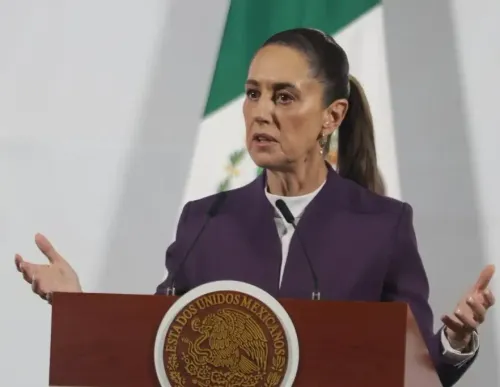
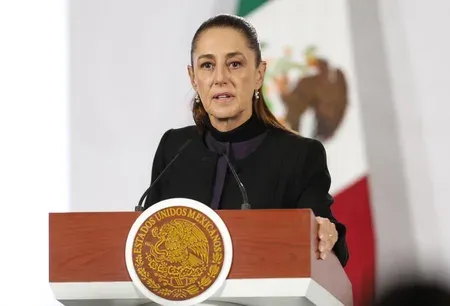
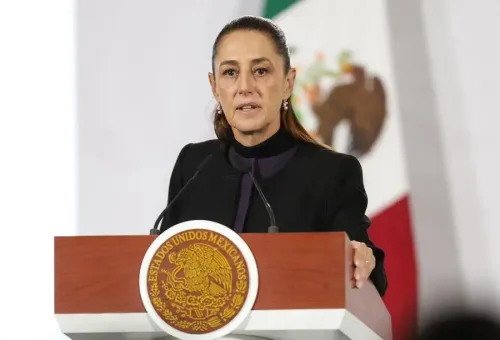
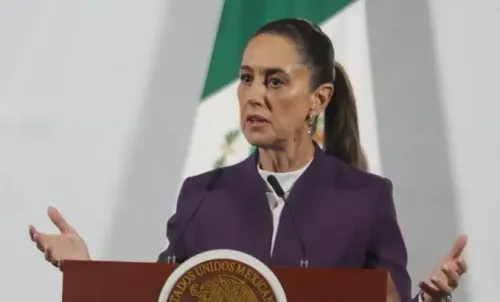
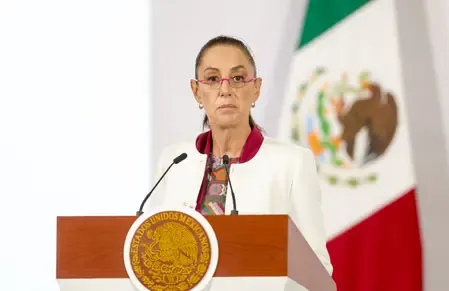
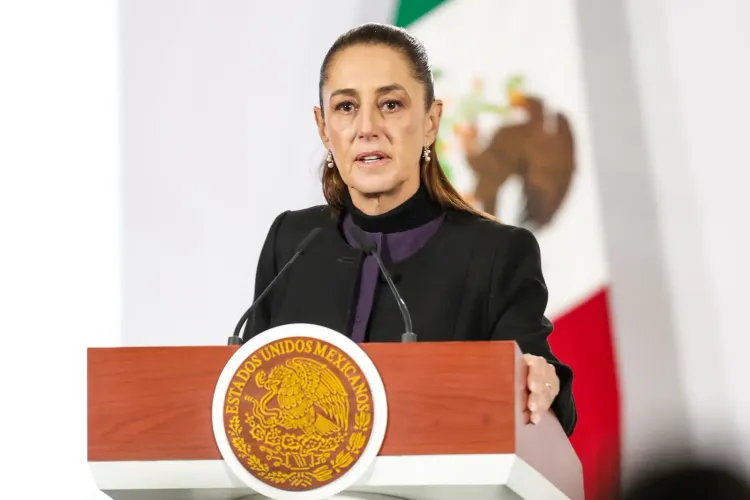
Mexican President Claudia Sheinbaum on Thursday, 27 November 2026, reaffirmed Mexico's solidarity with Cuba and said her government opposes any trade or energy blockade imposed on the Caribbean island. Speaking at her daily press conference in Mexico City, she defended the Cuban people's right to determine their own future and said no country should intervene in Cuba's internal affairs.
Key Developments
Sheinbaum was responding to a reporter's question on her government's stance towards Cuba. She said Mexico's foreign policy rests on respect for the self-determination of peoples.
“The only ones who can decide Cuba's destiny are the Cuban people, no one else,” Sheinbaum said, according to reports.
She added that Mexico has maintained ties of solidarity and brotherhood with Cuba for decades and has long opposed measures aimed at economically isolating the island.
What Mexico Said on Sanctions
The President reiterated Mexico's rejection of trade sanctions against Cuba and of measures that restrict the island's access to energy. She argued that such policies directly harm ordinary people.
“We oppose any trade blockade against the island, and now an energy blockade, because no policy should be directed against a people,” she said.
Notably, her reference to an “energy blockade” points to a newer layer of pressure on Cuba, beyond the trade restrictions that have shaped the island's economy for decades.
Humanitarian Support and the Havana Office
Sheinbaum said Mexico continues to support Cuba by sending medical supplies and providing other forms of assistance. She announced that the Mexican Agency for International Development Cooperation recently opened an office in Havana. The office is intended to make it easier to deliver food and other humanitarian aid.
The move gives Mexico a permanent operational presence on the island for aid delivery. That support carries added weight as external pressure on Cuba's economy grows.
Context: Tighter US Embargo in 2026
Her remarks come amid a sharp tightening of Washington's policy. In 2026, the US government significantly expanded its trade, economic and financial embargo against Cuba. The measures included new executive orders, secondary tariffs targeting oil supplies, and sectoral sanctions implemented by the US Treasury Department and the State Department.
The secondary tariffs on oil supplies are directly relevant to Sheinbaum's criticism of measures restricting Cuba's energy access.
Global Backing at the UN
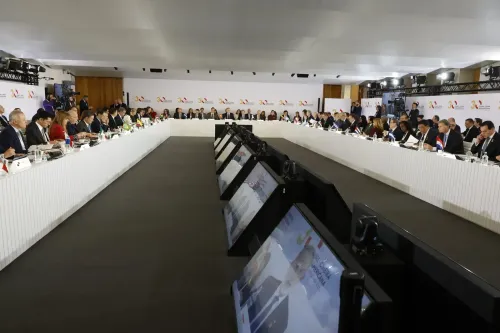
In October, the UN General Assembly adopted a resolution calling for an end to the decades-old US embargo on Cuba. The vote was 130 in favour, 17 against and 25 abstentions.
The resolution voiced concern over laws such as the Helms-Burton Act, enacted by the United States in 1996. It said the extraterritorial effects of such laws undermine the sovereignty of other states, the legitimate interests of individuals and entities under their jurisdiction, and the freedom of trade and navigation.
It called on all states to refrain from promulgating and applying such laws. It also urged states that continue to apply them to take steps to repeal or invalidate them as soon as possible. The UN Secretary-General has been asked to report on its implementation at the Assembly's next annual session.
This was the 34th consecutive year the General Assembly adopted a resolution on ending the US embargo on Cuba. Such resolutions are non-binding, and the embargo has remained in place despite repeated votes.
With Mexico expanding its aid footprint in Havana and Washington's sanctions widening, the gap between the two neighbours' Cuba policies is likely to become a recurring point of friction in North American diplomacy.
Point of View
And each vote has had no effect on US policy, which exposes how little multilateral consensus counts against unilateral sanctions. For India, which has also long voted against the embargo, the episode shows the growing reach of secondary tariffs. These can penalise third countries for trading with sanctioned states, and that is a template New Delhi has already faced over Russian and Iranian oil.
NationPress
27 Nov 2026
Frequently Asked Questions
What did Claudia Sheinbaum say about Cuba?
Mexican President Claudia Sheinbaum said on 27 November 2026 that only the Cuban people can decide Cuba's destiny. She said Mexico opposes any trade blockade and the newer energy blockade against the island.
What is the energy blockade on Cuba?
It refers to measures restricting Cuba's access to energy. These include US secondary tariffs targeting oil supplies to the island, introduced in 2026 as part of a wider tightening of the embargo.
How is Mexico helping Cuba?
Mexico is sending medical supplies and other forms of assistance to Cuba. The Mexican Agency for International Development Cooperation has also opened an office in Havana to make it easier to deliver food and humanitarian aid.
How did the UN vote on the US embargo on Cuba?
In October, the UN General Assembly adopted a resolution calling for an end to the US embargo, with 130 votes in favour, 17 against and 25 abstentions. It was the 34th consecutive year such a resolution was adopted.
What is the Helms-Burton Act?
The Helms-Burton Act is a US law enacted in 1996 that reinforces the embargo on Cuba. The UN resolution said its extraterritorial effects undermine other states' sovereignty and the freedom of trade and navigation.