Cuba slams US sanctions, energy blockade at 30th Ibero-American Summit
Synopsis
At the 30th Ibero-American Summit in Madrid, Cuba's Foreign Minister Bruno Rodriguez delivered a rare multilateral broadside against Washington, accusing the US of pushing a 10-month escalation of sanctions — including an energy siege likened to a naval blockade — to 'inhuman limits of collective punishment.' With both Rodriguez and President Diaz-Canel amplifying the message on X, Havana is clearly seeking to internationalise its case against US economic pressure.
Key Takeaways
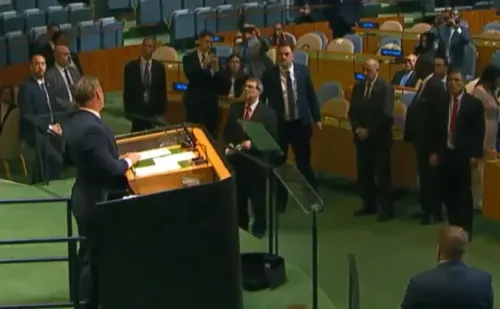
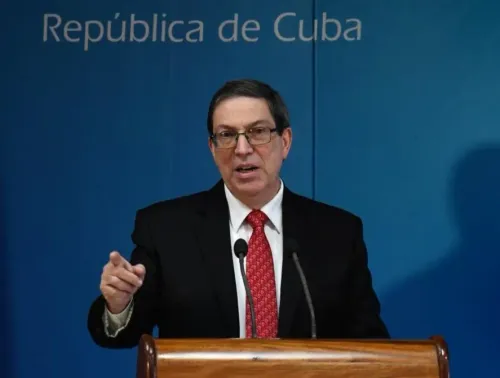
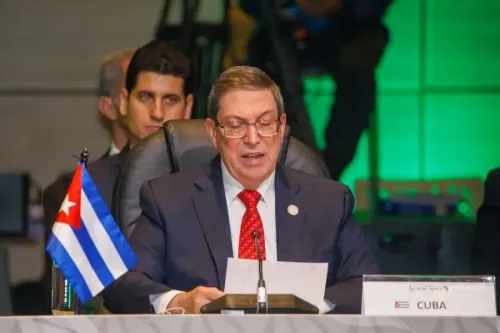
Cuban Foreign Minister Bruno Rodriguez addressed the 30th Ibero-American Summit in Madrid on 4–5 November 2026 , condemning expanded US sanctions.
Rodriguez accused the US of imposing an energy blockade equivalent to a naval blockade over the past 10 months .
Secondary sanctions targeting individuals and companies seeking to trade with Cuba were specifically condemned.
Cuban President Miguel Diaz-Canel confirmed and amplified the speech via posts on X .
Cuba reaffirmed commitment to Ibero-American cooperation and called on the bloc to act against unilateral coercive measures.
Honduras currently holds the pro tempore secretariat of the Ibero-American Community.
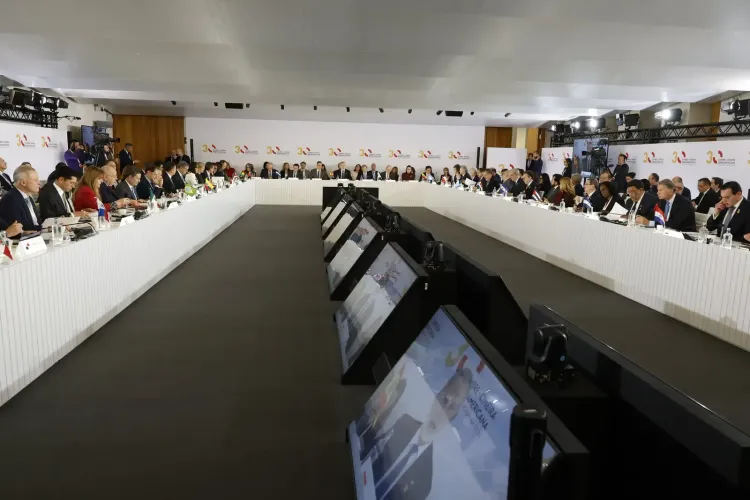
Cuban Foreign Minister Bruno Rodriguez denounced intensified United States sanctions against Cuba — including what Havana describes as an energy blockade — before world leaders at the 30th Ibero-American Summit in Madrid, Spain, held from 4 to 5 November 2026. The address marked one of Havana's most forceful multilateral condemnations of Washington's economic pressure campaign in recent years.
Key Accusations at the Summit
Rodriguez told delegates that over the past 10 months, Cubans have endured what he called an unprecedented tightening of the US trade embargo, an energy siege he characterised as equivalent to a naval blockade, and secondary sanctions targeting individuals and organisations that trade with the island. 'The United States has taken its obsessive war of economic strangulation against Cuba to inhuman limits of collective punishment,' Rodriguez said in his address, calling on Ibero-American nations to counter what he described as arbitrary sanctions and an abuse of power.
Diaz-Canel Amplifies the Message
Cuban President Miguel Diaz-Canel confirmed the foreign minister's remarks in posts on X, stating that Rodriguez reaffirmed Cuba's commitment to Ibero-American cooperation grounded in 'equality, sovereignty and mutual respect' and aligned with the national priorities of countries across the region. Rodriguez also independently posted on X to condemn the US measures, citing the same 10-month timeline of escalating pressure.
Cooperation Agenda Amid Confrontation
Beyond the confrontational framing, Rodriguez stressed the importance of joint Ibero-American projects, knowledge-sharing, and collaborative approaches to sustainable development. He also reiterated Cuba's commitment to strengthening bloc cooperation during Honduras' tenure as pro tempore secretariat — signalling Havana's intent to remain an active participant in regional diplomacy despite its diplomatic standoff with Washington.
Context: US-Cuba Tensions
US economic restrictions on Cuba have been in place for decades, but the current administration's expansion of secondary sanctions — penalising third-party entities that do business with Havana — has drawn criticism from several Latin American governments. This comes amid broader regional debate over multilateral sovereignty, with nations at the Ibero-American Summit historically advocating non-interference principles. Notably, the summit gathering itself, the bloc's 30th, underscores Cuba's continued engagement with the Ibero-American Community despite sustained US pressure.
What Comes Next
Cuba has called on the Ibero-American Community to act in accordance with its founding principles against unilateral coercive measures. Whether the bloc will adopt formal language reflecting that call in its summit conclusions remains to be seen. All eyes will be on the final communiqué and whether member states align with Havana's framing or opt for more diplomatic language.
Point of View
But the specificity of the 'energy blockade' framing — equating it to a naval blockade — is a deliberate escalation in rhetoric designed to draw multilateral sympathy. The secondary sanctions mechanism is the sharpest edge of Washington's current approach: it effectively forces third-country firms to choose between Cuba and the US market, chilling trade far beyond bilateral numbers suggest. The summit setting matters — Latin American states have historically resisted extraterritorial sanctions as a matter of sovereignty principle, giving Havana more natural allies here than in any UN forum. Whether rhetorical solidarity translates into concrete bloc action is the question mainstream coverage largely skips.
NationPress
6 Nov 2026
Frequently Asked Questions
What did Cuba say at the 30th Ibero-American Summit?
Cuban Foreign Minister Bruno Rodriguez denounced intensified US sanctions at the summit in Madrid, held from 4 to 5 November 2026. He accused the United States of imposing an energy blockade equivalent to a naval blockade and applying secondary sanctions on anyone trading with Cuba, calling it 'inhuman collective punishment.'
What are the secondary sanctions Cuba is condemning?
Secondary sanctions penalise individuals and organisations in third countries that engage in commercial relations with Cuba, effectively pressuring foreign firms to avoid trade with the island to retain access to the US market. Rodriguez cited these alongside the broader US embargo as part of an unprecedented 10-month escalation.
What is the Ibero-American Summit and why does it matter here?
The Ibero-American Summit is a forum of Spanish- and Portuguese-speaking nations spanning Latin America, Spain, and Portugal. Its founding principles include non-interference and sovereignty, making it a natural platform for Cuba to build multilateral opposition to US unilateral sanctions.
How did President Diaz-Canel respond to the summit address?
Cuban President Miguel Diaz-Canel posted on X confirming Rodriguez's remarks, reaffirming Cuba's commitment to Ibero-American cooperation based on equality, sovereignty, and mutual respect. Rodriguez also independently posted on X to publicly condemn the US measures.
What could follow from Cuba's call to action at the summit?
Cuba has urged the Ibero-American Community to act against arbitrary sanctions in line with the bloc's founding principles. The key question is whether the summit's final communiqué adopts language reflecting that call, or member states opt for softer diplomatic wording to avoid direct confrontation with Washington.