Cuba's Diaz-Canel slams US 'empty rhetoric' on terrorism label, warns of military threat
Synopsis
Cuban President Miguel Diaz-Canel has gone on the offensive, accusing Washington of fabricating a terrorism label against Cuba without evidence to justify military aggression — as the US deploys the Nimitz Carrier Strike Group to the Caribbean and indicts Raul Castro. Havana is warning of a 'bloodbath with incalculable consequences' if attacked, raising the stakes across Latin America.
Key Takeaways
Cuban President Miguel Diaz-Canel accused the United States of using ‘empty rhetoric’ to label Cuba a ‘sponsor of terrorism’ without evidence, in a post on X on Friday .
Diaz-Canel alleged that certain US officials have ‘hijacked’ Washington’s Cuba policy and are lying to justify what he called ‘a new irrational war.’ The United States recently indicted Cuban Revolution leader Raul Castro over the fatal downing of two planes 30 years ago .
Washington deployed the Nimitz Carrier Strike Group to the Caribbean , seen as part of a broader pressure campaign against Havana .
Diaz-Canel warned that any US military attack on Cuba would cause ‘a bloodbath with incalculable consequences’ for Latin America and the Caribbean .
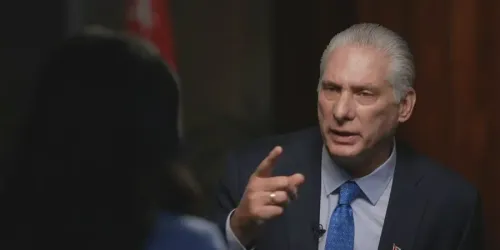
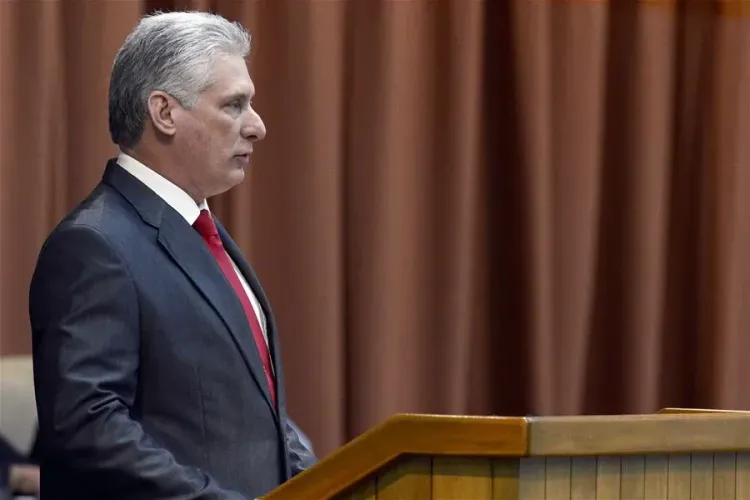
Cuban President Miguel Diaz-Canel on Friday accused the United States of deploying “empty rhetoric” to brand Cuba a “sponsor of terrorism” without presenting any evidence, warning that Washington is manufacturing a media narrative to justify what he called military aggression against the island nation.
Diaz-Canel's Accusations Against Washington
In a post on X, Diaz-Canel said claims that Cuba poses a threat to the United States “can only exist in the sick minds” of certain officials within the current US administration. He alleged that those officials have “hijacked” Washington’s Cuba policy and are “lying to the American people and the world” to justify what he described as “a new irrational war with a high potential cost in human lives for both countries.”
The Cuban president charged that the United States — which he called “a country that has harboured the most infamous terrorists of this continent” — is labelling Cuba a state sponsor of terrorism “without presenting a single piece of evidence and in the face of majority repudiation from the international community.”
Cuba's Position: Peace, Self-Defence, and Dialogue
Diaz-Canel maintained that Cuba has sought to live in peace since the triumph of its Revolution, while successive US administrations have “threatened that right time and again.” He said the current situation has escalated to “extreme levels,” combining what he termed “absurd lies with military intimidation” and the deprivation of the Cuban people of basic resources and services.
The president stressed that Cuba “neither threatens, challenges, nor provokes” the United States or any other country, and reaffirmed Havana’s commitment to “reason, dialogue and peace.” He also reiterated Cuba’s right to legitimate self-defence under international law.
Backdrop: US Indictment of Raul Castro and Naval Deployment
The statement comes amid a sharp escalation in US-Cuba tensions. The United States recently indicted Cuban Revolution leader Raul Castro in connection with the Cuban military’s fatal downing of two planes 30 years ago. Washington also deployed the Nimitz Carrier Strike Group to the Caribbean — moves widely seen as part of a broader pressure campaign against Havana.
Diaz-Canel has previously warned that any US military attack on Cuba would cause “a bloodbath with incalculable consequences,” with a devastating impact on peace and stability across Latin America and the Caribbean.
What Comes Next
The diplomatic standoff shows no sign of easing, with Havana signalling it will not back down and Washington maintaining its pressure posture. The deployment of a carrier strike group to the region and the high-profile indictment of Raul Castro suggest the US is intensifying its campaign. How regional neighbours and international bodies respond to the escalation will be closely watched in the coming weeks.
Point of View
Framed in the language of international law and regional solidarity, is clearly aimed at rallying Latin American and Global South opinion against the US posture. The risk is that both sides are now speaking past each other at a moment when the margin for miscalculation is dangerously thin. Mainstream coverage has focused on the rhetorical exchange; the more consequential story is the naval deployment and what rules of engagement accompany it.
NationPress
6 Oct 2026
Frequently Asked Questions
Why did Cuba's president accuse the US of 'empty rhetoric'?
Cuban President Miguel Diaz-Canel accused the United States of using 'empty rhetoric' because Washington labelled Cuba a 'sponsor of terrorism' without, according to him, presenting any evidence. He argued the label is being used to manufacture justification for military aggression against Cuba.
What recent US actions have escalated tensions with Cuba?
The United States recently indicted Cuban Revolution leader Raul Castro over the Cuban military's fatal downing of two planes 30 years ago, and deployed the Nimitz Carrier Strike Group to the Caribbean. Both moves are seen as part of a broader US pressure campaign against Havana.
What has Diaz-Canel warned will happen if the US attacks Cuba?
Diaz-Canel has warned that any US military attack on Cuba would cause 'a bloodbath with incalculable consequences,' with a devastating impact on peace and stability across Latin America and the Caribbean.
What is Cuba's stated position on dialogue and conflict?
Cuba has reaffirmed its commitment to 'reason, dialogue and peace,' with Diaz-Canel stressing that the island 'neither threatens, challenges, nor provokes' the United States or any other country. He also reiterated Cuba's right to legitimate self-defence under international law.
How has the international community responded to the US terrorism label on Cuba?
According to Diaz-Canel, the US terrorism designation faces 'majority repudiation from the international community.' He framed the label as internationally isolated and lacking evidentiary basis, though independent verification of the extent of that repudiation was not immediately available.