Cuba denounces US indictment of Raul Castro as illegal and baseless
Synopsis
For the first time, a former Cuban head of state has been indicted by a US court — over a 30-year-old incident that Havana insists was legitimate self-defence. Cuba's Foreign Minister and President have both rejected the charges on X as a political fabrication, raising the diplomatic temperature between Washington and Havana at an already fraught moment.
Key Takeaways
The US Department of Justice unsealed an indictment on 21 May charging former Cuban leader Raul Castro and five others over the 1996 downing of two Brothers to the Rescue aircraft.
Cuban Foreign Minister Bruno Rodriguez called the charges 'illegitimate and illegal,' saying they were based on lies and ignored documented historical facts.
Cuban President Miguel Diaz-Canel described the indictment as a 'political manoeuvre' designed to justify potential military aggression against Cuba.
Cuba maintains the planes were shot down in its airspace in legitimate self-defence after more than a dozen warnings were ignored by Washington.
Rodriguez accused the US of extrajudicial executions of nearly 200 people in international waters, and vowed Cuba would not abandon its right to self-defence.
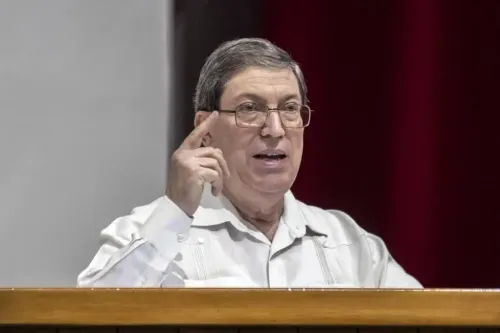
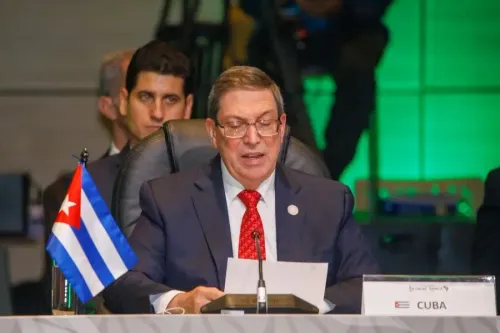
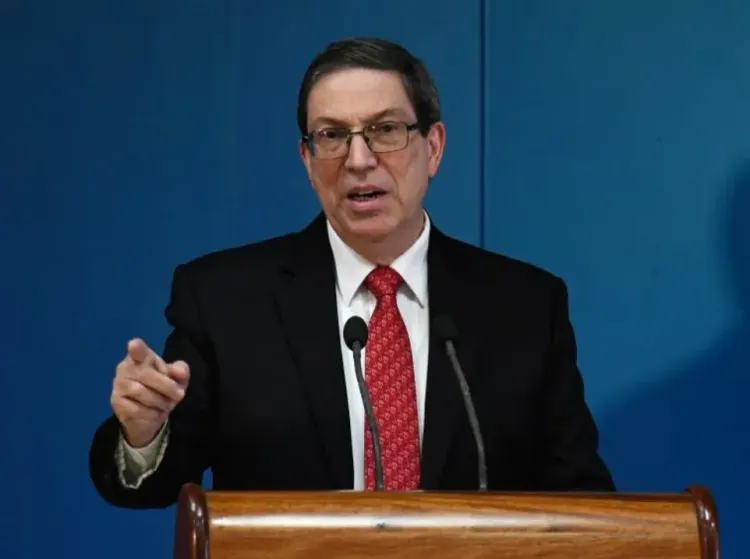
Cuban Foreign Minister Bruno Rodriguez on Wednesday, 21 May sharply condemned the US Department of Justice indictment of former Cuban leader Raul Castro, calling the charges 'illegitimate and illegal' and accusing Washington of fabricating a 'fraudulent narrative' to justify escalating aggression against Cuba. The indictment, unsealed the same day, charges Castro and five others over the Cuban military's 1996 downing of two aircraft operated by Brothers to the Rescue, a Miami-based Cuban exile group.
What the US Indictment Alleges
The US Department of Justice unsealed a superseding indictment on Wednesday charging Raul Castro and five co-defendants in connection with the 24 February 1996 shootdown of the two small aircraft over waters near Cuba. The incident killed the crew members aboard both planes. The case had remained dormant for nearly three decades before Washington moved to formally charge the former Cuban head of state.
Havana's Counter-Narrative
Rodriguez, posting on X on Wednesday, stated that the US accusation 'is based on lies and ignores documented historical facts.' Cuba maintains that the aircraft were downed inside Cuban airspace and that the military acted in legitimate self-defence after members of the group repeatedly violated the island's airspace. According to Havana, Cuba issued more than a dozen warnings about the violations, which Washington allegedly ignored.
Rodriguez further accused Washington of complicity in organising violent actions against Cuba, and denounced what he described as extrajudicial executions of nearly 200 people by US forces in international waters in the Caribbean and the Pacific on alleged drug-trafficking grounds. 'Cuba will not renounce its inalienable right to legitimate defence,' Rodriguez said.
Diaz-Canel Calls It a Political Manoeuvre
Cuban President Miguel Diaz-Canel also took to X on Wednesday to reject the charges, calling them a 'political manoeuvre' with no legal basis. Diaz-Canel said the indictment 'only reveals the arrogance and frustration of the empire's representatives in the face of the unwavering resolve of the Cuban Revolution.' He accused Washington of 'lying and manipulating the events' surrounding the 1996 incident, describing the Brothers to the Rescue as a 'narco-terrorist organisation.'
Diaz-Canel added that the charges were intended 'solely to enlarge the file they are fabricating to justify the folly of a military aggression against Cuba,' and defended Castro's legacy, saying he had 'won the love of his people, in addition to the respect and admiration of other leaders in the region and the world.'
Background and Broader Context
The Brothers to the Rescue incident has been a persistent flashpoint in US–Cuba relations. Washington has long held that the aircraft were in international airspace when they were shot down, while Havana disputes this account. This is the first time a former Cuban head of state has been formally indicted by a US court. The move comes amid already strained bilateral ties, with Cuba currently on the US State Department's list of state sponsors of terrorism. Analysts note the indictment is largely symbolic given Cuba's refusal to extradite its nationals, but it carries significant diplomatic weight as a tool of political pressure.
Point of View
And the timing matters: it lands as US–Cuba tensions remain elevated and Cuba stays on the state sponsors of terrorism list. Havana's swift, coordinated response on X by both the Foreign Minister and the President signals this is being treated as a serious escalation, not a routine diplomatic irritant. The deeper question is whether the indictment hardens Cuba's posture or opens a pressure point that Washington intends to exploit in future negotiations. History suggests the former.
NationPress
22 Sept 2026
Frequently Asked Questions
What is the US indictment against Raul Castro about?
The US Department of Justice unsealed a superseding indictment on 21 May charging former Cuban leader Raul Castro and five others in connection with the Cuban military's downing of two aircraft operated by Brothers to the Rescue on 24 February 1996. Washington alleges the planes were in international airspace when they were shot down.
How has Cuba responded to the indictment?
Cuba has flatly rejected the charges. Foreign Minister Bruno Rodriguez called them 'illegitimate and illegal,' while President Miguel Diaz-Canel described the move as a 'political manoeuvre' with no legal basis, saying it was designed to justify potential military aggression against Cuba.
What is Cuba's version of the 1996 Brothers to the Rescue incident?
Cuba maintains that the two aircraft were shot down inside Cuban airspace after members of the Miami-based group repeatedly violated the island's airspace. Havana says it issued more than a dozen warnings that Washington ignored, and that Cuba acted in legitimate self-defence.
Can the US actually prosecute Raul Castro?
In practical terms, enforcement is highly unlikely as Cuba does not extradite its nationals to the United States. The indictment is widely seen as a political and diplomatic instrument rather than a realistic prosecution, though it carries formal legal weight as a US federal charge.
Who are Brothers to the Rescue?
Brothers to the Rescue is a Miami-based Cuban exile organisation that conducted humanitarian missions over the Florida Straits. Cuba has characterised the group as a 'narco-terrorist organisation,' a label Washington and the group itself reject. Two of their aircraft were shot down by the Cuban military on 24 February 1996, killing those on board.