US indictment of Raul Castro a 'political manoeuver', says Cuban President Diaz-Canel
Synopsis
Washington's federal grand jury has indicted 94-year-old Raul Castro over the 1996 downing of two exile aircraft — and Havana has hit back hard. Cuban President Diaz-Canel called it a fabricated pretext for military aggression, invoking Cuba's self-defence argument and Castro's revolutionary stature. The move reignites one of the most enduring flashpoints in US-Cuba relations.
Key Takeaways
A US federal grand jury in Florida indicted Raul Castro , 94, over the alleged ordering of the downing of two Brothers to the Rescue aircraft on 24 February 1996 .
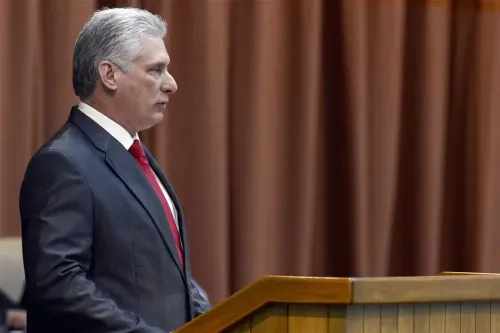
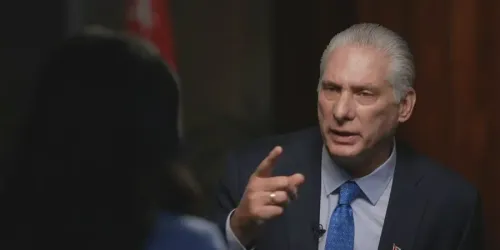
Cuban President Miguel Diaz-Canel called the charges a “political manoeuver” with no legal basis, posting his response on X on Wednesday.
Diaz-Canel alleged the indictment was designed to justify “military aggression against Cuba.” Cuba maintains it acted in legitimate self-defence after issuing more than a dozen warnings about airspace violations.
Castro served as Cuba's Minister of the Revolutionary Armed Forces at the time of the 1996 incident.
Cuban President Miguel Diaz-Canel has dismissed the United States government's indictment of Cuban Revolution leader Raul Castro as a “political manoeuver” with no legal basis, calling it an act of imperial arrogance against Cuba's leadership. The remarks came on Wednesday after a US federal grand jury formally charged Castro over his alleged role in a deadly 1996 incident.
The US Indictment
A grand jury from the US District Court for the Southern District of Florida indicted Raul Castro for his alleged role in ordering the downing of two aircraft operated by Brothers to the Rescue, a Cuban exile organisation based in Miami, on 24 February 1996. Castro, now 94, served as Cuba's Minister of the Revolutionary Armed Forces at the time of the incident.
Cuba's Response
Diaz-Canel, posting on X on Wednesday, said the charges “only reveal the arrogance and frustration of the empire's representatives in the face of the unwavering resolve of the Cuban Revolution and the unity and moral strength of its leadership.” He further alleged the indictment was designed “solely to enlarge the file they are fabricating to justify the folly of a military aggression against Cuba.”
Havana's Account of the 1996 Incident
Diaz-Canel maintained that Cuba acted “in legitimate self-defence” within its territorial waters, stating that members of the Miami-based group had repeatedly violated Cuban airspace. According to him, Cuba issued more than a dozen warnings about these violations before acting, but the US government “ignored the warnings and allowed the violations to continue.” He added that “documentary evidence” demonstrated that Cuba neither acted recklessly nor violated international law.
Washington, he charged, is “lying and manipulating the events surrounding the downing of the small planes belonging to the narco-terrorist organization Brothers to the Rescue.”
Castro's Legacy Invoked
Defending the former Cuban leader's standing, Diaz-Canel said Castro “as a guerrilla leader and statesman, won the love of his people, in addition to the respect and admiration of other leaders in the region and the world.” He described these qualities as Castro's “best defence and a moral shield against the ridiculous attempt to diminish his stature as a hero.”
Broader Context
The indictment marks a significant escalation in US-Cuba tensions, coming decades after the 1996 incident which has long been a flashpoint between Washington and Havana. The Brothers to the Rescue group had been conducting humanitarian flights over the Florida Straits to locate Cuban migrants at sea; the US maintains the planes were downed in international airspace. Cuba has consistently disputed this account. The legal move is widely seen as the latest chapter in a protracted geopolitical standoff that has defined relations between the two nations for over six decades.
Point of View
Not a prosecutorial one. Diaz-Canel's framing of it as a prelude to military aggression is pointed: Havana is signalling that it reads this as threat escalation, not accountability. What mainstream coverage risks missing is how this move could harden Cuban domestic opinion and complicate any quiet back-channel diplomacy that may exist between Washington and Havana.
NationPress
23 Sept 2026
Frequently Asked Questions
What is the US indictment against Raul Castro about?
A US federal grand jury in the Southern District of Florida indicted Raul Castro for his alleged role in ordering the downing of two aircraft operated by the Cuban exile group Brothers to the Rescue on 24 February 1996. Castro was Cuba's Minister of the Revolutionary Armed Forces at the time.
How has Cuba responded to the indictment?
Cuban President Miguel Diaz-Canel rejected the charges as a 'political manoeuver' with no legal basis, stating they reflect the 'arrogance and frustration' of US officials. He also alleged the indictment was fabricated to justify potential military aggression against Cuba.
What was the Brothers to the Rescue incident in 1996?
On 24 February 1996, Cuban military forces shot down two small aircraft operated by Brothers to the Rescue, a Miami-based Cuban exile group. The US says the planes were in international airspace; Cuba maintains they had repeatedly violated Cuban airspace and that it acted in legitimate self-defence after issuing over a dozen warnings.
What does Cuba say about the legality of the 1996 downing?
Cuba insists it acted within international law and in legitimate self-defence, citing documentary evidence and arguing that the US government ignored repeated warnings about airspace violations by Brothers to the Rescue before the incident occurred.