Operation Sindoor forces ISI to shift from iconic terror hubs to multi-camp strategy
Synopsis
Operation Sindoor didn't just destroy terror camps — it forced a strategic rethink inside Pakistan's ISI. The iconic JeM and LeT headquarters have been rebuilt as symbolic shells while real operations shift to a dispersed, multi-city network of four to five facilities each. Direct ISI control has tightened, symbolic figureheads like Hafiz Saeed and Masood Azhar have been sidelined operationally, and operative rotation is now designed to defeat Indian surveillance.
Key Takeaways
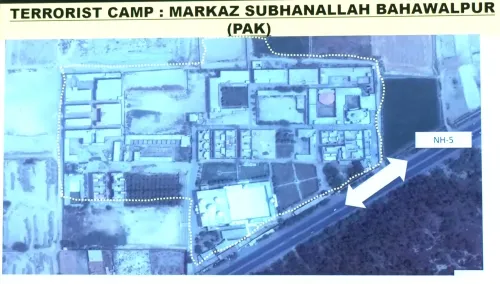
Operation Sindoor struck JeM's Bahawalpur headquarters and LeT's Muridke training facility , exposing the vulnerability of centralised terror infrastructure.
Both sites have been rebuilt but intelligence intercepts indicate activity there is 'extremely limited or minimal' — they serve primarily as symbolic structures.
The ISI has set up four to five dispersed facilities each in Islamabad , Rawalpindi , Muzaffarabad , and Rawalakot .
The new command centre is reportedly based in Khyber Pakhtunkhwa (KP) ; operatives will be rotated to complicate Indian surveillance.
Hafiz Saeed , Masood Azhar , and Syed Salahuddin are now reportedly symbolic figureheads, with real operational control held by ISI's Brigadier Iqbal and Colonel Owaiz .
JeM , LeT , and Hizbul Mujahideen are to operate in coordination under a unified attack framework going forward.
Operation Sindoor has forced Pakistan's Inter-Services Intelligence (ISI) to fundamentally overhaul the operational structure of terror outfits including Jaish-e-Mohammed (JeM), Lashkar-e-Taiba (LeT), and Hizbul Mujahideen, according to intelligence assessments. The Indian armed forces' precision strikes on centralised terror infrastructure exposed the vulnerability of single-hub command models, compelling the ISI to disperse training and operations across multiple facilities nationwide.
Iconic Headquarters Rebuilt but Hollowed Out
JeM's headquarters in Bahawalpur and LeT's key training facility in Muridke — both struck during Operation Sindoor — have since been rebuilt, but according to intelligence intercepts, activity at both sites is now described as 'extremely limited or minimal.' An official said the rebuilding was primarily a morale exercise. 'Not rebuilding the structure would have had a telling effect on the already demoralised cadres,' the official said.
The Muridke facility carries particular historical weight. Operatives who carried out the Mumbai 26/11 attacks, the 2005 Delhi bombings, and the 2000 Red Fort attack were all trained there. Cadres of the JeM also used Muridke to train for the 2001 Indian Parliament attack. The rebuilding, officials say, was intended to send a signal to operatives — not to resume full-scale operations.
ISI Directs Dispersal Across Multiple Sites
According to an Intelligence Bureau official, all intercepts gathered during the ISI's rebuilding exercise clearly indicate that the restored facilities will remain symbolic. 'All major attacks will not be executed from the multiple training facilities that have been set up. The ISI has directed them to maintain a very low profile while training at these facilities,' the official said.
The new command centre for these outfits is reportedly based in Khyber Pakhtunkhwa (KP), while training facilities are now spread across Islamabad, Rawalpindi, Muzaffarabad, and Rawalakot. The ISI has reportedly set up four to five facilities in each of these locations, with training imparted at various levels. The Hizbul Mujahideen's Markaz Raheel Shahid at Koti in Pakistan-occupied Kashmir (PoK) and the Mehmoona Jaya camp in Sialkot have also been restored with ISI assistance.
Operatives to Be Rotated, Tracking Made Harder
Under the new strategy, operatives will not be stationed at a single hub but will be rotated across facilities to provide broader exposure and complicate surveillance. 'This makes tracking harder for Indian agencies due to constant rotation and movement of the operatives,' an official said. The logic is explicit: even if one facility is targeted in a future Indian operation, terror operations can continue from another camp, limiting the damage of any single strike.
Unified Command, Symbolic Figureheads
Notably, the new dispensation marks a structural shift in how the three outfits operate. All three groups — JeM, LeT, and Hizbul Mujahideen — would reportedly work in coordination, with no organisational division between them. Attacks would be unified in planning and execution. Figures such as Hafiz Saeed, Masood Azhar, and Syed Salahuddin would retain only symbolic and ideological roles, while operational and day-to-day control would be exercised directly by the ISI, reportedly through Brigadier Iqbal and Colonel Owaiz.
This consolidation of ISI's direct control, combined with dispersed infrastructure, signals a more resilient — and harder to disrupt — terror architecture that Indian security agencies will need to contend with going forward.
Point of View
Designed to prevent cadre demoralisation while real operations quietly shift elsewhere. More significantly, the sidelining of Saeed, Azhar, and Salahuddin to purely ideological roles and the consolidation of direct ISI command through Brigadier Iqbal and Colonel Owaiz represents a professionalisation of Pakistan's terror architecture — removing the deniability buffer that named figureheads previously provided. Indian agencies now face a more resilient, rotation-based network that is explicitly designed to survive targeted strikes.
NationPress
7 Nov 2026
Frequently Asked Questions
What is Operation Sindoor and what did it target?
Operation Sindoor was an Indian military operation that struck key Pakistan-based terror infrastructure, including JeM's headquarters in Bahawalpur and LeT's training facility in Muridke . The strikes exposed the vulnerability of centralised terror hubs and prompted the ISI to overhaul its operational structure.
Why has the ISI rebuilt the Bahawalpur and Muridke facilities if they are largely inactive?
According to intelligence officials, the rebuilding was primarily a morale exercise to prevent demoralisation among cadres. 'Not rebuilding the structure would have had a telling effect on the already demoralised cadres,' an official said. Intelligence intercepts suggest actual operational activity at both sites remains minimal.
What is the ISI's new multi-camp strategy?
The ISI has reportedly set up four to five dispersed training and operational facilities each in Islamabad, Rawalpindi, Muzaffarabad, and Rawalakot. Operatives are rotated across sites to broaden exposure and complicate Indian surveillance, ensuring that if one facility is struck, operations can continue from others.
Who now controls Jaish-e-Mohammed, Lashkar-e-Taiba, and Hizbul Mujahideen operations?
According to intelligence assessments, day-to-day operational control has been centralised under the ISI directly, reportedly through Brigadier Iqbal and Colonel Owaiz. Figures such as Hafiz Saeed, Masood Azhar, and Syed Salahuddin are said to retain only symbolic and ideological roles.
How significant is the Muridke facility historically?
The Muridke training facility has been central to LeT's operations against India for decades. Operatives behind the Mumbai 26/11 attacks, the 2005 Delhi bombings, and the 2000 Red Fort attack were all trained there. JeM cadres also used it to prepare for the 2001 Indian Parliament attack.