Sikh couple killed at Mardan gurdwara; HRCP flags minority safety crisis in KP

Synopsis
A Sikh couple serving as gurdwara caretakers were shot dead inside a place of worship in Mardan, Pakistan — and the alleged assailant may have been the very person hired to guard them. The HRCP is calling out both the police's hasty motive-framing and the systemic failure to implement a decade-old Supreme Court order on minority protections.
Key Takeaways
Unidentified assailants shot dead Jagannath, 70 , and his wife inside a gurdwara in Mardan, Khyber Pakhtunkhwa .
The couple were reportedly serving as caretakers of the gurdwara in the Babu Mohalla Khawaja Ganj Bazaar area.
The HRCP condemned the killings and challenged police claims of a personal vendetta motive at the preliminary investigation stage.
Reports indicate the alleged assailant may have been engaged as a security provider at the site, raising vetting concerns.
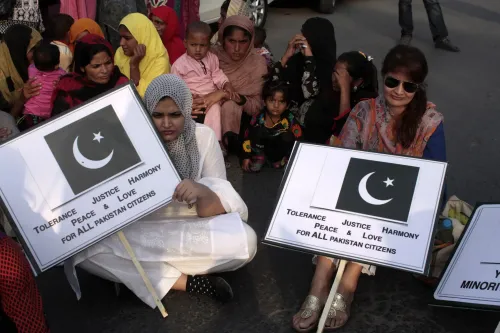
Rights body VOPM cited a recurring pattern: minority victims, unguarded religious spaces, and investigations that rarely deliver justice — from Peshawar in 2022 to Mardan.
The HRCP called for full enforcement of the 2014 Supreme Court judgment mandating protection of minority religious sites.
The Human Rights Commission of Pakistan (HRCP) has strongly condemned the killing of a Sikh couple who were reportedly serving as caretakers of a gurdwara in Mardan city, Khyber Pakhtunkhwa, saying the attack has deepened fears over the safety of religious minorities and their places of worship across Pakistan. The incident is drawing sharp scrutiny from rights organisations both inside and outside the country.
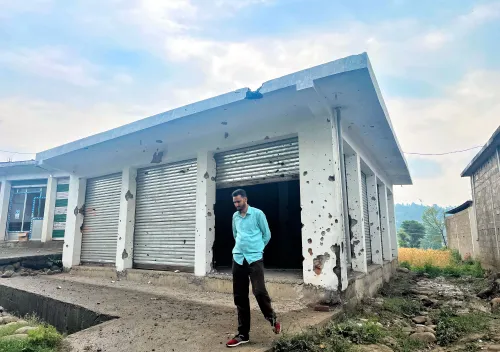
According to reports, unidentified assailants opened fire inside the gurdwara located in the Babu Mohalla Khawaja Ganj Bazaar area of Mardan, killing 70-year-old Jagannath and his wife before fleeing the scene.
What the HRCP Said
Expressing grave concern, the HRCP stated: 'This incident raises serious concerns not only for the safety and security of religious minorities and places of worship but also regarding the circumstances in which the attack occurred. Reports suggesting that the alleged assailant had been engaged in providing security at the site warrant particular scrutiny and underline the need for stronger vetting and oversight mechanisms in implementing the 2014 Supreme Court judgment on the protection of religious minorities.'
The commission also challenged the Mardan District Police Officer's (DPO) early assertion linking the killings to a personal vendetta, saying it remained unclear on what basis such a motive could be established with certainty at such a preliminary stage of investigation. The HRCP called on Pakistani authorities to ensure all possible lines of enquiry are examined thoroughly and that those responsible are held accountable under the law.
Rights Groups Cite a Disturbing Pattern
A leading minority rights body, Voice of Pakistan Minority (VOPM), condemned the killings as an assault on the already fragile assurances of safety for Pakistan's religious minorities. 'This was not merely an attack on two individuals; it was an attack on the fragile promise of safety for religious minorities in Pakistan. Authorities have described it as a 'targeted attack,' but such language has become routine, almost mechanical, in the face of repeated violence. What remains unchanged is the pattern: minority victims, unguarded religious spaces, unidentified assailants, and investigations that rarely deliver justice. From Peshawar in 2022 to Mardan today, the cycle continues with alarming predictability,' the VOPM stated.
The VOPM further noted that the attack was not an isolated incident but part of a broader and deeply troubling pattern of violence against minorities in Pakistan.
The Security Lapse at the Gurdwara
A particularly troubling dimension of this case is the reported involvement of someone allegedly engaged to provide security at the gurdwara itself. Rights groups say this points to critical failures in vetting and oversight — failures that the 2014 Supreme Court of Pakistan judgment had specifically sought to address by mandating protections for minority religious sites. That the judgment's directives have not translated into effective safeguards on the ground is, according to the HRCP, a matter demanding urgent governmental attention.
Broader Context and What Comes Next
Attacks on Sikh and other minority communities in Khyber Pakhtunkhwa have been documented with troubling frequency in recent years. The province, which borders Afghanistan, has seen multiple incidents targeting minority places of worship and community members. Rights advocates argue that without independent investigations and credible prosecutions, the cycle of impunity will continue. The HRCP has demanded that Pakistani authorities move beyond routine condemnations and institute systemic reforms to protect minority communities and their sacred spaces.
Frequently Asked Questions
Who was killed in the Mardan gurdwara attack?
Jagannath , aged 70 , and his wife were killed. The couple were reportedly serving as caretakers of the gurdwara in the Babu Mohalla Khawaja Ganj Bazaar area of Mardan, Khyber Pakhtunkhwa, Pakistan.
Who condemned the Mardan gurdwara killings?
The Human Rights Commission of Pakistan (HRCP) strongly condemned the killings and called for a thorough investigation. The minority rights group Voice of Pakistan Minority (VOPM) also condemned the attack, describing it as part of a recurring pattern of violence against minorities in Pakistan.
Why did the HRCP question the police's statement?
The HRCP challenged the Mardan DPO's early assertion that the attack was linked to a personal vendetta, saying it was unclear how such a motive could be established with certainty at such a preliminary stage of the investigation.
What is the significance of the 2014 Supreme Court judgment mentioned by the HRCP?
The 2014 Supreme Court of Pakistan judgment mandated the protection of religious minorities and their places of worship. The HRCP cited it to underscore that the government has failed to implement adequate vetting and oversight mechanisms — failures that may have directly contributed to the Mardan attack.
Is this attack an isolated incident?
Rights organisations say it is not. The VOPM described the Mardan killing as part of a broader pattern involving minority victims, unguarded religious spaces, and investigations that rarely result in justice, drawing a direct line from the Peshawar attack in 2022 to the present incident.