South Korea, Argentina ink critical minerals and oil deal in new era push
Synopsis
South Korea's President Lee Jae Myung wrapped up his South America tour in Buenos Aires with a tangible win: a signed MOU on lithium and critical minerals, plus a deal to begin importing Argentine crude oil in 2026. For Seoul, it is a direct move to loosen the grip of Middle Eastern oil dependency and lock in battery-grade mineral supply — two strategic imperatives in one summit.
Key Takeaways
President Lee Jae Myung met Argentine President Javier Milei in Buenos Aires on 1 August 2025 , the final stop of a three-nation South America tour.
Both nations signed an MOU covering critical minerals — including lithium — spanning exploration, mining, and processing.
South Korea will begin importing Argentine crude oil in 2026 , following a pilot shipment earlier in 2025.
The crude oil deal is aimed at diversifying South Korea's supply away from its current concentration in the Middle East .
National Security Advisor Wi Sung-lac outlined the MOU's scope, including bilateral corporate investment promotion and joint lithium value chain projects.
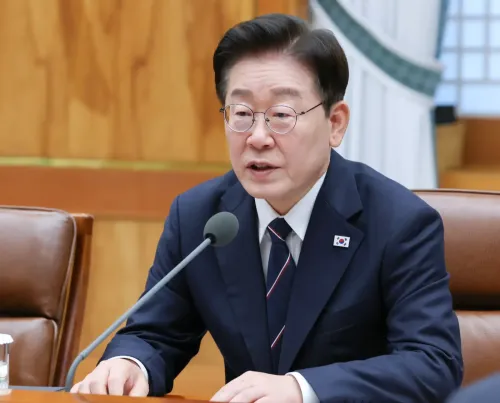
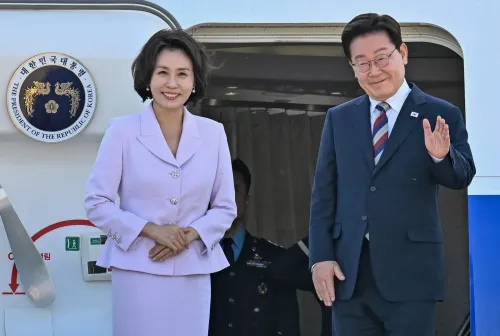
South Korean President Lee Jae Myung declared on 1 August 2025 that South Korea and Argentina are entering a new era of bilateral cooperation, anchored by a formal agreement on critical minerals — including lithium — and Argentine crude oil imports set to begin next year. The announcement came at the conclusion of Lee's three-nation South America tour, with Buenos Aires as its final stop.
Summit Outcomes and the MOU
President Lee held a bilateral summit with Argentine President Javier Milei earlier on Friday, during which the two leaders agreed to deepen cooperation across critical mineral supply chains and energy trade. A memorandum of understanding (MOU) was signed on the sidelines of the summit to formalise the arrangement.
Under the MOU, both governments will exchange policy information on critical minerals and related investment frameworks, promote corporate investment flows in both directions, and pursue joint projects spanning the entire lithium value chain — from exploration and mining through to processing — according to South Korean National Security Advisor Wi Sung-lac.
Argentine Crude Oil: A New Supply Line for Seoul
The two countries also agreed to ensure stable exports of Argentine crude oil to South Korea. Seoul plans to begin regular imports of Argentine crude next year, following a pilot shipment conducted earlier in 2025. The move is designed to reduce South Korea's heavy dependence on Middle Eastern oil and diversify its energy supply base toward South America, according to Advisor Wi.
This diversification is seen as strategically significant given persistent geopolitical uncertainties affecting traditional supply routes. South Korea currently sources the bulk of its crude from the Middle East, making alternative supply lines a long-term energy security priority.
Lee's Message to the Korean Community
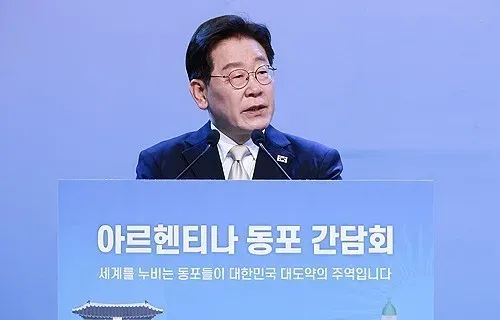
Speaking at a meeting with members of the South Korean community in Argentina, President Lee struck a confident tone. 'I am confident that a new era of cooperation between Argentina and South Korea will fully unfold,' he said.
He added: 'Amid the changing international order, from the artificial intelligence revolution to shifts in global supply chains, strategic bilateral cooperation is more important than ever.' Lee characterised the relationship as moving beyond intent into 'tangible results,' with collaboration now spanning critical minerals, energy, and infrastructure.
Strategic Context: Why This Partnership Matters Now
Argentina holds some of the world's largest lithium reserves, a resource central to electric vehicle batteries and the global clean energy transition. For South Korea — home to major battery manufacturers and EV component exporters — securing reliable lithium access is a top industrial priority, particularly as competition with China over critical mineral supply chains intensifies.
This is not an isolated bilateral overture. Lee's South America tour was explicitly framed around critical mineral supply chain security, reflecting a broader Seoul strategy to reduce dependency on single-source suppliers. The Argentina stop, as the tour's final leg, was arguably its most consequential.
What Comes Next
With the MOU now signed, both governments are expected to advance joint lithium projects and formalise the crude oil import schedule for 2026. Industry bodies and energy analysts will watch whether the partnership produces concrete supply agreements within the next fiscal cycle, or remains at the framework stage.
Point of View
Sitting atop the Lithium Triangle and eager for foreign investment under Milei's market-opening agenda, is a logical partner. What mainstream coverage underplays is the competitive subtext: China has long courted Argentine lithium, and South Korea's accelerated engagement is partly a counter-move. The real test will be whether the joint lithium projects advance to binding offtake agreements, or stall at the MOU stage as many such frameworks do.
NationPress
15 Sept 2026
Frequently Asked Questions
What did South Korea and Argentina agree to in Buenos Aires?
The two countries signed a memorandum of understanding on 1 August 2025 covering cooperation on critical minerals — primarily lithium — and stable exports of Argentine crude oil to South Korea beginning in 2026. The MOU covers the entire lithium value chain, from exploration to processing.
Why is South Korea seeking Argentine crude oil?
South Korea currently relies heavily on the Middle East for crude oil imports, and the Argentine deal is designed to diversify that supply base and reduce exposure to geopolitical risks in the region. A pilot shipment of Argentine crude was already conducted earlier in 2025.
What is the significance of the lithium agreement?
Argentina holds some of the world's largest lithium reserves, a critical input for electric vehicle batteries. South Korea's battery manufacturers and EV component exporters depend on secure lithium supply, making the agreement strategically important for Seoul's industrial competitiveness.
Who signed the MOU and what does it cover?
The MOU was signed on the sidelines of the bilateral summit between President Lee Jae Myung and President Javier Milei. It covers information sharing on critical mineral policies, bilateral corporate investment, and joint projects across the lithium value chain, according to National Security Advisor Wi Sung-lac.
What was the broader purpose of President Lee's South America tour?
President Lee's three-nation South America tour was aimed at strengthening cooperation on critical mineral supply chains and energy security. Buenos Aires was the final stop, and it yielded the most concrete outcomes of the tour in the form of the signed MOU.