Gwangju Air Base relocation: Muan County finalised, clearing path for ₩800 trillion semiconductor hub
Synopsis
South Korea's defence ministry has locked in Muan County as the new home for the Gwangju Air Base — a move that does double duty as a military reshuffle and the trigger for an ₩800 trillion semiconductor and AI megaproject backed by Samsung and SK Hynix. With local opposition, ballistic-shield gaps at temporary hangars, and US land-return talks still unresolved, the path to a 2032 completion is anything but straightforward.
Key Takeaways
Muan County formally designated on 29 August as the relocation site for the Gwangju Air Base and its 1st Fighter Wing .
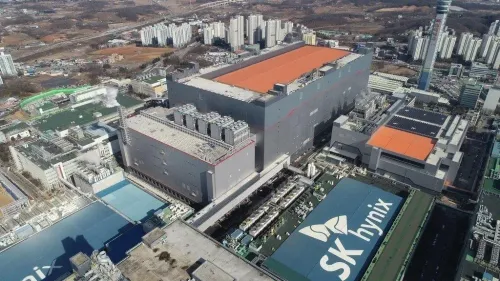
The decision enables South Korea to accelerate an ₩800 trillion (US$582.9 billion) semiconductor and AI cluster in Gwangju , anchored by Samsung Electronics and SK Hynix .
The government plans a ₩1 trillion-plus support package for Muan County to address local concerns over noise and safety.
The 1st Fighter Wing will temporarily disperse to bases in North Gyeongsang , North Chungcheong , and South Chungcheong by mid-2028 , per President Lee Jae Myung's directive.
Temporary hangars at Chungcheong bases reportedly lack ballistic missile shielding, raising defence-readiness concerns.
Negotiations with US Forces Korea (USFK) over land return under the Status of Forces Agreement remain ongoing.
South Korea's defence ministry selection committee on 29 August formally finalised Muan County in the country's southwestern region as the new site for the Gwangju Air Base, home to the 1st Fighter Wing. The decision unlocks the government's accelerated push to build an ₩800 trillion (approximately US$582.9 billion) semiconductor and artificial intelligence cluster in Gwangju and surrounding areas, a project anchored by Samsung Electronics and SK Hynix.
Key Developments in the Relocation Decision
The selection committee, led by the South Korean defence ministry and joined by municipal government officials, confirmed Muan County — previously named in April as the candidate site — as the permanent relocation destination. The ministry stated: 'The final designation of Muan County as the relocation site puts the Gwangju base relocation project into full motion, laying the groundwork for a swift process in cooperation with relevant agencies.'
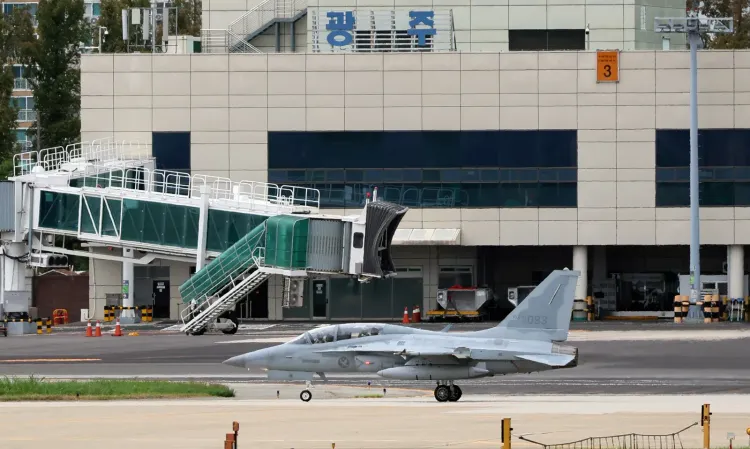
The Gwangju Air Base currently shares runways with a civilian airport. Commercial flight operations at that airport are expected to shift to Muan ahead of the military units, adding a civilian dimension to the transition timeline.
The Semiconductor Cluster at Stake
The relocation is not merely a military logistics exercise — it is the linchpin of one of South Korea's most ambitious economic projects. Freeing up the Gwangju land enables the government to fast-track a sprawling semiconductor and AI industrial zone, drawing in anchor investments from Samsung Electronics and SK Hynix. The cluster, valued at ₩800 trillion, is seen as central to South Korea's strategy to retain global leadership in chip manufacturing amid intensifying competition from the United States, Taiwan, and China.
Local Opposition and the Support Package
The decision has not been without friction. Residents of Muan County have raised concerns over noise pollution and safety risks associated with hosting a fighter wing, and have expressed scepticism over government support pledges. In response, the ministry announced plans to flesh out a '₩1 trillion-plus' comprehensive support package for the development of Muan County, with a joint commission involving municipal governments to be launched to detail incentives and other forms of assistance for affected communities.
Temporary Dispersal of the 1st Fighter Wing
Under the relocation plan, directed by President Lee Jae Myung to disperse unit operations to other bases by mid-2028, the 1st Fighter Wing will temporarily split across three bases in North Gyeongsang, North Chungcheong, and South Chungcheong provinces. Two of its training squadrons operate T-50 advanced jet trainers for fighter pilot instruction, while a third flies the indigenous TA-50 Block-2 light attack aircraft to guard the country's southwestern airspace.
Construction of the new permanent Muan base is targeted for completion by late 2032, meaning key Air Force training units face at least four years at temporary facilities. Concerns have emerged over the adequacy of these arrangements: a local media outlet reported on Friday that temporary hangars at the Chungcheong bases will lack ballistic missile shielding, citing an Air Force document submitted to an opposition lawmaker. Pilot and maintenance offices, according to the same report, will use modular structures without chemical and biological protection. The defence ministry said the temporary setup will 'maximise the use of existing infrastructure' and that new structures will be built only when necessary, adding: 'We are working with the Air Force to minimise disruptions to our defence readiness and pilot training.'
US Forces and Land Return Negotiations
The relocation plan carries an additional diplomatic layer. The Gwangju Air Base functions as a collocated operating base, from which the US Air Force can deploy assets in contingency scenarios. Land has been provided to US Forces Korea (USFK) under the bilateral Status of Forces Agreement (SOFA). The defence ministry confirmed it is working closely with USFK to ensure an early return of the land currently under US military use, a process that will require sustained bilateral consultation before the semiconductor cluster can fully take shape.
With the formal designation now in place, the government's next steps — launching the joint commission, finalising the support package, and concluding USFK land-return talks — will determine whether the ambitious 2032 completion target holds.
Point of View
But its real driver is economic: South Korea is betting ₩800 trillion on a semiconductor cluster that cannot break ground until the air base moves. That sequencing creates a structural vulnerability — military readiness is being subordinated to industrial policy timelines. The reported absence of ballistic missile shielding at temporary hangars is not a minor footnote; it is a material gap in the defence of a country that lives under a persistent missile threat from the north. Meanwhile, the USFK land-return dimension adds a layer of alliance politics that Seoul cannot resolve unilaterally. If those negotiations stall, the entire 2032 timeline — and with it the semiconductor cluster's launch date — comes under pressure.
NationPress
29 Aug 2026
Frequently Asked Questions
Why is the Gwangju Air Base being relocated to Muan County?
The relocation frees up land in Gwangju city to build an ₩800 trillion semiconductor and AI industrial cluster backed by Samsung Electronics and SK Hynix. South Korea's defence ministry finalised Muan County as the new base site on 29 August, enabling the government to accelerate this flagship economic project.
What is the ₩800 trillion semiconductor cluster in Gwangju?
It is a large-scale semiconductor and artificial intelligence industrial zone planned for Gwangju and surrounding regions, valued at approximately ₩800 trillion (US$582.9 billion). Samsung Electronics and SK Hynix are among the anchor investors, and the project is central to South Korea's strategy to maintain global chip manufacturing leadership.
When will the Gwangju Air Base relocation be completed?
The South Korean government aims to complete construction of the new Muan air base by late 2032. In the interim, the 1st Fighter Wing will operate from temporary facilities across three provinces from mid-2028, meaning key units face at least four years at dispersed locations.
What are the concerns raised by Muan County residents?
Residents have objected to noise pollution and safety risks from hosting a fighter wing, and have expressed scepticism about government support promises. The ministry has announced a ₩1 trillion-plus comprehensive support package for Muan's development, with a joint commission to be formed to detail incentives.
How does the US military factor into the relocation plan?
The Gwangju Air Base is a collocated operating base from which the US Air Force can deploy assets under contingency plans, with land provided to US Forces Korea under the bilateral Status of Forces Agreement. The South Korean defence ministry is negotiating with USFK for an early return of that land, a process required before the relocation can be fully completed.