Did Two Lawmakers from South Korea's Ruling Party Just Lose Their Seats Over Election Law Violations?
Synopsis
In a significant political development, two members of South Korea's ruling party lost their parliamentary seats due to election law violations. This ruling highlights the serious implications of misconduct in political campaigns, emphasizing the need for integrity in governance.
Key Takeaways
Two lawmakers stripped of seats due to election law violations.
Supreme Court upholds fines against the lawmakers.
Election misconduct has serious implications for political integrity .
Campaign managers can affect election outcomes and face penalties .
Transparency in governance is critical for public trust .
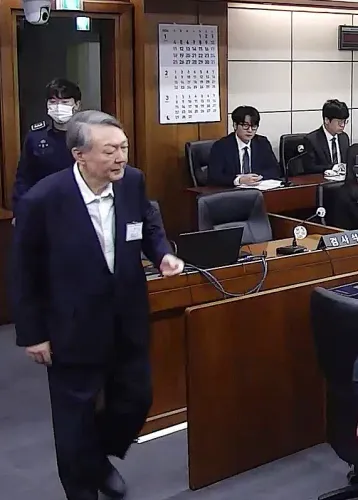
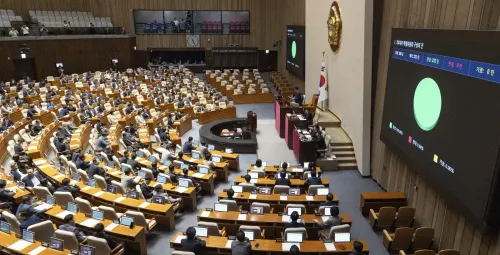
Seoul, Jan 8 (NationPress) Two lawmakers from South Korea's ruling Democratic Party (DP) were stripped of their parliamentary seats on Thursday after the Supreme Court upheld previous rulings related to election law violations.
The top court confirmed a fine of 7 million won ($4,800) against Representative Yi Byeong-jin for underreporting his assets during the April 2024 parliamentary elections, in which he was elected to office.
In another ruling, the court upheld the sentence of a suspended prison term for Representative Shin Yeong-dae's former campaign manager, who was found guilty of manipulating a party opinion poll ahead of the 2024 elections, as reported by Yonhap News Agency.
According to the law, a lawmaker loses their parliamentary position upon conviction for violating the Public Official Election Act and receiving a prison term or a fine of 1 million won or greater.
If a campaign manager is convicted and sentenced to a prison term or fined 3 million won or more, the lawmaker's election is also rendered invalid.
Yi was indicted in October 2024 for failing to declare several assets during his campaign, including stocks worth approximately 70 million won and a property in Asan used as loan collateral.
He was also accused of not disclosing his name in a joint land purchase in 2018.
The Supreme Court also upheld a separate fine of 5 million won against Yi for breaching the Act on Real Name Financial Transactions and Confidentiality, which mandates the use of real names in financial dealings.
Meanwhile, the court confirmed a one-year prison sentence, suspended for two years, along with 120 hours of community service for Kang, the former campaign manager of Shin, resulting in the lawmaker losing his seat.
Kang was indicted for allegedly providing 15 million won and 100 mobile phones to a former leader of a sports association for the disabled in Gunsan in December 2023 to manipulate responses in a DP primary opinion poll.
Investigators found that the phones were utilized to show support for Shin in the opinion poll.
Shin narrowly secured a constituency nomination in the primary by less than a 1% margin over his competitor in March 2024 and subsequently won a parliamentary seat in the general elections the following month.
Point of View
This incident serves as a reminder of the crucial need for transparency and accountability among elected officials. Upholding the integrity of electoral processes is vital for maintaining public trust in governance.
NationPress
19 Sept 2026
Frequently Asked Questions
What were the charges against Yi Byeong-jin?
Yi Byeong-jin was charged with underreporting his assets during the parliamentary elections and was fined 7 million won.
What did the Supreme Court decide regarding Shin Yeong-dae's campaign manager?
The Supreme Court upheld a suspended prison term for Shin's former campaign manager for distorting a party opinion poll.
What are the consequences of violating the Public Official Election Act?
Lawmakers convicted of violating this act can lose their parliamentary seats and face significant fines or prison sentences.
How did the election misconduct affect Shin's candidacy?
Despite the misconduct, Shin won a constituency nomination by a narrow margin and subsequently secured a seat in the general elections.
What does this ruling mean for the future of South Korean politics?
This ruling highlights the importance of accountability and transparency in political campaigns, which may lead to stricter enforcement of election laws.