South Korean Government Revamps Investigation Agency Plans Amid Criticism
Synopsis
In a significant move, the South Korean government has restructured its plans for two new agencies meant to replace the prosecution service, responding to public backlash. The revised framework aims to address concerns about political bias in investigations.
Key Takeaways
Two new agencies set to replace the prosecution service.
Revised focus on six major crime categories .
Organizational structure simplified with uniform investigator titles .
New provisions for prosecutor discipline introduced.
Response to public criticism reflects commitment to justice reform.
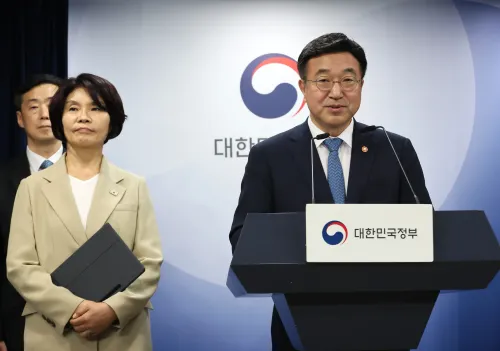
Seoul, February 24 (NationPress) - In response to widespread criticism, the South Korean government has made significant changes to the proposed legislation for two new entities that will replace the prosecution service. This announcement was made by a task force on Tuesday.
The upcoming serious crimes investigation agency and indictment agency are set to launch in October, as part of a government restructuring initiative that gained approval from the National Assembly last September, as reported by Yonhap News Agency.
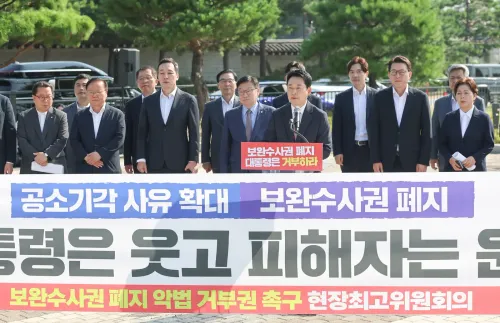
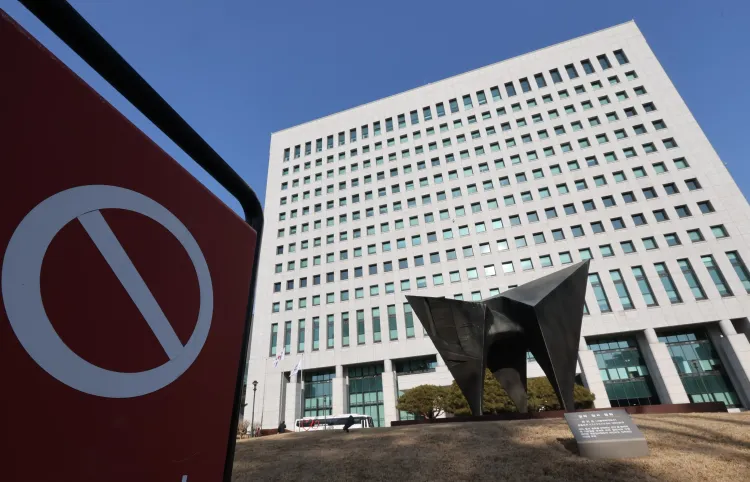
These two new agencies are intended to take over the responsibilities of the prosecution office, with the investigation agency focusing on investigative powers, while the indictment agency will handle prosecution functions. This reform is part of President Lee Jae Myung's administration's initiative to address long-standing concerns over the prosecution's perceived misuse of its powers for politically motivated investigations.
Initially, the drafting of the bills included nine categories of crimes for investigation. However, the revised proposal now limits this to six categories, excluding offenses related to public officials, elections, and major disasters, due to concerns about potential overlap with other agencies' jurisdictions, as noted by the prosecution reform task force operating under the Prime Minister's Office.
The updated legislation specifies that the new agency will investigate issues related to corruption, economic crimes, the defense sector, drug-related offenses, cybercrime, and insurgencies or foreign threats.
Additionally, the organizational structure has been simplified, eliminating the distinction between prosecutors and general investigators from the original proposal. In the new framework, all investigators will be categorized as such, with rankings from Grade 1 to Grade 9 based on their skills and responsibilities.
Importantly, the title of the agency's leader will still be referred to as prosecutor general.
Moreover, the revisions to the indictment agency's bill now include provisions for the dismissal of a prosecutor as a disciplinary measure, which was not previously possible unless an impeachment or prison sentence occurred. It also prohibits any discriminatory treatment against prosecutors who question the fairness of orders from superiors.
The task force has circulated legislative notices regarding the revised bills, which will remain open for feedback until Thursday.
Point of View
This reform initiative demonstrates the South Korean government's responsiveness to public criticism regarding the prosecution's perceived overreach. The adjustments reflect a commitment to enhancing the integrity of the justice system, aligning with democratic principles and public trust.
NationPress
19 Sept 2026
Frequently Asked Questions
What are the two new agencies being established?
The two new agencies are the serious crimes investigation agency and the indictment agency, set to replace the current prosecution service.
When will these agencies be established?
The agencies are scheduled to be established in October.
What types of crimes will the new investigation agency address?
The investigation agency will focus on crimes related to corruption, economic offenses, the defense industry, drug-related issues, cyber activities, and insurrections or foreign aggression.
What changes have been made to the organizational structure?
The revised structure eliminates the distinction between prosecutors and general investigators, categorizing all investigators under a single title with a ranking system.
How will disciplinary actions against prosecutors change?
The revised bill allows for the dismissal of a prosecutor as a disciplinary action, which was not possible before without impeachment or imprisonment.