Is South Korea Considering Joint Military Drills to Leverage Inter-Korean Talks?
Synopsis
In a significant statement, South Korea's National Security Advisor Wi Sung-lac confirmed that the country does not intend to adjust its joint military drills with the U.S. to facilitate stalled talks with North Korea. As tensions remain, the future of inter-Korean dialogue hangs in the balance.
Key Takeaways
Seoul is not modifying joint military drills with the U.S. .
The goal is to reignite stalled negotiations with North Korea .
Military exercises are viewed as defensive by the allies.
President Lee Jae Myung emphasized evolving security conditions for drills.
Dialogue proposals remain unanswered by Pyongyang .
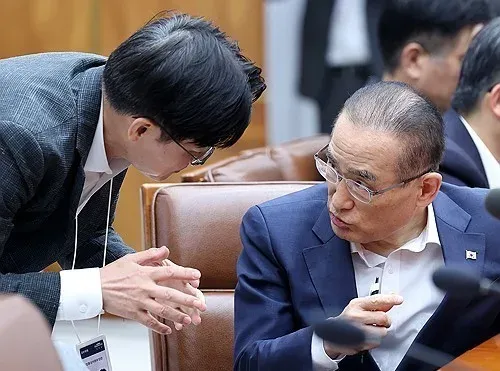
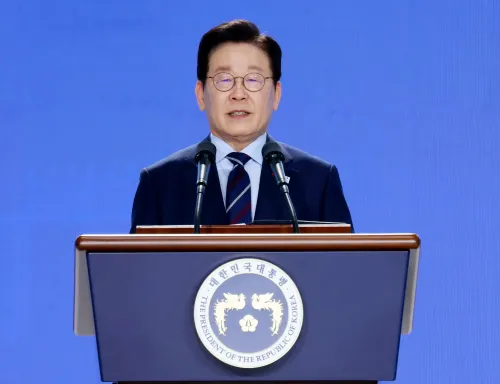
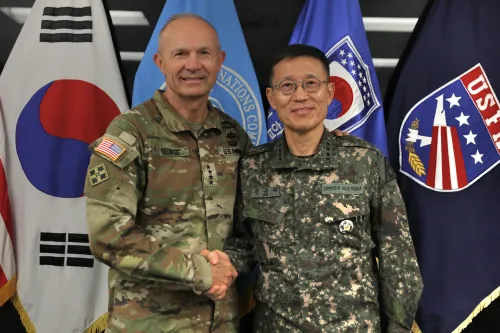
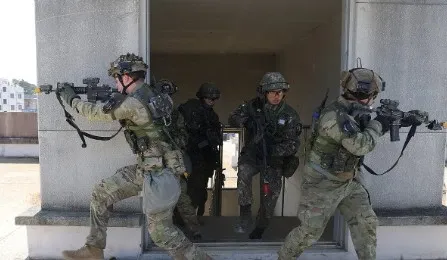
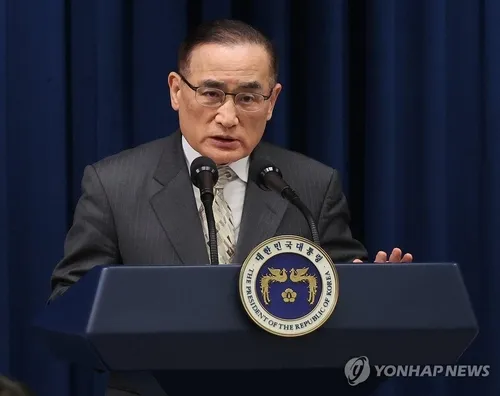
Seoul, December 7 (NationPress) - South Korea is not planning to modify its joint military exercises with the United States as part of efforts to reignite stalled negotiations with North Korea, stated National Security Advisor Wi Sung-lac on Sunday.
Wi made these comments when questioned if Seoul would reconsider the routine drills with Washington to facilitate the revival of inter-Korean discussions, as Pyongyang has dismissed Seoul's overtures during the first six months of South Korean President Lee Jae Myung's administration.
"If we are to resume dialogue, we need to assess the options available to us. While there are numerous possibilities, we are not specifically contemplating utilizing the Korea-U.S. joint exercises as leverage," Wi remarked during a press briefing, according to the Yonhap News Agency.
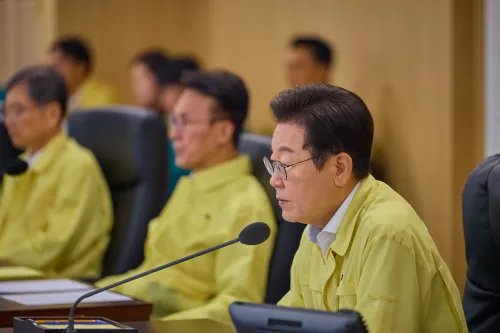
He acknowledged that advancements in inter-Korean relations have been minimal, promising ongoing efforts to reduce tensions on the Korean Peninsula and rekindle dialogue with Pyongyang.
Last month, President Lee indicated that while a stable peace regime where large-scale drills are unnecessary would be ideal in the long run, decisions regarding exercises must be based on evolving security conditions. He emphasized that it is too early to make firm conclusions on this matter, labeling it as "the most sensitive" issue for North Korea.
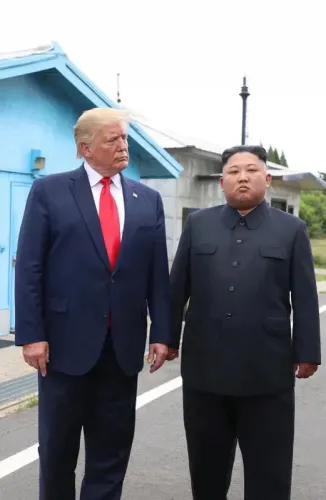
For a long time, Pyongyang has condemned the Seoul-Washington drills as "war rehearsals," while the allies assert they are defensive in nature.
President Lee has reiterated his call for dialogue after Seoul proposed military discussions to define the Military Demarcation Line to avert unintended confrontations near the border, although Pyongyang has yet to respond.
Wi later informed reporters that the omission of North Korea from Washington's recent National Security Strategy (NSS) does not seem to indicate U.S. indifference towards North Korean issues; rather, it may reflect a focus on an "America First" agenda.
"There seems to be no reason to assume the U.S. is disinterested in addressing North Korea's nuclear challenges or in rekindling talks with the North," Wi stated, adding that these matters may be addressed in lower-level documents moving forward.
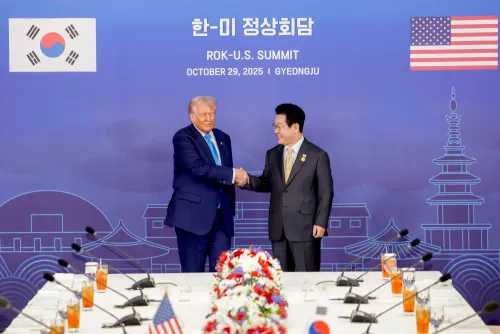
Last Friday, the administration of U.S. President Donald Trump released a document outlining its foreign policy, defense, and economic security stance without mentioning North Korea, marking a departure from previous documents.
Point of View
This development underscores South Korea's commitment to maintaining its defense posture alongside the United States, even amidst ongoing tensions with North Korea. The decision not to use military drills as leverage reflects a strategic stance aimed at fostering stability while being open to dialogue.
NationPress
23 Sept 2026
Frequently Asked Questions
What did South Korea's National Security Advisor say about military drills?
Wi Sung-lac stated that South Korea is not considering adjusting its joint military drills with the United States to help resume talks with North Korea.
What is North Korea's stance on the South Korea-U.S. military drills?
North Korea has long criticized the joint exercises as 'war rehearsals,' while South Korea and the U.S. maintain they are defensive.
What is the current state of inter-Korean relations?
Inter-Korean relations have seen limited progress, with South Korea pledging efforts to ease tensions and resume dialogue with Pyongyang.