South Korea's new Defence Minister warns North Korea to stop DMZ border-hardening after blast
Synopsis
A suspected North Korean landmine injured three South Korean soldiers inside the DMZ on 21 September — and within 24 hours, Seoul's newly inaugurated Defence Minister Kang Shin-chul publicly warned Pyongyang to stop its border-fortification drive, explicitly rejecting any notion that South Korea walks on eggshells. The blast, which occurred as troops cleared a path for a UN Command inspection, is the sharpest flashpoint on the peninsula in months.
Key Takeaways
A suspected landmine explosion inside the DMZ on 21 September injured three South Korean military officers , including an Army battalion commander.
New Defence Minister Kang Shin-chul demanded on 22 September that North Korea cease its border-fortification and mine-laying activities.
The Joint Chiefs of Staff confirmed the soldiers were clearing a route for a UN Command field inspection to investigate suspected North Korean mine-planting near the MDL .
An investigation is ongoing; authorities have not yet confirmed whether the blast site coincides with the area where North Korean mine-laying is suspected.
Kang raised the prospect of a visit to Washington ahead of a ministerial defence dialogue expected in early November , emphasising 'mutual trust' on the OPCON transfer.
Kang was nominated by President Lee Jae Myung on 30 August and is a retired four-star Army general.
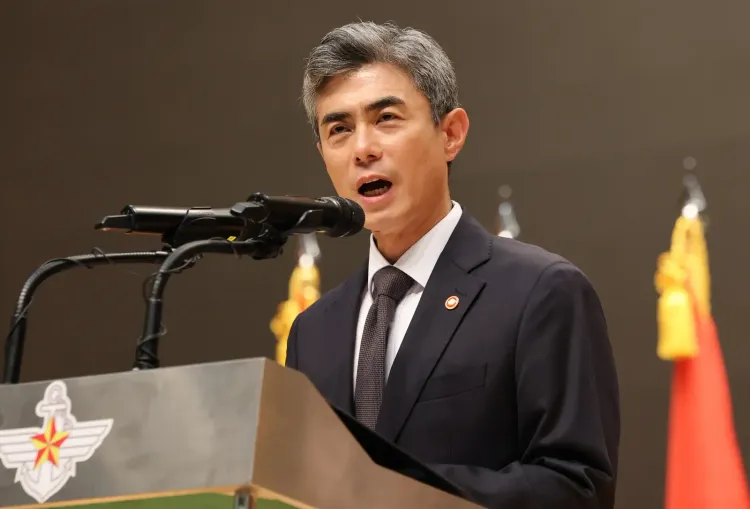
South Korea's newly inaugurated Defence Minister Kang Shin-chul on Tuesday, 22 September publicly urged North Korea to halt its border-fortification activities along the inter-Korean frontier, warning that Seoul would not soften its stance toward Pyongyang. His remarks came a day after a suspected landmine explosion south of the Military Demarcation Line (MDL) on the western inter-Korean border injured three South Korean military officers, deepening tensions in the Demilitarised Zone (DMZ).
The DMZ Explosion and What We Know
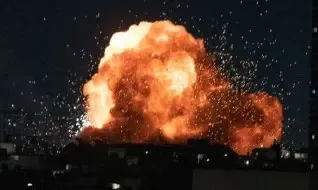
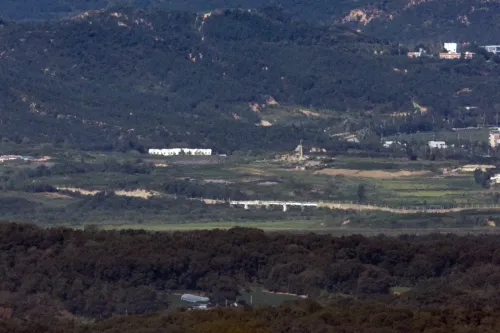
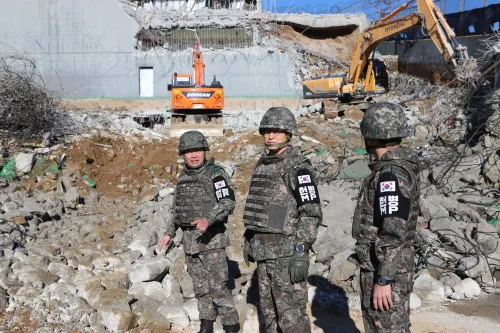
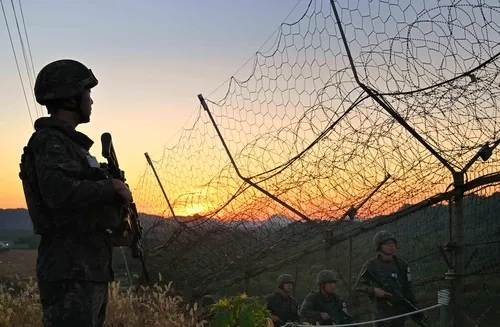
The blast occurred on Monday, 21 September, inside the DMZ — the buffer zone that straddles the MDL separating the two Koreas. The explosion severely injured the commander of an Army battalion unit; a second officer sustained a leg fracture, while a third was injured less seriously. The Joint Chiefs of Staff (JCS) said on Tuesday that the three officers had been clearing a path for an upcoming UN Command (UNC) field inspection to examine sites on the southern side of the DMZ where North Korean troops are suspected of planting mines, potentially in violation of the armistice agreement.
An investigation is under way to determine the exact cause, but speculation is growing that a landmine illegally planted by the North on the South Korean side of the DMZ may have been the trigger. Minister Kang, however, cautioned that investigators had not yet confirmed whether the mine-blast site, the patrol route, and the area where North Korea is suspected of illicitly laying mines all coincide.
'Frankly, what is at issue is whether the minefield area you are referring to, the patrol route our personnel had entered and the exact site of the explosion all match up,' Kang told reporters. 'The problem is that we cannot confirm this at this point. That is precisely what the investigation must determine.'
Minister Kang's Strong Warning to Pyongyang
Speaking at a press availability following his inauguration, Kang was unequivocal about Seoul's posture. 'North Korea must cease its border fortification. Of course, we need to speak out,' he said. Pressed on whether there are secondary consequences flowing from the North's fence-and-mine activities, Kang acknowledged, 'There are secondary effects that stem from North Korea's border-hardening, and this explosion could be one of them.'
Kang also pushed back against the perception that Seoul handles Pyongyang with kid gloves. 'You keep bringing up that we walk on eggshells when it comes to North Korea, but we do not,' he said, adding that during his confirmation hearing he had explicitly declared the North's military to be South Korea's enemy. He further ordered the military to focus 'relentlessly' on tough training to 'win in competition' and called for a 'firm response' to any enemy provocation, according to the defence ministry.
Kang also noted the difficulty of visual confirmation at the blast site, citing challenging terrain within the buffer zone. 'As of now, nothing is clearly visible,' he said, adding that the military has not yet obtained clear footage of the explosion site.
Background: North Korea's Border Fortification Campaign
North Korea has in recent months accelerated a campaign to reinforce its side of the inter-Korean border — erecting barriers, laying additional fencing, and reportedly planting landmines in areas close to or even south of the MDL. This pattern has drawn repeated condemnation from Seoul and scrutiny from the UN Command, which oversees armistice-related matters. The Monday blast is the latest and most consequential incident linked to this campaign, and is the kind of escalatory incident that has historically heightened military alert levels on both sides of the peninsula.
South Korea-US Alliance and OPCON Transition
Beyond the immediate crisis, Kang — a retired four-star Army general who was nominated by President Lee Jae Myung on 30 August — touched on the broader alliance architecture with Washington. He reiterated the importance of 'mutual trust' in the ongoing transition of wartime operational control (OPCON) from the United States to South Korea, describing the technical conditions for OPCON transfer as 'science' that may already have been met, while noting that political consultations — the 'art' — remain essential. Kang, a former deputy commander of the South Korea-US Combined Forces Command (CFC), indicated he may travel to Washington even before the ministerial defence dialogue tentatively scheduled for early November.
He began his first day as minister by visiting Seoul National Cemetery to pay respects to fallen soldiers, before presiding over a meeting with the chiefs of the armed forces. As the investigation into the DMZ blast continues, Kang ordered the military to keep 'all possibilities open' and stand ready to act on whatever the findings reveal.
Point of View
Making it politically impossible for Seoul to downplay. Kang's blunt language on day one — calling the North's military 'the enemy' and pledging no eggshell diplomacy — sets a harder tone than his predecessors, but the gap between tough rhetoric and actionable response remains wide so long as the investigation cannot even confirm where the blast occurred. The OPCON transfer subtext is also telling: Kang's emphasis on 'trust' over 'conditions' suggests Seoul is managing Washington's expectations carefully as the alliance navigates a new phase.
NationPress
22 Sept 2026
Frequently Asked Questions
What happened at the DMZ on 21 September 2026?
A suspected landmine explosion inside the Demilitarised Zone (DMZ) on 21 September injured three South Korean military officers, including the commander of an Army battalion unit, who was severely hurt. A second officer suffered a leg fracture; a third sustained lighter injuries. The soldiers were clearing a path for a UN Command field inspection of sites where North Korean troops are suspected of illegally planting mines.
Who is South Korea's new Defence Minister Kang Shin-chul?
Kang Shin-chul is a retired four-star Army general nominated by President Lee Jae Myung on 30 August 2026. He previously served as deputy commander of the South Korea-US Combined Forces Command (CFC) and formally assumed office on 22 September 2026.
Has North Korea been confirmed as responsible for the explosion?
Not yet. An investigation is under way, but authorities have not confirmed whether the blast site, the patrol route, and the area where North Korea is suspected of laying mines all correspond. Minister Kang said investigators have not obtained clear footage of the explosion site due to difficult terrain in the buffer zone.
What is North Korea's border-hardening campaign?
North Korea has in recent months accelerated efforts to reinforce its side of the inter-Korean border, reportedly including erecting barriers, extending fencing, and planting landmines in areas close to or across the Military Demarcation Line — the latter potentially in violation of the armistice agreement that ended the Korean War in 1953.
What is the OPCON transfer and why did Kang raise it?
Wartime operational control (OPCON) over South Korean forces currently rests with the US-led Combined Forces Command; South Korea and the United States have long been negotiating its transfer to Seoul. Kang described the technical requirements as potentially already met but stressed that 'mutual trust' — a political dimension — is the more critical factor, signalling he plans early Washington consultations.