South Korea's Cabinet Greenlights Constitutional Amendments
Synopsis
In a significant move, South Korea's Cabinet has approved a motion to amend parts of the Constitution, allowing for a National Assembly vote. If passed, the amendment will be subjected to a national referendum, potentially aligning with local elections in June.
Key Takeaways
Cabinet Approval: South Korea's Cabinet has approved a motion for constitutional amendments.
Bipartisan Proposal: The amendment was proposed by lawmakers from the ruling party and minor parties.
Public Notice: A public notice will be issued for 20 days for citizen review.
National Assembly Vote: A vote must occur within 60 days, requiring a two-thirds majority.
Historical Recognition: The proposal aims to enshrine key pro-democracy movements in the Constitution.
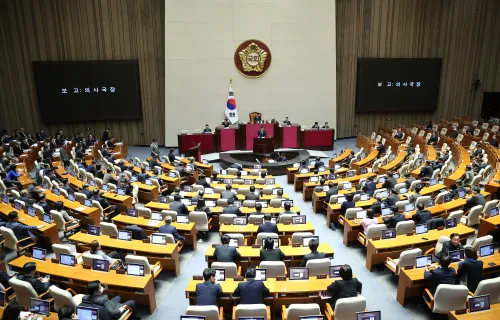
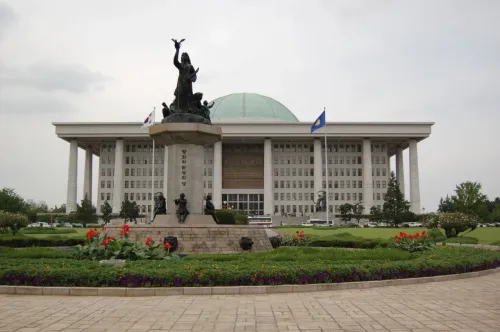
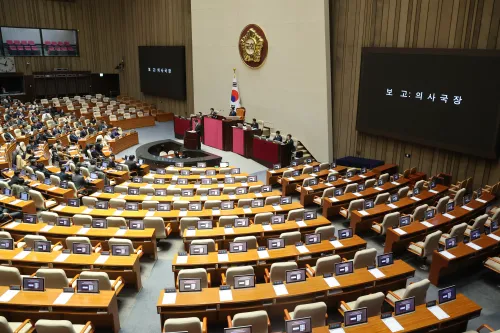
Seoul, April 6 (NationPress) - The Cabinet of South Korea has given its approval on a motion to modify certain texts within the Constitution, paving the way for the National Assembly to deliberate on this proposed amendment. Should lawmakers endorse it, the amendment will subsequently be presented to the public in a national referendum.
This initiative follows a joint proposal made on Friday by 187 legislators from the ruling Democratic Party, along with five smaller parties, aiming to strengthen the criteria for declaring martial law and to embed the essence of historical pro-democracy movements into the Constitution. Notably, the main opposition group, the People Power Party, has opted not to participate in this initiative, as reported by Yonhap news agency.
With the Cabinet's endorsement, President Lee Jae Myung is obligated to issue a public notice detailing the proposed amendment for a minimum of 20 days, allowing citizens ample time to review the changes.
The National Assembly must then cast its vote on the bill within 60 days following the public notice. To pass, the bill requires a two-thirds majority vote.
If the bill is ratified between May 4 and 10, there may be an opportunity to hold a national referendum in conjunction with the local elections scheduled for June 3. For the amendment to be finalized, it must achieve both a majority turnout and majority approval.
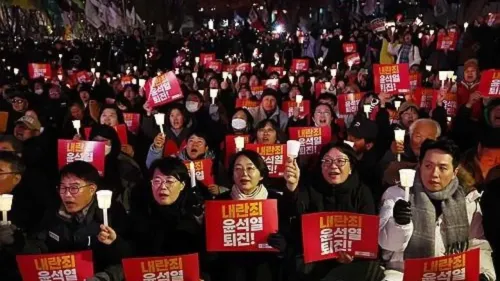
The proposal seeks to include mentions of pivotal events like the 1980 Gwangju pro-democracy uprising and the 1979 Busan-Masan protests in the Constitution's preamble. Currently, it only acknowledges the legacy of the April 19 revolution in 1960, which led to the ousting of South Korea's inaugural president, Rhee Syng-man, due to election fraud.
Additionally, the bill intends to impose stricter regulations regarding the declaration of martial law, mandating that the president obtain immediate parliamentary consent. If the National Assembly rejects the declaration, or fails to approve it within 48 hours, the martial law will be automatically revoked.
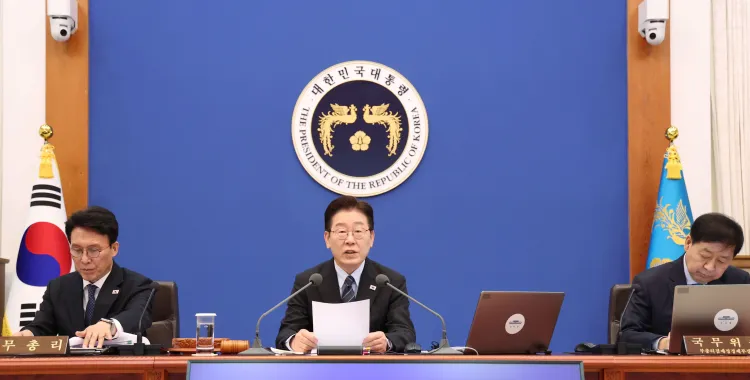
During the Cabinet meeting, President Lee emphasized the necessity for bipartisan support for constitutional revision to better reflect the societal changes that have transpired since the last amendment in 1987.
"There is a widespread agreement on the importance of updating the Constitution to accurately mirror societal transformations nearly four decades after its last amendment," he stated. "Bipartisan collaboration is essential to effectively advance these constitutional changes."
He expressed optimism regarding the possibility of holding the referendum in alignment with the local elections, noting that areas of consensus among political factions suggest that constitutional amendments can be pursued in tandem with the forthcoming local elections.
Point of View
It is crucial to recognize the significance of South Korea's proposed constitutional amendments. These changes aim to reflect historical pro-democracy movements and enhance democratic processes, demonstrating the government's responsiveness to societal evolution. The bipartisan effort, although not fully inclusive, signals a noteworthy step towards more robust democratic governance.
NationPress
16 Sept 2026
Frequently Asked Questions
What does the proposed amendment aim to achieve?
The proposed amendment seeks to tighten martial law requirements and incorporate historical pro-democracy movements into the Constitution.
Who proposed the amendment?
The amendment was proposed by 187 lawmakers from the ruling Democratic Party and five smaller parties.
What is the next step after the Cabinet's approval?
The National Assembly must vote on the bill within 60 days of the public notice issued by the president.
When could a national referendum take place?
If approved, a national referendum could occur during the local elections on June 3.
What historical events will be recognized in the Constitution?
The amendment aims to include the 1980 Gwangju uprising and the 1979 Busan-Masan protests in the Constitution's preamble.