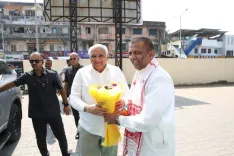
Lalan Singh pledges full Central support for Sikkim animal husbandry
Synopsis
Union Minister Lalan Singh on 3 November 2026 hailed Sikkim's animal husbandry achievements, announced a fresh Central target for the sector, and committed full ministry and NDDB support to the Sikkim government — reinforcing the Northeast livestock development push.
Key Takeaways
Union Minister Rajiv Ranjan Singh (Lalan Singh) publicly praised Sikkim's progress in animal husbandry on 3 November 2026 .
The Central government has set a new forward-looking target for Sikkim's livestock sector; specific details are yet to be officially disclosed.
The ministry is 'committed to providing every possible assistance' to the Sikkim government — the minister's own words.
The National Dairy Development Board (NDDB) , established in 1965 , has been tagged as a key partner, signalling technical and cooperative-development support.
Central livestock schemes, including the Rashtriya Gokul Mission (2014) and the National Programme for Dairy Development , provide the policy framework for this engagement.
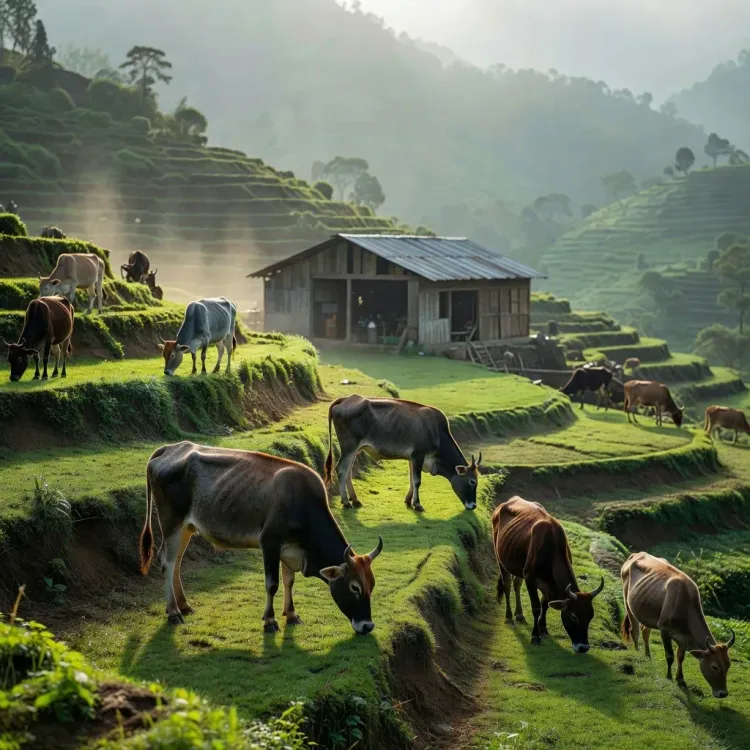
Sikkim's organic-farming-focused, hill-terrain economy makes livestock a high-impact rural-income lever, amplifying the significance of Central attention.
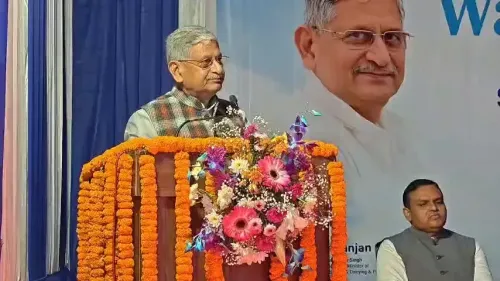
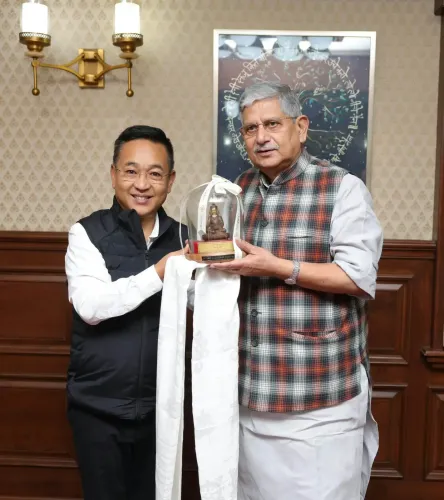
Sikkim's livestock farmers are squarely in the sights of New Delhi's rural-development machinery. Union Minister for Animal Husbandry and Dairying Rajiv Ranjan Singh, popularly known as Lalan Singh, on Tuesday, 3 November 2026, publicly praised the northeastern state's progress in animal husbandry and announced that a fresh forward-looking target has been set — with the Central government committed to backing the Sikkim administration every step of the way.
Posting in Hindi, the minister said: 'Sikkim mein pashupaalan ke kshetra mein kaafi achha kaam hua hai. Aane waale samay ke liye hamne ek lakshya nirdhaarit kiya hai.' ('Quite good work has been done in the field of animal husbandry in Sikkim. We have set a target for the time ahead.') He added that the ministry remains 'committed to providing every possible assistance to the Sikkim government,' tagging the Department of Animal Husbandry and Dairying (DAHD), the Sikkim government, and the National Dairy Development Board (NDDB).
Why Sikkim fits the Northeast livestock push
Sikkim — India's least populous state and a pioneer in organic farming — relies heavily on small-scale livestock rearing for rural incomes in its hill communities. The state's agro-ecological profile makes cattle breed improvement and dairy cooperative strengthening especially high-value interventions. Central ministries have consistently channelled support to northeastern states under the cooperative-federalism framework, with NDDB providing technical muscle and central funds flowing through state governments.
Two long-running schemes form the backbone of this effort. The Rashtriya Gokul Mission, launched in 2014, targets indigenous-breed improvement and higher milk yields through state-level implementation. The National Programme for Dairy Development, operational in successive plan cycles since the 1970s, funds cold-chain, processing, and cooperative infrastructure — including in the Northeast, where terrain makes supply-chain investment particularly consequential.
NDDB's role in translating Central intent into Sikkim dairies
The National Dairy Development Board, the statutory cooperative body established in 1965, is the implementation anchor whenever the Centre deepens dairy work in a state. Its tag in the minister's post signals that NDDB may be a key technical partner in whatever joint roadmap is being drawn up for Sikkim. Historically, NDDB involvement has meant breed-improvement camps, milk-union capacity building, and supply-chain linkages that lift farm-gate prices for small holders.
The specific targets the minister referenced have not yet been publicly detailed, and any formal announcement is expected through upcoming ministry-state review meetings. What is already clear is the political signal: a senior NDA coalition partner's minister has placed Sikkim's animal husbandry sector on the Central government's active agenda.
For the hill farmers of Sikkim, the question is no longer whether the Centre is watching — it is how quickly targeted funds and technical expertise will translate into fatter dairy cooperatives and stronger cattle bloodlines on the ground.
Point of View
Singh's active stewardship of Northeast agricultural portfolios signals both governance intent and political relationship management. The announcement of a fresh 'target' without published specifics is a common pre-review-meeting choreography: it builds stakeholder expectation ahead of a formal announcement and puts the state on notice to align its asks with Central priorities. Watchers should track whether a formal Memorandum of Understanding or a dedicated package for Sikkim dairy cooperatives follows from upcoming ministry-state meetings.
NationPress
3 Nov 2026
Frequently Asked Questions
What did Lalan Singh say about Sikkim animal husbandry?
Union Minister Lalan Singh on 3 November 2026 praised Sikkim's animal husbandry progress, said a new Central target has been set for the sector, and committed the ministry to providing every possible support to the Sikkim government, with NDDB named as a partner.
What is NDDB's role in Sikkim dairy development?
The National Dairy Development Board, established in 1965, provides technical assistance, breed-improvement support, and cooperative-strengthening services. Its tagging by the minister signals it is likely to be a key implementation partner for any new Sikkim livestock initiative.
Which Central schemes cover animal husbandry in Sikkim?
The Rashtriya Gokul Mission, launched in 2014, focuses on indigenous cattle breed improvement. The National Programme for Dairy Development, running since the 1970s, funds dairy infrastructure in states including Sikkim and other northeastern states.
Why is animal husbandry important for Sikkim's economy?
Sikkim is India's least populous state with a hill-terrain, organic-farming-oriented economy where small-scale livestock rearing is a major source of rural livelihood. Stronger cattle breeds and dairy cooperatives directly raise farm-gate incomes for hill farmers.
What targets has the Central government set for Sikkim's livestock sector?
The specific targets have not yet been publicly detailed. Minister Lalan Singh indicated they exist and will guide upcoming work, with formal details expected through ministry-Sikkim government review meetings.