How is South Korea's Defence Chief Reinforcing Military Loyalty to Constitutional Values?
Synopsis
In a critical meeting, South Korea's Defence Minister Ahn Gyu-back emphasizes the military’s role in upholding constitutional values one year after a failed martial law bid. With ongoing tensions from North Korea and the US-China rivalry, Ahn advocates for a reformed military structure focused on the people and national defense.
Key Takeaways
Ahn Gyu-back emphasizes military adherence to constitutional principles.
Military restructuring is planned for 2040 to meet modern challenges.
Focus on artificial intelligence and unmanned technology for surveillance.
Reclaiming wartime operational control from the US is a priority.
Upcoming year is crucial for transition initiatives.
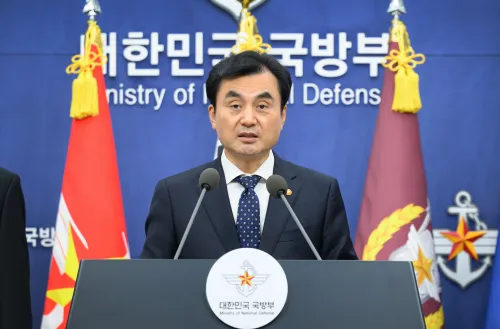
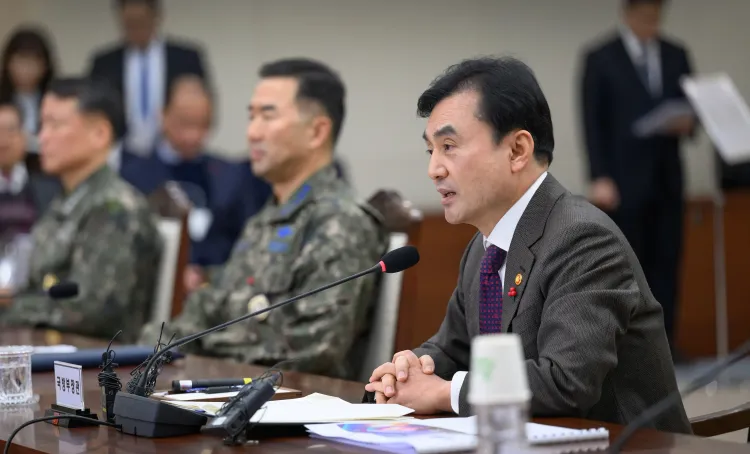
Seoul, Dec 3 (NationPress) South Korea's Defence Minister Ahn Gyu-back chaired a significant meeting with top military leaders on Wednesday, emphasizing the military's responsibility to uphold constitutional values. This meeting marks one year since the unsuccessful attempt at martial law, which implicated the former defence minister and numerous senior military officials.
The gathering followed Ahn's recent apology regarding the military's role in the brief martial law attempt initiated by former President Yoon Suk Yeol on December 3 last year. During this period, military troops were deployed to the National Assembly, obstructing lawmakers from voting against the decree.
Ahn remarked, "The conduct of general officers involved in the insurrection, who failed to recognize an unconstitutional directive and merely claimed they were following orders, has led to a negative public perception of the military. This should weigh heavily on our armed forces." This meeting included around 150 influential military personnel, as reported by Yonhap News Agency.
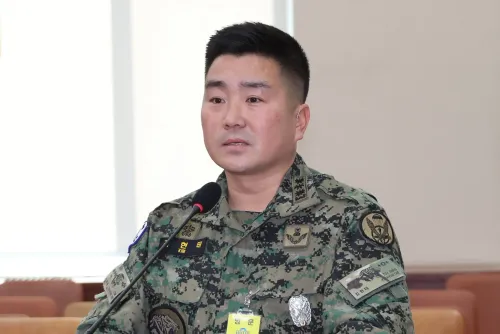
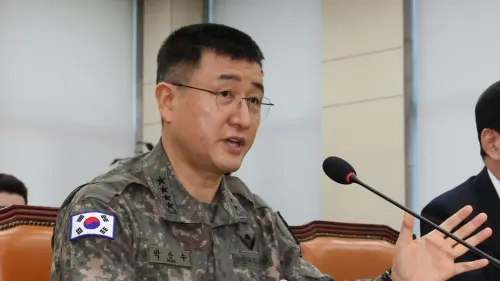
Top officials appointed by Yoon, such as former Army Chief of Staff Gen. Park An-su, who led the martial law operation, and former head of the Defence Counterintelligence Command, Lt. Gen. Yeo In-hyung, are currently facing trial for their pivotal roles in the insurrection.
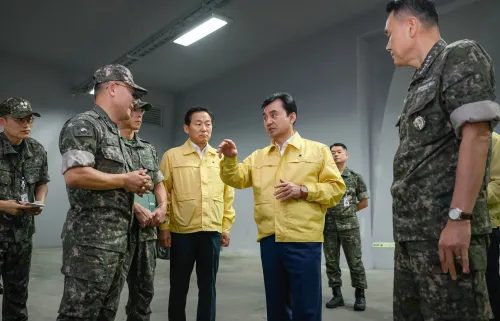
Since his appointment as the first civilian defence chief in 64 years, Ahn, a five-term lawmaker, has committed to reforming the military into an entity that serves the populace, distancing it from its history of being used as a mechanism for emergency martial law.
In his opening statements, Ahn indicated that the military is undergoing a crucial test of survival due to North Korea's ongoing nuclear and missile programs, its antagonistic stance towards South Korea, and the escalating Sino-US rivalry in the Indo-Pacific region.
The defence minister also highlighted the necessity of restructuring the military by 2040 to adapt to evolving warfare trends and the nation's diminishing troop numbers.
During discussions, participants explored the implementation of artificial intelligence and unmanned technologies for surveillance, as well as expanding the civilian workforce to support these initiatives.
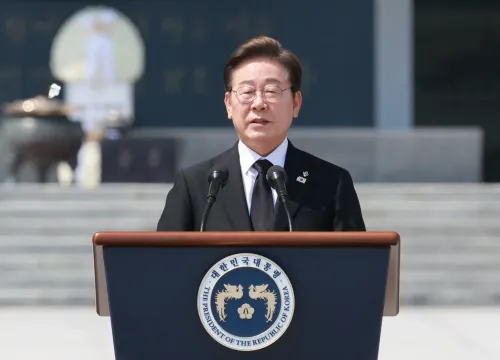
In conjunction with internal matters, Ahn reiterated South Korea's ambition to reclaim wartime operational control from the United States by the end of President Lee Jae Myung's five-year term in 2030.
He stated, "The transfer of wartime operational control will extend beyond mere self-reliant defence, becoming a vital foundation for peace and stability in the Indo-Pacific region. I am confident that we are prepared for this transition."
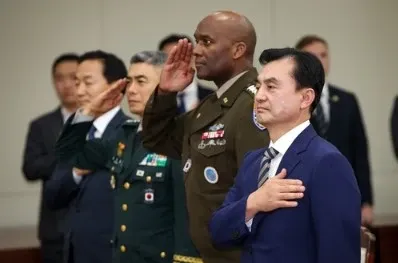
In the recent annual security meeting, Ahn and US Defence Secretary Pete Hegseth noted significant advancements in their bilateral assessment of readiness and capabilities, agreeing to develop a roadmap to facilitate the transition.
During Wednesday's meeting, members acknowledged that the upcoming year will be pivotal for the transition initiative and exchanged views regarding the roadmap, alongside joint exercises conducted by the allies, according to the ministry.
The defence leaders of South Korea and the US have agreed to pursue the certification of full operational capability for the Future-Combined Forces Command headquarters by 2026 during their defense discussions in November.
Point of View
I emphasize that the military's commitment to constitutional values is paramount for national integrity. Ahn Gyu-back’s leadership reflects a pivotal shift towards accountability and modernization, aligning our defense strategies with democratic principles. This approach is essential for maintaining public trust and ensuring the military's role as a protector of the nation.
NationPress
19 Sept 2026
Frequently Asked Questions
What prompted Ahn Gyu-back’s call for reform in the military?
The call for reform was prompted by the military's involvement in a failed martial law attempt last year, which raised concerns about adherence to constitutional values.
How does the current geopolitical climate affect South Korea's military strategy?
The ongoing nuclear threats from North Korea and the intensifying rivalry between the US and China necessitate a robust and reformed military strategy to ensure national security.
What are the key reforms Ahn is proposing for the military?
Ahn is proposing to restructure the military to better adapt to modern warfare trends, incorporate advanced technologies, and expand the civilian workforce.
What is the significance of regaining wartime operational control from the US?
Regaining wartime operational control is viewed as a step towards self-reliance in defense and is crucial for strengthening South Korea's sovereignty and regional stability.
What are the implications of the Future-Combined Forces Command certification?
The certification of full operational capability for the Future-Combined Forces Command is intended to enhance military readiness and cooperation between South Korea and the US.