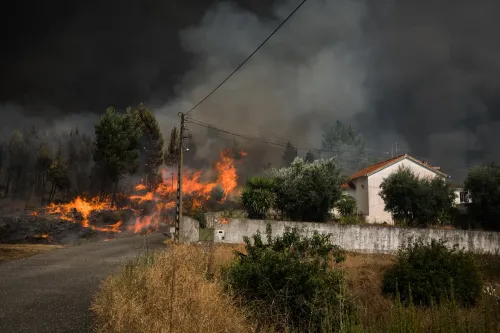
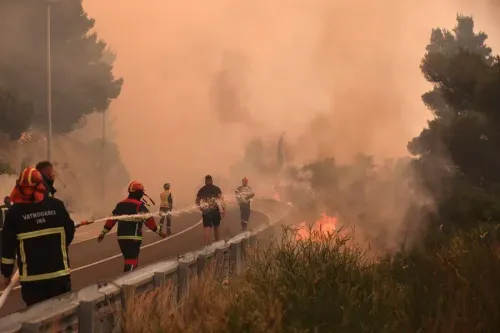
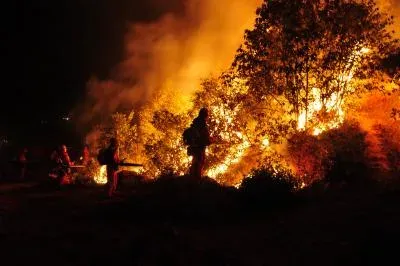
Spain wildfire crisis: National emergency ends in Madrid, Avila as 130,000 hectares burn
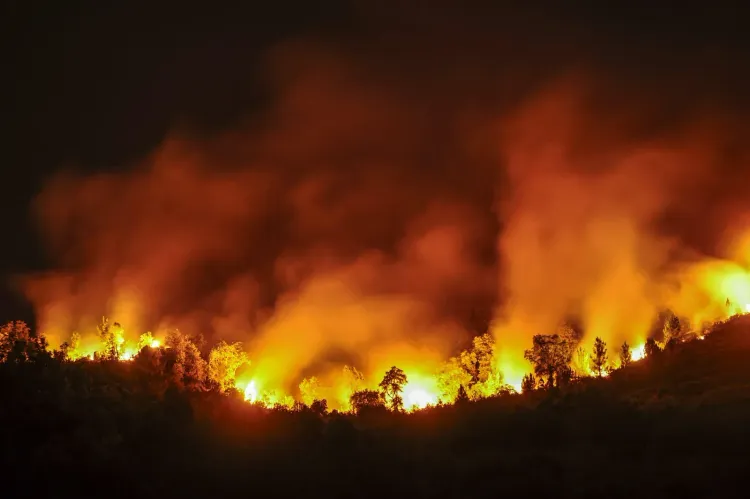
Synopsis
Spain's Burgohondo fire in Avila has become the largest wildfire ever recorded in the country at over 50,000 hectares — and it is just one part of a nationwide crisis that has consumed nearly 130,000 hectares in 2025 alone. Even as the national emergency in Madrid and Avila is lifted, a fourth heatwave and active blazes elsewhere mean Spain is far from out of danger.
Key Takeaways
Pedro Sanchez declared the end of the national wildfire emergency in Avila and Madrid on 30 July , downgrading to Level 2 operational status.
The Burgohondo fire in Avila has burned more than 50,000 hectares — the largest wildfire ever recorded in Spain .
Nearly 130,000 hectares have burned across Spain since the start of 2025 , according to the European Forest Fire Information System .
Seven residential developments in Madrid's western mountain areas remain under evacuation orders.
Portugal sent 129 personnel and 41 vehicles ; Greece and Italy each contributed two Canadair aircraft under the EU Civil Protection Mechanism .
Spain is experiencing its fourth heatwave of the summer, with fires still active in other regions.
Spanish Prime Minister Pedro Sanchez on Thursday, 30 July announced the end of the national emergency declared over wildfires in the province of Avila and the Madrid region, saying fires in both areas have largely stabilised. The decision, however, does not signal the end of Spain's broader wildfire crisis — blazes remain active across the country amid a punishing fourth heatwave of the summer.
Emergency Downgraded, Not Over
Speaking at an emergency command centre in Navaluenga, Avila, Sanchez said the downgrade followed consultations with regional authorities and technical teams. Emergency management will now revert to regional governments under a lower Level 2 operational status. The move reflects stabilisation on the ground, not an all-clear — firefighters are still battling hotspots and monitoring zones at risk of renewed outbreaks.
Scale of the Destruction
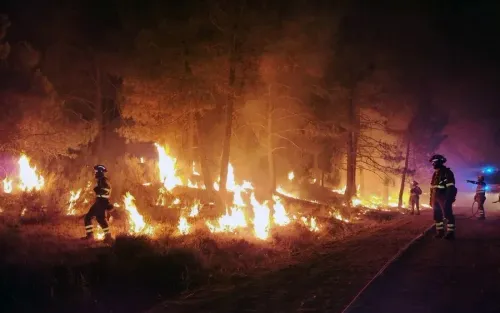
The Burgohondo fire in Avila has scorched more than 50,000 hectares, making it the largest wildfire ever recorded in Spain. The blaze has been technically stabilised and evacuated residents have been permitted to return home. In Madrid's western mountain areas, approximately 28,000 hectares have been affected, with seven residential developments still under evacuation orders. Since the start of 2025, nearly 130,000 hectares have burned across Spain, according to the European Forest Fire Information System.
Conditions Fuelling the Crisis
Spain is enduring its fourth heatwave of the summer, with extreme temperatures, low humidity, and strong winds compounding firefighting challenges and raising the risk of flare-ups. This comes amid a broader pattern of increasingly severe fire seasons across southern Europe, where climate-driven heat extremes are lengthening the fire window and intensifying burn intensity.
Massive Deployment on the Ground
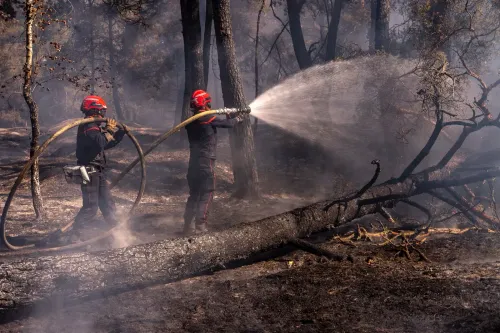
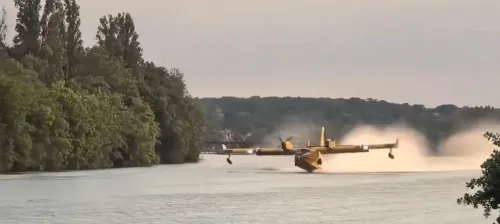
Thousands of firefighters, soldiers, police officers, and civil protection personnel have been deployed across affected zones. The Military Emergency Unit continues to play a central role in protecting communities and critical infrastructure while supporting regional teams. Spain has also activated the European Union Civil Protection Mechanism, under which Greece and Italy each contributed two Canadair firefighting aircraft along with an additional support aircraft. Italian aircraft had already joined suppression operations over Madrid and Avila by the previous Saturday.
International Support Pouring In
International assistance has been substantial. 33 Greek and 14 Italian emergency personnel have been deployed alongside Spanish services, the military, and security forces. Portugal sent 129 firefighters and emergency personnel along with 41 vehicles — including fire engines, command vehicles, bulldozers, and ambulances — to reinforce ground operations. The scale of foreign support underscores the severity of a crisis that has overwhelmed domestic capacity.
With active fires continuing in other parts of Spain and heatwave conditions persisting, authorities have cautioned that the situation remains volatile and could escalate rapidly in the days ahead.
Point of View
Not a turning point — Spain's wildfire season is still unfolding and the conditions driving it have not changed. The Burgohondo fire's record size is a data point that demands structural attention: southern Europe's fire seasons are no longer exceptional events but recurring crises that are outpacing domestic response capacity. The activation of the EU Civil Protection Mechanism and the deployment of Portuguese, Greek, and Italian assets signal that national preparedness frameworks are already at their ceiling. The harder question — whether Spain and the EU are investing proportionately in prevention, forest management, and long-term climate adaptation — is one that tends to get deferred until the smoke clears.
NationPress
30 Jul 2026
Frequently Asked Questions
Why did Spain lift the national wildfire emergency in Madrid and Avila?
Prime Minister Pedro Sanchez lifted the national emergency on 30 July after fires in both regions were largely stabilised, following consultations with regional authorities and technical teams. Emergency management has been handed back to regional governments under a lower Level 2 operational status, though firefighting operations continue.
What is the Burgohondo fire and why is it significant?
The Burgohondo fire in Avila is the largest wildfire ever recorded in Spain, having burned more than 50,000 hectares. It has been technically stabilised and evacuated residents have been allowed to return, but it marks a historic threshold in the scale of Spain's fire crisis.
How much land has burned in Spain in 2025?
Nearly 130,000 hectares have burned across Spain since the start of 2025, according to the European Forest Fire Information System. This figure spans multiple fire events across the country, with Madrid and Avila among the worst-affected regions.
Which countries are helping Spain fight the wildfires?
Greece and Italy each contributed two Canadair firefighting aircraft under the EU Civil Protection Mechanism, along with a combined 47 emergency personnel. Portugal deployed 129 firefighters and emergency workers along with 41 vehicles including fire engines, bulldozers, and ambulances.
Is Spain's wildfire crisis over?
No. While the national emergency in Madrid and Avila has been lifted, active fires continue in other parts of Spain. The country is currently in its fourth heatwave of the summer, with extreme temperatures, low humidity, and strong winds keeping the risk of new outbreaks high.