Global steel forum adopts Milwaukee Framework to curb overcapacity, target China subsidies
Synopsis
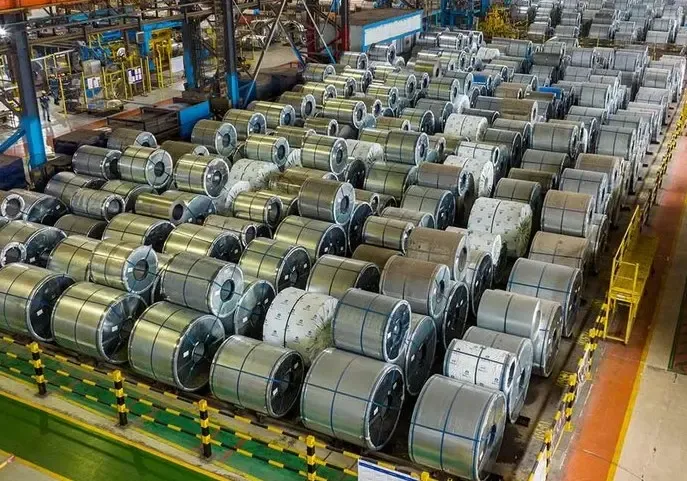
More than 30 economies gathered in Milwaukee have adopted a landmark framework to confront global steel overcapacity projected to hit 745 million tonnes by 2028 — with Chinese subsidies, now nearly double their 2019 level, and record-high Chinese exports of 131 million tonnes in 2025 driving the urgency. The real test is follow-through.
Key Takeaways
The Global Forum on Steel Excess Capacity (GFSEC) adopted the Milwaukee Framework on 1 October 2026 in Milwaukee, Wisconsin .
Global steel excess capacity is projected to rise from 601 million tonnes in 2024 to 745 million tonnes by 2028 — a decade-high.
China's steel subsidy rate has reportedly nearly doubled since 2019 ; Chinese exports hit a record 131 million tonnes in 2025 , up 153% since 2020.
The framework mandates subsidy elimination, 'country of melt and pour' data collection, anti-dumping probes, and coordinated circumvention monitoring.
More than 30 economies participated, including the EU , Canada , Japan , South Korea , Brazil , and India -neighbouring nations Indonesia , Malaysia , Thailand , and Vietnam .
American Iron and Steel Institute CEO Kevin Dempsey called member follow-through 'critical to the long-term health of the global steel sector.'
A US-led coalition of more than 30 steel-producing economies on 1 October 2026 adopted the 'Milwaukee Framework' — a coordinated plan to combat surging global steel overcapacity — at a meeting of the Global Forum on Steel Excess Capacity (GFSEC) in Milwaukee, Wisconsin. The framework calls for stronger trade measures, subsidy scrutiny, and joint action against tariff circumvention, as global surplus capacity is projected to climb from 601 million tonnes in 2024 to 745 million tonnes by 2028 — the highest level in a decade.
What the Milwaukee Framework Commits To
The agreement, reached under the chairmanship of US Trade Representative Jamieson Greer, requires participating economies to work through their national legal systems to reduce and eliminate market-distorting subsidies and government support that fuel persistent overcapacity. Members also reaffirmed their commitment to World Trade Organisation (WTO) rules and a fair, rules-based trading system.
The framework mandates improvements to supply-chain transparency, including the collection of 'country of melt and pour' data — a measure designed to trace steel origin and identify circumvention of trade restrictions. It also envisages anti-dumping and countervailing duty investigations, global safeguard probes, and coordinated monitoring to prevent displaced steel from entering member markets through back channels.
The China Question at the Centre of the Forum
While the ministerial statement referenced 'non-market policies and practices in some non-GFSEC economies,' China figures prominently in the forum's underlying data. According to OECD figures cited by GFSEC, a typical Chinese steel firm receives subsidies — through grants, tax concessions, and below-market borrowing — at a level approximately 15 times higher relative to its assets than a comparable firm elsewhere. China's steel subsidy rate has reportedly nearly doubled since 2019.
Chinese steel exports reached a record 131 million tonnes in 2025, a 153 per cent increase since 2020, according to the forum's documents. Chinese steelmakers are also reportedly adding 70 million tonnes of new capacity abroad, with a focus on Southeast Asia and Africa — a pattern members flagged as a potential circumvention route.
What the US Said
Greer framed the framework as an extension of the Trump administration's domestic steel revival. 'Under President Trump, the US steel industry is undergoing a renaissance on the strength of tariffs, trade deals, favorable tax treatment, improved energy policy, and the American entrepreneurial spirit,' he said. He added that if like-minded partners adopted similar policies, they could 'hold accountable those countries that are contributing to the problem of global overcapacity in steel.'
Greer said Washington would work with fellow members to implement the framework and 'restore a global level playing field for our workers and producers.'
Industry Response and Participating Economies
Kevin Dempsey, president and CEO of the American Iron and Steel Institute, welcomed the agreement, calling it critical to tackling circumvention and evasion of steel trade measures. 'It is critical to the long-term health of the global steel sector that GFSEC Members follow through on the commitments made today in Milwaukee,' he said.
The Milwaukee meeting brought together representatives from more than 30 economies, including the United States, European Union, Canada, Japan, South Korea, Mexico, Brazil, Australia, the United Kingdom, Indonesia, Malaysia, Thailand, and Vietnam. The projected 2028 surplus of 745 million tonnes would exceed the combined current production of all GFSEC members by 319 million tonnes — underlining the scale of the challenge the framework now faces.
The durability of the Milwaukee Framework will depend on whether member economies translate its commitments into enforceable domestic action — and whether they can sustain consensus on naming, and penalising, the primary sources of excess supply.
Point of View
But its credibility rests entirely on enforcement — a historically weak link in trade forums. China is unmistakably the target, yet is not named in the ministerial text, a diplomatic hedge that could blunt legal and retaliatory tools. For India, the framework carries a dual edge: Indian steelmakers benefit if Chinese dumping into Southeast Asia is curtailed, but Indian exports could face fresh scrutiny if GFSEC members apply 'country of melt and pour' tracing aggressively to transshipped steel. The real story in the coming months is whether this framework produces binding domestic legislation in member states — or joins a long line of well-worded communiqués that China has previously weathered without consequence.
NationPress
1 Oct 2026
Frequently Asked Questions
What is the Milwaukee Framework on steel overcapacity?
The Milwaukee Framework is a multilateral agreement adopted on 1 October 2026 by more than 30 economies at the Global Forum on Steel Excess Capacity (GFSEC) in Milwaukee, Wisconsin. It commits members to eliminating market-distorting subsidies, improving supply-chain transparency, and coordinating anti-dumping and circumvention monitoring to address global steel surplus projected to reach 745 million tonnes by 2028.
Why is global steel overcapacity a concern right now?
Global steel excess capacity is forecast to jump from 601 million tonnes in 2024 to 745 million tonnes by 2028 — its highest level in a decade. According to GFSEC, the projected surplus would exceed the combined current steel production of all forum members by 319 million tonnes, threatening jobs and pricing power in domestic industries worldwide.
What role does China play in the steel overcapacity crisis?
China is the central, if diplomatically unnamed, concern. OECD data cited by GFSEC shows a typical Chinese steel firm receives subsidies roughly 15 times higher relative to assets than firms elsewhere, and China's subsidy rate has reportedly nearly doubled since 2019. Chinese steel exports hit a record 131 million tonnes in 2025 — up 153% since 2020 — and Chinese steelmakers are adding 70 million tonnes of new capacity abroad, mainly in Southeast Asia and Africa.
What is 'country of melt and pour' data, and why does it matter?
'Country of melt and pour' refers to the country where steel is actually smelted and cast, as distinct from where it is processed or shipped from. Collecting this data allows authorities to trace the true origin of steel products and identify attempts to circumvent tariffs by routing steel through third countries — a key concern given the rapid expansion of Chinese steelmaking capacity in Southeast Asia.
Which countries participated in the Milwaukee GFSEC meeting?
More than 30 economies attended, including the United States, European Union, Canada, Japan, South Korea, Mexico, Brazil, Australia, the United Kingdom, Indonesia, Malaysia, Thailand, and Vietnam. The meeting was chaired by US Trade Representative Jamieson Greer.