Sudan food crisis: 19.5 million face acute hunger, famine looms in 14 areas
Synopsis
With 19.5 million people already in acute food crisis and 14 areas teetering on the edge of famine, Sudan is heading into its lean season with a humanitarian response that reached barely two-thirds of its own monthly target. UN agencies are sounding the alarm — but funding and access gaps mean the worst may still be ahead.
Key Takeaways
Nearly 19.5 million people in Sudan face crisis-level acute food insecurity, according to FAO , WFP , and UNICEF .
14 areas across Greater Darfur and Greater Kordofan are at risk of famine, with conditions expected to deteriorate from June to September .
Humanitarian partners targeted 4.8 million people per month but reached only an estimated 3.13 million in February .
85,000 people in North Kordofan received water and sanitation support; 2,000 displaced families received essential household items in Sheikan .
FAO , WFP , and UNICEF have called for an immediate cessation of hostilities and urgent international funding scale-up. $12 million has been targeted for famine relief in neighbouring South Sudan .
Nearly 19.5 million people in Sudan are facing crisis-level acute food insecurity, according to a United Nations spokesperson citing findings from the Food and Agriculture Organization (FAO), the World Food Programme (WFP), and the United Nations Children's Fund (UNICEF). The warning, issued on 16 May, underscores one of the world's most severe humanitarian emergencies.
Farhan Haq, deputy spokesperson for the UN secretary-general, told a daily briefing that 14 areas across Greater Darfur and Greater Kordofan are at risk of famine — with conditions expected to worsen sharply during the lean season running from June to September.
Scale of the Crisis
The humanitarian response has fallen critically short of what is needed. Between February and May, humanitarian partners set a target of reaching 4.8 million people per month. In practice, only an estimated 3.13 million people received assistance in February alone — a gap of nearly 1.7 million people in a single month, according to Haq.
This comes amid an active conflict that continues to displace civilians and restrict aid access. The shortfall is not merely logistical — it reflects a broader funding and access crisis that agencies warn is worsening by the week.
What UN Agencies Are Demanding
FAO, WFP, and UNICEF have jointly called for an immediate cessation of hostilities in Sudan. The three agencies are also urging the international community to urgently scale up funding across food assistance, emergency food production, nutrition, health, and water and sanitation services. Rebuilding civilian livelihoods, they said, must be part of any sustained response.
The UN Office for the Coordination of Humanitarian Affairs (OCHA) stated that the UN and its humanitarian partners continue to respond to needs across Sudan, even as fighting puts civilians at grave risk.
Aid Reaching Some, but Far From Enough
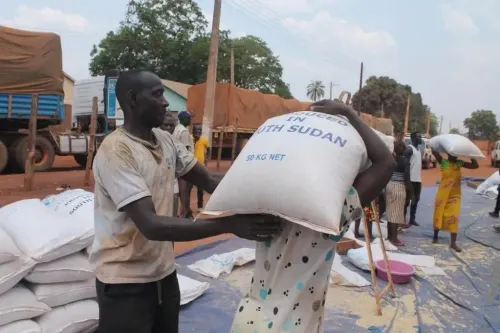
On 13 May, UN humanitarians confirmed that aid distribution is under way in war-torn southwestern Sudan. Separately, $12 million has been targeted for famine relief in neighbouring South Sudan.
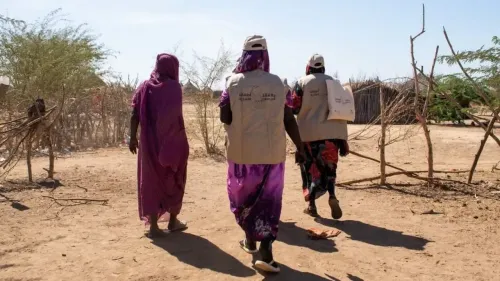
In the Kordofan region, aid organisations are providing life-saving support to displaced people, refugees, and host communities. Water and sanitation assistance has reached approximately 85,000 people in the localities of Sheikan and Ar Rahad in North Kordofan state.
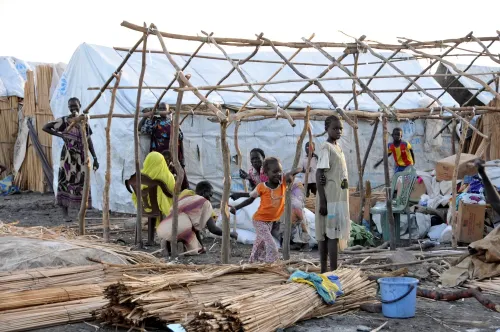
Humanitarians also distributed blankets, mosquito nets, and essential household items to 2,000 displaced families in Sheikan. Cash assistance reached 200 families at the Taggat displacement site in April. In South Kordofan, nearly 88,000 people — including South Sudanese refugees, displaced persons, and host communities — received water and sanitation support.
What Comes Next
With the lean season approaching, agencies warn that food insecurity will intensify before it improves. The famine risk across Greater Darfur and Greater Kordofan is not a future projection — it is an imminent threat. Without a dramatic scale-up in funding and a halt to hostilities, the 19.5 million figure risks climbing further in the months ahead.
Point of View
But the more damning number is the delivery gap — humanitarian partners reached only 3.13 million of a 4.8 million monthly target in February, a failure rate of over 30% even before the lean season begins. Sudan's crisis has been compounding for over two years, and the international response has consistently lagged the scale of need. With 14 famine-risk zones identified and the worst months still ahead, the question is no longer whether the system is underfunded — it is whether the political will exists to treat this as the emergency it demonstrably is.
NationPress
23 Sept 2026
Frequently Asked Questions
How many people in Sudan are facing food insecurity?
Nearly 19.5 million people in Sudan are facing crisis levels of acute food insecurity, according to the UN, citing FAO, WFP, and UNICEF. The situation is expected to worsen during the lean season between June and September 2025.
Which regions of Sudan are at risk of famine?
14 areas across Greater Darfur and Greater Kordofan are identified as being at risk of famine. Humanitarian agencies warn that conditions in these zones could deteriorate sharply in the coming months without urgent intervention.
Why is humanitarian aid falling short in Sudan?
Humanitarian partners aimed to reach 4.8 million people per month between February and May, but only an estimated 3.13 million received assistance in February. Ongoing conflict, access restrictions, and insufficient international funding are cited as key reasons for the shortfall.
What are UN agencies calling for in Sudan?
FAO, WFP, and UNICEF have called for an immediate cessation of hostilities and urged the international community to urgently scale up funding for food, nutrition, health, water and sanitation, and livelihood rebuilding programmes.
Is aid reaching any part of Sudan?
Yes, aid is being distributed in parts of Sudan. Around 85,000 people in North Kordofan received water and sanitation support, and 2,000 displaced families in Sheikan received blankets, mosquito nets, and household essentials. However, OCHA has stated that ongoing fighting continues to put civilians at grave risk.