South Sudan hunger crisis: 7.8 million face starvation as UN aid funds run dry
Synopsis
With 7.8 million people — 55% of its population — already in crisis-level hunger or worse, South Sudan is running out of time and money. The WFP and FAO warn that aid rationing has left millions without support, while drought forecasts and ongoing conflict threaten to push the country's worst hunger emergency since independence into outright catastrophe.
Key Takeaways
7.8 million people — 55% of South Sudan's population — are in IPC Phase 3 (Crisis) or worse as of the April–July 2025 projection.
This is an increase of approximately 280,000 people compared to the September 2025 lean season projection.
Aid agencies are rationing assistance, focusing only on IPC Phase 5 (Catastrophe) populations due to severe funding shortfalls.
High-risk areas — Akobo , Nyirol , Luakpiny/Nasir , and Ulang — face conflict, displacement, and total market collapse simultaneously.
OCHA warns of intensifying drought risk, with below-average rainfall forecast for the June–September rainy season.
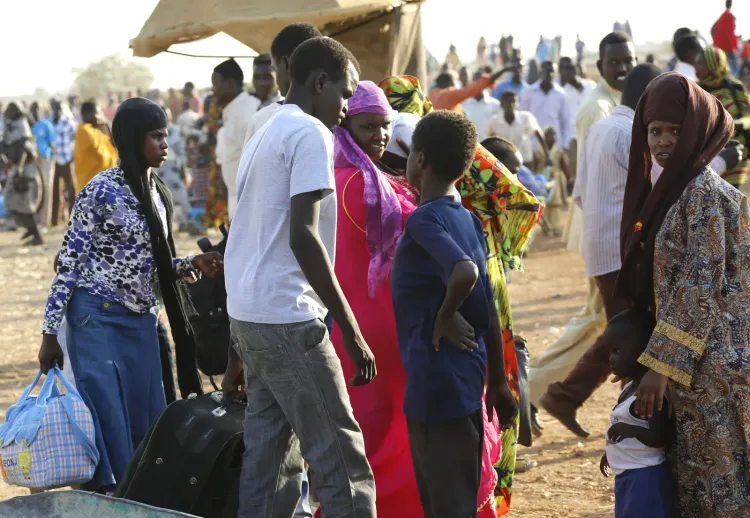
About 1,500 people have already moved from Kapoeta, Eastern Equatoria toward Kenya due to water scarcity.
South Sudan is rapidly closing in on a catastrophic tipping point, with two United Nations agencies warning on Friday, 4 July 2025 that humanitarian needs are far outpacing the international response. The World Food Programme (WFP) and the Food and Agriculture Organisation (FAO) jointly flagged that a devastating combination of escalating local conflict, climate shocks, and a severely underfunded aid budget has pushed the nation into its gravest hunger crisis since independence.
Scale of the Crisis
According to the IPC April–July 2025 projection, 7.8 million people — roughly 55 per cent of South Sudan's population — are currently in IPC Phase 3 (Crisis) or worse. This represents an increase of approximately 280,000 people compared to the September 2025 lean season projection, underscoring how quickly conditions are deteriorating.
Due to acutely limited resources, aid agencies have been compelled to ration assistance, concentrating almost exclusively on populations already at IPC Phase 5 (Catastrophe) — the most severe classification on the hunger scale. This hyper-targeted strategy, while driven by necessity, leaves millions in highly vulnerable conditions without adequate support.
High-Risk Areas on the Brink
The agencies identified several high-risk areas facing what they described as a catastrophic convergence of threats. Akobo, Nyirol, Luakpiny/Nasir, and Ulang are grappling simultaneously with escalating local conflict, mass displacement, severe access constraints, and total market collapse. Communities in these zones are, according to the agencies, being pushed to the absolute brink.
This comes amid a broader pattern of compounding crises in South Sudan, which has struggled with food insecurity, ethnic conflict, and governance challenges since gaining independence in 2011. Notably, this is among the worst hunger projections the country has recorded in over a decade.
Drought Risk Compounds the Emergency
On Monday, the UN Office for the Coordination of Humanitarian Affairs (OCHA) added another layer of alarm, warning that South Sudan faces intensifying drought risks. Seasonal forecasts by the national flood task force indicate a high likelihood of below-average rainfall and above-average temperatures across much of the country during the June–September rainy season.
'Early impact is already emerging,' OCHA said in a report released in Juba, the capital, noting that the Office of the United Nations High Commissioner for Refugees (UNHCR) had reported approximately 1,500 people moving from areas around Kapoeta in Eastern Equatoria towards Kenya due to water scarcity and deteriorating livelihoods.
The Funding Shortfall at the Core
At the heart of the crisis is a severe gap between what is needed and what donors have committed. Aid agencies have not publicly disclosed the exact funding deficit, but the rationing of assistance to only the most extreme cases signals that the shortfall is substantial. Without a significant injection of international resources, millions currently in IPC Phase 3 and Phase 4 risk sliding deeper into emergency and catastrophe-level hunger in the months ahead.
What Comes Next
With the lean season intensifying and drought conditions worsening, humanitarian organisations are calling for an urgent scale-up of both funding and access. The situation in high-risk districts could deteriorate sharply if conflict-driven access constraints persist. All eyes are now on donor governments and international institutions to close the funding gap before conditions become irreversible for millions of South Sudanese families.
Point of View
The early displacement from Kapoeta toward Kenya is a signal that cross-border spillover is no longer hypothetical. Donor fatigue combined with compounding climate and conflict shocks creates conditions where a Phase 3 population can slide to Phase 5 faster than response cycles allow. The real accountability question is whether the international community will act before the projections become obituaries.
NationPress
2 Oct 2026
Frequently Asked Questions
How many people are facing hunger in South Sudan in 2025?
According to IPC April–July 2025 projections, 7.8 million people — approximately 55% of South Sudan's population — are in IPC Phase 3 (Crisis) or worse. This is about 280,000 more than the September 2025 lean season estimate.
What is IPC Phase 5 and why does it matter?
IPC Phase 5, classified as 'Catastrophe,' is the most severe level on the Integrated Food Security Phase Classification scale, indicating starvation and death. Aid agencies in South Sudan are currently concentrating almost exclusively on Phase 5 populations due to severe resource constraints, leaving millions in Phase 3 and Phase 4 without adequate support.
Which areas of South Sudan are worst affected?
Akobo, Nyirol, Luakpiny/Nasir, and Ulang have been identified as the highest-risk areas, facing a simultaneous convergence of armed conflict, mass displacement, access constraints, and total market collapse.
What is causing the South Sudan hunger crisis to worsen?
A combination of escalating local conflict, climate shocks — including drought forecasts for the June–September 2025 rainy season — and a severely underfunded international aid response are driving the crisis. The WFP and FAO describe it as South Sudan's gravest hunger emergency since independence in 2011.
Is there a risk of people fleeing South Sudan due to the crisis?
Yes. OCHA and UNHCR have reported that approximately 1,500 people have already moved from areas around Kapoeta in Eastern Equatoria toward Kenya due to water scarcity and deteriorating livelihoods, signalling early cross-border displacement pressure.