WFP launches South Sudan's first drought anticipatory action in Eastern Equatoria

Synopsis
South Sudan has activated its first-ever drought anticipatory action — a $2.45 million intervention targeting 65,000-plus people in Eastern Equatoria before the drought worsens, not after. It is a model shift from reactive aid to forecast-driven resilience, and a potential template for one of the world's most food-insecure nations.
Key Takeaways
The WFP and the South Sudanese government launched the country's first drought anticipatory action in Eastern Equatoria State on 10 July .
The initiative targets Budi and Kapoeta North counties, reaching more than 65,000 people .
Over 50,000 people are receiving cash assistance to protect food and livelihood needs before conditions worsen.
The action was activated with $2.45 million in international donor funding.
WFP Country Director Mutinta Chimuka said the initiative acts on forecasts rather than waiting for drought to deepen humanitarian needs.
The United Nations World Food Programme (WFP), in partnership with the South Sudanese government, has launched South Sudan's first-ever drought anticipatory action initiative in Eastern Equatoria State, targeting vulnerable agro-pastoral communities before dry conditions worsen. The intervention, activated on 10 July, is set to directly benefit more than 65,000 people through early warning communications and cash assistance.
What the Initiative Covers
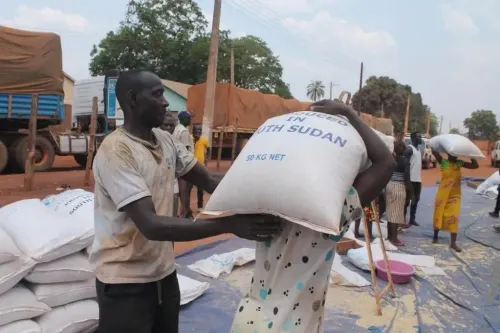
The programme focuses on Budi and Kapoeta North counties in Eastern Equatoria. Cash assistance is being extended to over 50,000 people to help households meet essential food and livelihood needs before conditions deteriorate, while also reducing reliance on negative coping mechanisms. A further 65,000-plus residents are receiving early warning communications covering drought preparedness, livestock management, efficient water use, and livelihood planning.
Why Acting Early Matters
Eastern Equatoria's agro-pastoral communities depend heavily on seasonal rainfall for both crop production and livestock rearing. According to the WFP, prolonged dry spells can rapidly trigger crop failure, livestock losses, declining household incomes, and deepening food insecurity among families who are already among the most vulnerable in the region.
The anticipatory action model — which combines scientific forecasts, early warning data, and pre-arranged financing — is designed to intervene before a crisis fully materialises, rather than responding after the damage is done. The WFP says this approach reduces both the human and economic costs of climate shocks.
What the WFP Said
Mutinta Chimuka, WFP Country Director for South Sudan, said the initiative marks a shift in how climate-related shocks are managed. 'Anticipatory action is transforming the way we manage climate-related shocks,' she said in a statement. 'Rather than wait for drought to deepen humanitarian needs, we are acting based on forecasts and evidence to support communities before livelihoods are disrupted. By delivering assistance early, we can help families protect what they have, strengthen their resilience, and reduce the human and economic costs of drought,' she added.
Funding and Operational Readiness
The anticipatory action was activated with $2.45 million in funding from international donors. The WFP noted that prior donor support had also helped build South Sudan's broader anticipatory action system, including the development of a national drought anticipatory action plan and enhanced operational readiness frameworks. This institutional groundwork was critical to enabling the speed of the current response.
Broader Context
South Sudan remains one of the world's most food-insecure nations, with climate variability compounding years of conflict-driven displacement. This launch is notable as the country's first structured attempt to get ahead of drought rather than react to it — a model that humanitarian agencies have been piloting across the Horn of Africa and Sahel with measurable success. The WFP said the initiative will strengthen long-term community resilience if scaled beyond the current two counties.
Point of View
And the programme covers just two counties. The real question is whether this pilot generates the outcome data needed to unlock larger, sustained pre-crisis financing. Without that scaling, anticipatory action risks becoming another well-intentioned proof of concept that never moves beyond its initial geography.
NationPress
10 Oct 2026
Frequently Asked Questions
What is South Sudan's drought anticipatory action launched by the WFP?
It is South Sudan's first-ever forecast-based intervention against drought, launched by the WFP in partnership with the South Sudanese government in Eastern Equatoria State. The initiative provides cash assistance and early warning communications to over 65,000 people in Budi and Kapoeta North counties before drought conditions worsen.
How much funding has been allocated for this initiative?
The anticipatory action was activated with $2.45 million in funding from international donors. Previous donor contributions also helped build South Sudan's national drought anticipatory action system and operational readiness frameworks.
Who benefits from the WFP's anticipatory action in South Sudan?
More than 65,000 people in Budi and Kapoeta North counties in Eastern Equatoria State are expected to benefit. Of these, over 50,000 are receiving direct cash assistance, while the broader group is receiving early warning communications on drought preparedness and livelihood planning.
Why is anticipatory action different from traditional humanitarian aid?
Traditional humanitarian aid responds after a crisis has already caused damage. Anticipatory action uses scientific forecasts and pre-arranged financing to deliver support before conditions deteriorate, reducing both human suffering and the overall economic cost of climate shocks.
Why is Eastern Equatoria particularly vulnerable to drought?
Eastern Equatoria's communities are agro-pastoral, relying heavily on seasonal rainfall for crop production and livestock rearing. Prolonged dry conditions can rapidly cause crop failure, livestock losses, and worsening food insecurity among families who already face significant vulnerabilities.