Why Did a Swan Cause a Disruption in Japan's Bullet Train Services?
Click to start listening
Synopsis
On December 3, a swan caused a temporary halt in Japan's renowned Tohoku Shinkansen services, highlighting the delicate balance between nature and high-speed rail travel. This incident, although minor, underscores the efficiency and safety of the Shinkansen system, which has maintained impeccable passenger safety records since its inception.
Key Takeaways
- Services on the Tohoku Shinkansen were briefly suspended due to a swan on the tracks.
- JR East quickly responded to ensure passenger safety and minimize delays.
- The Shinkansen is recognized for its speed and outstanding safety record.
- Despite the disruption, no passengers were harmed, showcasing the effectiveness of safety measures in place.
- Such incidents highlight the interactions between wildlife and high-speed rail systems.
Tokyo, Dec 3 (NationPress) – Services on the Tohoku Shinkansen Line in northeastern Japan faced a brief suspension on Wednesday morning after a swan was spotted on the tracks, as reported by the leading news agency Kyodo News citing the railway operator.
The incident occurred at approximately 10:20 a.m. when the driver of a train traveling between Kurikoma-Kogen and Furukawa stations in Kurihara, Miyagi Prefecture, halted the train due to the bird's presence. Thankfully, the train did not collide with the swan. According to JR East, three trains were delayed, affecting around 1,300 passengers.
In a statement from the East Japan Railway Company (JR East), it was noted that operations were temporarily paused on both tracks from Kurikoma-Kogen to Sendai as crews worked to remove the swan. Services resumed approximately 40 minutes later.
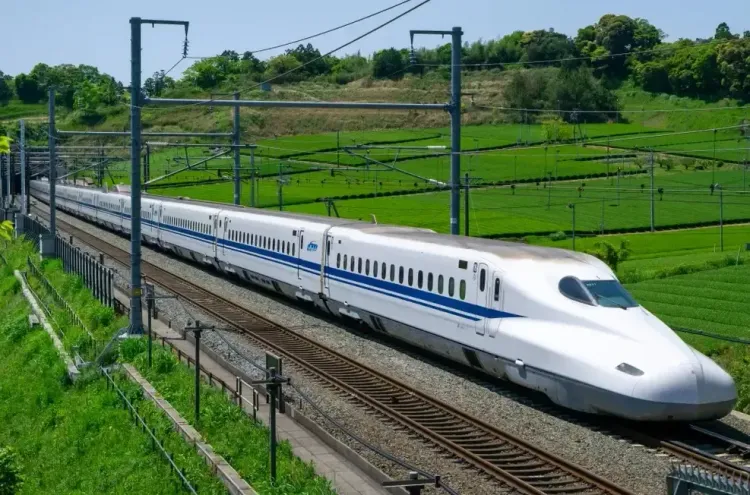
The Tōhoku Shinkansen, which began operations in 1982, is the longest line operated by JR East, connecting Tokyo to Shin-Aomori. It also provides direct access to other lines, including the Hokkaido Shinkansen, which links Shin-Aomori and Shin-Hakodate-Hokuto.
Renowned globally for their speed and punctuality, the Shinkansen can reach speeds of up to 177 miles per hour. To put it in perspective, if one were to travel on the Shinkansen from New York to Los Angeles, the journey would take only 14 hours! Engineers have achieved these speeds through a combination of innovative solutions, including an aerodynamic train design, tracks that navigate Japan's mountainous terrain with minimal curves, and an advanced Automatic Train Control system that ensures safe maximum speeds for each segment of the journey.
Notably, there have been no recorded fatalities or injuries to passengers since the inception of Shinkansen operations.
Point of View
It is our responsibility to provide a balanced perspective on such occurrences. While the incident of a swan on the tracks may seem trivial, it draws attention to the operational challenges of high-speed rail systems. The swift action taken by JR East reflects their commitment to passenger safety, ensuring that even minor disruptions are dealt with promptly.
NationPress
03/12/2025
Frequently Asked Questions
What caused the disruption in bullet train services?
The disruption was caused by a swan spotted on the tracks, leading to a temporary halt of the Tohoku Shinkansen services.
How long was the bullet train service suspended?
The services were suspended for approximately 40 minutes while crews worked to remove the swan.
How many passengers were affected by this incident?
Around 1,300 passengers were affected due to delays of three trains.
Is the Shinkansen known for its safety?
Yes, the Shinkansen has maintained a record of zero fatalities or injuries since its operations began.
What is the speed of the Shinkansen?
The Shinkansen can travel at speeds of up to 177 miles per hour.