India-Japan tech partnership to be strongest pillar of ties: PM Modi
Synopsis
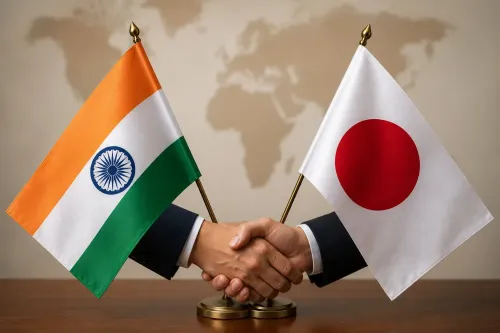
At the 16th India-Japan Annual Summit, Modi and Takaichi didn't just reaffirm friendship — they put a number on it: 10 trillion Yen in Japanese investment over a decade and a formal AI Joint Statement. The convergence of Tokyo's FOIP and New Delhi's MAHASAGAR frameworks signals a deepening strategic compact at a moment when both nations are recalibrating their positions in an increasingly contested Indo-Pacific.
Key Takeaways
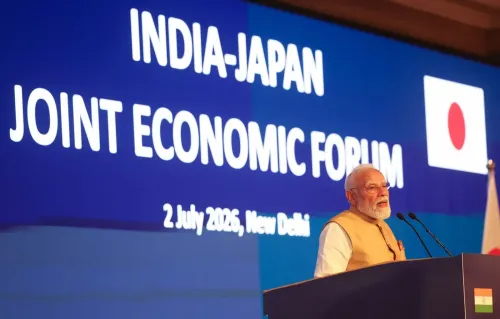
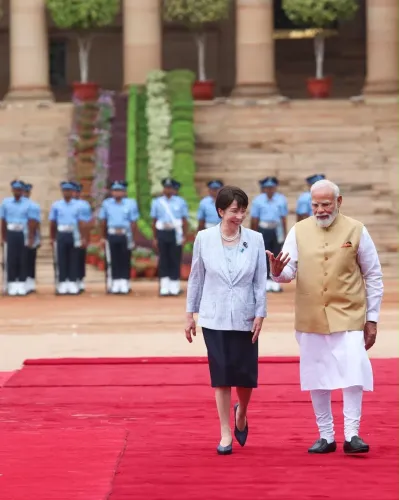
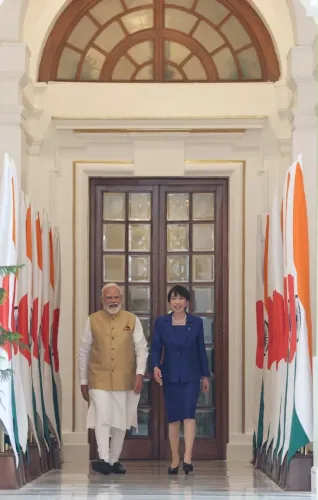
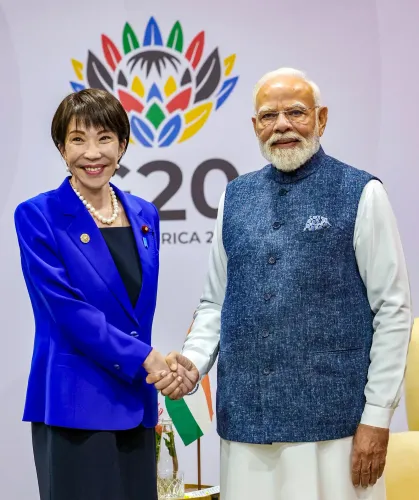
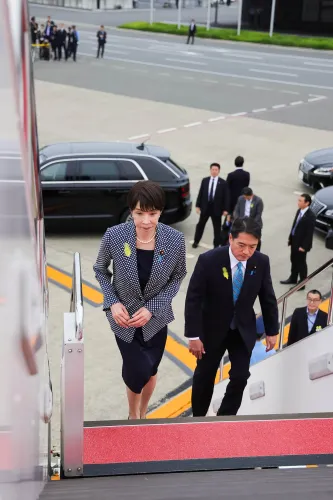
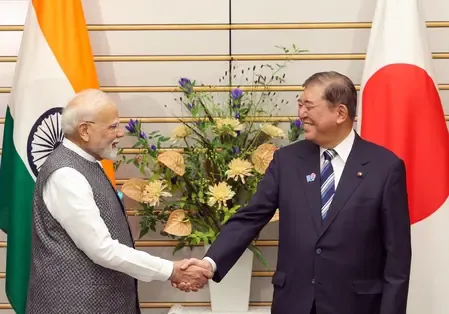
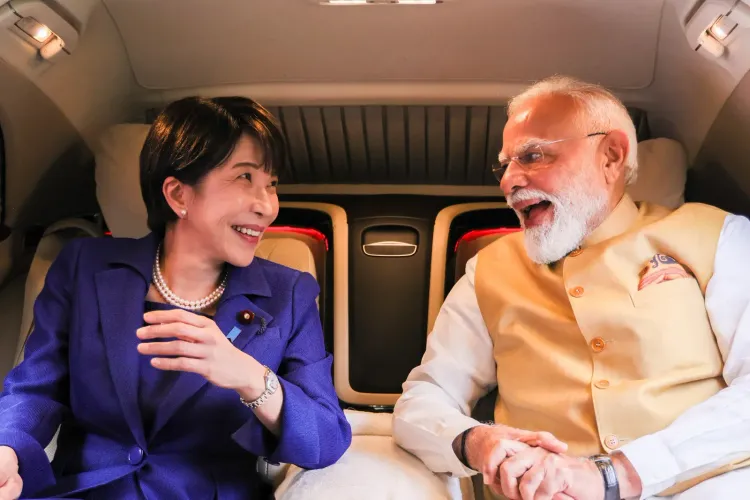
PM Narendra Modi and Japanese PM Sanae Takaichi held the 16th India-Japan Annual Summit in New Delhi on 2 July 2025 .
A Joint Statement on AI was issued; leading Indian AI institutions signed agreements with Japanese partners.
India and Japan set a target of 10 trillion Yen in Japanese investment into India over the next 10 years , along with doubling the number of Japanese companies in India.
PM Takaichi identified India as a key partner in realising Japan's Free and Open Indo-Pacific (FOIP) vision.
Modi's MAHASAGAR framework and Japan's FOIP were described as sharing aligned objectives for Indo-Pacific prosperity.
Both nations are approaching the 75th anniversary of diplomatic relations, due next year.
Prime Minister Narendra Modi on Thursday, 2 July declared that technology partnership will become the strongest pillar of India-Japan cooperation, following high-level bilateral talks with Japanese Prime Minister Sanae Takaichi in New Delhi. The two leaders held the 16th India-Japan Annual Summit, reviewing and reinforcing the full spectrum of the Special Strategic and Global Partnership between the two nations.
Key Outcomes of the Summit
The summit covered a wide range of strategic and economic areas, including technology, innovation, artificial intelligence (AI), defence and security, and pharmaceuticals. A Joint Statement on AI was issued, and several leading institutions within India's AI ecosystem signed agreements with their Japanese counterparts on the sidelines of the summit.
'Prime Minister Takaichi and I believe that technology partnership will become the strongest pillar of our cooperation,' Modi said in a post on X, adding that discussions also extended to energy linkages, people-to-people ties, and cooperation in education.
Investment and Economic Targets
On the economic front, Modi outlined an ambitious bilateral investment goal. 'Our goal is clear… in the next ten years, 10 trillion Yen of Japanese investment into India and doubling the number of Japanese companies in India!' he wrote. This target signals a significant deepening of economic engagement between Asia's second- and fifth-largest economies.
Japan's View: India Central to Free and Open Indo-Pacific
Prime Minister Takaichi described India as an 'important partner for Japan in realising' the Free and Open Indo-Pacific (FOIP). She noted that Japan and India would together 'contribute to the prosperity of the Indo-Pacific region and, furthermore, the entire international community,' with an eye toward the 75th anniversary of diplomatic relations between the two countries next year.
Takaichi also drew a parallel between her FOIP vision and Modi's MAHASAGAR framework — Mutual and Holistic Advancement for Security and Growth Across Regions — describing both as sharing the objective of 'nurturing the Indo-Pacific into a rich ocean where freedom and prosperity can be enjoyed.'
Regional Security and Indo-Pacific Stability
Both leaders exchanged views on regional situations, with a particular focus on the Indo-Pacific. The convergence of FOIP and MAHASAGAR frameworks underscores growing strategic alignment between New Delhi and Tokyo at a time of heightened geopolitical competition in the region. This is the 16th consecutive annual summit between the two nations, reflecting the institutionalised depth of their partnership.
With AI agreements signed and a concrete investment target set, the summit is expected to accelerate bilateral momentum heading into the milestone 75th anniversary of India-Japan diplomatic ties.
Point of View
But the real signal from this summit is structural: India and Japan are stitching together an AI and technology axis at a moment when both are diversifying away from overdependence on Chinese supply chains. The MAHASAGAR-FOIP convergence is not diplomatic boilerplate — it is a coordinated framing exercise designed to give the Indo-Pacific partnership an ideological spine distinct from Western-led alliances. What the summit did not address publicly is the pace of actual Japanese FDI inflows into India, which have historically lagged announced targets. Whether the AI agreements translate into manufacturing and R&D depth, or remain MoU-level symbolism, will be the real measure of this summit's legacy.
NationPress
2 Jul 2026
Frequently Asked Questions
What was decided at the 16th India-Japan Annual Summit?
The 16th India-Japan Annual Summit, held in New Delhi on 2 July 2025, produced a Joint Statement on AI, multiple institutional agreements between Indian and Japanese AI organisations, and a bilateral investment target of 10 trillion Yen into India over the next decade. The talks covered technology, defence, pharmaceuticals, energy, and people-to-people ties.
What is the 10 trillion Yen investment target between India and Japan?
PM Modi announced a goal of attracting 10 trillion Yen in Japanese investment into India over the next ten years, alongside a target to double the number of Japanese companies operating in India. The target was outlined as part of the broader economic agenda of the India-Japan Special Strategic and Global Partnership.
What is the India-Japan Joint Statement on AI?
The Joint Statement on AI is a formal bilateral agreement issued at the 16th Annual Summit, committing both nations to cooperation in artificial intelligence. Several leading Indian AI institutions also signed partnership agreements with Japanese counterparts on the same day.
How do India's MAHASAGAR and Japan's FOIP frameworks align?
PM Takaichi described both frameworks as sharing the objective of nurturing the Indo-Pacific into a region where freedom and prosperity can be enjoyed. FOIP (Free and Open Indo-Pacific) is Japan's strategic vision, while MAHASAGAR (Mutual and Holistic Advancement for Security and Growth Across Regions) is PM Modi's framework for the same region.
Why is the 75th anniversary of India-Japan diplomatic relations significant?
Next year will mark 75 years since India and Japan established diplomatic relations. PM Takaichi referenced the milestone as a horizon for deepened bilateral cooperation, signalling that both governments intend the current summit's outcomes to feed into a broader commemorative agenda.