What Caused the Alarm at TEPCO's Recently Restarted Nuclear Plant?
Synopsis
An alarming incident at TEPCO's recently restarted nuclear reactor in Niigata Prefecture has led to an operational suspension. This event underscores the ongoing challenges faced by Japan's nuclear power sector in the wake of the Fukushima disaster. Discover the details surrounding this situation and its implications for the future of nuclear energy in Japan.
Key Takeaways
TEPCO suspended operations at its recently restarted nuclear reactor in Niigata due to an alarm.
The alarm indicated an issue with control rod equipment .
The Nuclear Regulation Authority confirmed the reactor is stable.
No abnormal radioactivity levels were detected in the area.
This incident marks a significant moment for TEPCO, as it's the first reactor to restart since the 2011 disaster.
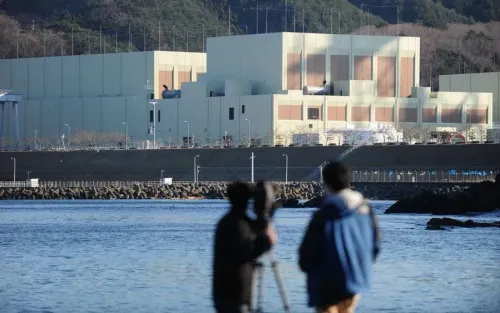
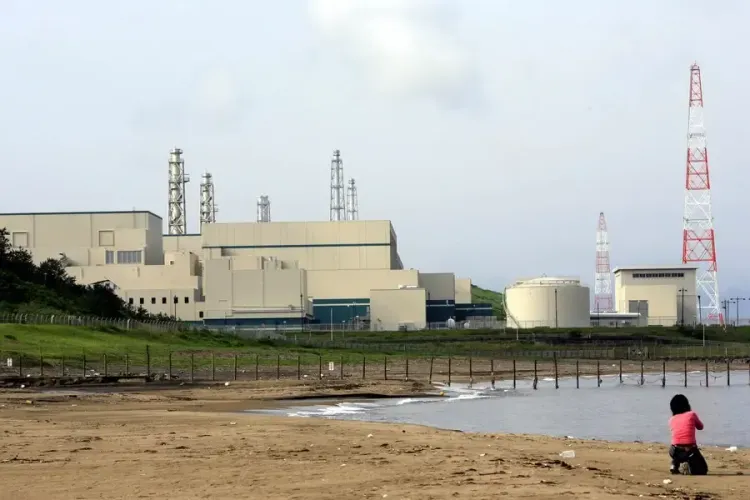
Tokyo, Jan 22 (NationPress) The Tokyo Electric Power Company (TEPCO) announced on Thursday that it has halted operations at the recently restarted reactor of a nuclear facility in Niigata Prefecture due to an alarming alert. The alarm was activated at 00:28 a.m. local time, indicating a potential issue with the control rod maneuvering equipment, as reported by TEPCO.
In response, TEPCO suspended operations at reactor No. 6 to withdraw the control rods, which are essential for regulating the nuclear fission process. The company is currently investigating the incident at the Kashiwazaki-Kariwa plant.
The Nuclear Regulation Authority confirmed that the reactor remains stable and assured that there are no safety concerns, according to reports from Xinhua news agency.
Fortunately, the Niigata prefectural government stated that no unusual levels of radioactivity have been detected around the world’s largest nuclear power station by capacity.
The No. 6 reactor, part of a seven-unit complex located approximately 220 kilometers northwest of Tokyo, was reactivated shortly after 7 p.m. local time on Wednesday. This marked TEPCO's first reactor to come back online since the 2011 Fukushima nuclear disaster.
The restart was delayed by a day from the original schedule after a control rod alarm was triggered during preliminary testing.
Earlier that same day, TEPCO successfully restarted the reactor at the Kashiwazaki-Kariwa nuclear facility, marking a significant milestone for the company since the Fukushima incident.
Approval for trial operations was granted by Japan's Nuclear Regulation Authority earlier in the day. TEPCO had initially aimed to reactivate the reactor on Tuesday, but had to postpone due to an alarm malfunction during a test.
Despite mixed sentiments among the local population regarding the plant's resumption, Niigata Governor Hideyo Hanazumi approved the restart last November, with the prefectural assembly following suit a month later.
The Kashiwazaki-Kariwa plant, which can generate up to 8.2 gigawatts of electricity at full capacity, is among the 54 reactors that were shut down following the catastrophic core meltdowns at TEPCO's Fukushima Daiichi facility in March 2011.
Point of View
My perspective is that this incident highlights ongoing concerns regarding nuclear safety in Japan. With the recent restart of reactors following the Fukushima disaster, it is crucial to monitor such developments closely, ensuring that safety protocols are adhered to and that public confidence in nuclear energy is maintained.
NationPress
7 Oct 2026
Frequently Asked Questions
What triggered the alarm at TEPCO's reactor?
The alarm was triggered by an apparent issue with the control rod maneuvering equipment.
Is the reactor stable?
Yes, the Nuclear Regulation Authority confirmed that the reactor remains stable with no safety concerns.
What is the capacity of the Kashiwazaki-Kariwa nuclear plant?
The plant is capable of producing up to 8.2 gigawatts of electricity when operating at full capacity.
When was the reactor restarted?
The No. 6 reactor was restarted shortly after 7 p.m. local time on Wednesday.
Why was the restart delayed?
The restart was delayed due to an alarm malfunction during a test operation.