Has Texas Governor Abbott Ordered a Freeze on H-1B Visas?
Synopsis
Texas Governor Greg Abbott's recent order to freeze H-1B visa applications has sparked a significant debate on the future of employment practices in the state. This decisive move aims to prioritize Texas workers and ensure accountability in the hiring process. Discover how this impacts public institutions and the broader implications for the H-1B visa program.
Key Takeaways
Governor Abbott has mandated a freeze on new H-1B visa petitions.
The freeze aims to prioritize jobs for Texans.
Agencies must report on H-1B workers they sponsor.
This action reflects growing scrutiny of the H-1B program.
It is significant for industries relying on foreign talent.
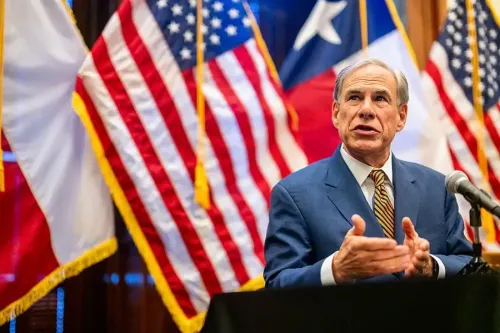
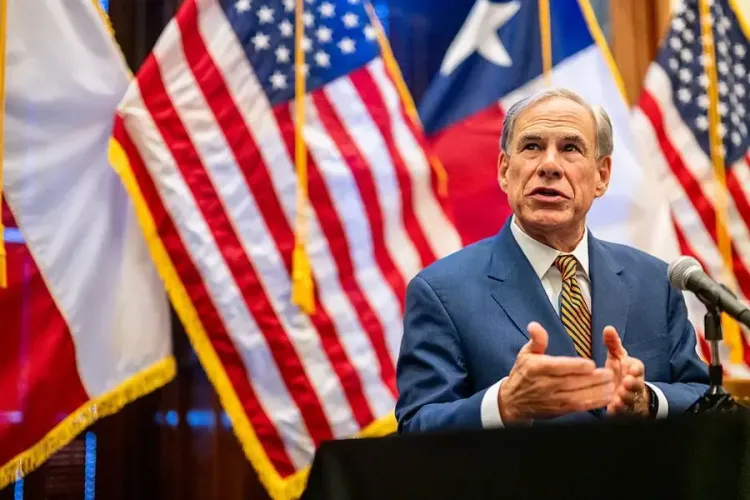
Washington, Jan 28 (NationPress) Texas Governor Greg Abbott took decisive action on Tuesday by announcing an immediate halt to new H-1B visa applications from all Texas state agencies and public universities. This decision aims to facilitate a comprehensive review of what his office termed potential misuse of the federal visa program.
In a communication to educational institutions and organizations, Abbott emphasized that this initiative was essential to guarantee that jobs funded by Texas taxpayers are prioritized for Texans first. He stated, “The economy of Texas should function for the advantage of Texas workers and Texas employers,” while declaring that all new H-1B applications must cease until further examination.
“Given the recent allegations of misuse in the federal H-1B visa program and the ongoing federal government assessment to ensure American jobs benefit American workers, I am instructing all state agencies to immediately freeze new H-1B visa applications as detailed in this correspondence,” Abbott said.
This directive encompasses all state agencies overseen by gubernatorial appointees and public higher education institutions, as noted in a media release. According to the order, no new H-1B visa applications may be commenced without prior written consent from the Texas Workforce Commission until the conclusion of the Texas Legislature’s 90th Regular Session on May 31, 2027.
In his letter dated January 27, Abbott also mandated agencies and universities to provide detailed reports by March 27, 2026, outlining the number of H-1B workers they sponsor, the job classifications involved, the countries of origin of visa holders, and documentation indicating efforts to recruit qualified Texas candidates before opting for foreign labor.
The governor noted that this review would grant lawmakers the opportunity to establish “statutory guardrails” for future employment practices involving federal visa holders, while permitting the Trump administration to pursue broader reforms.
Abbott’s directive follows comments he made a day earlier on a Dallas-based radio show, where he mentioned that his administration was investigating “the extent to which Texas taxpayer funds are being utilized to pay for any of these individuals,” referring to H-1B visa holders working in public schools, colleges, and universities.
“For instance, what role in our public schools in the State of Texas are these H-1B visa personnel fulfilling that we can’t fulfill with our own local workforce?” Abbott stated during the interview. “I see no justification for employing H-1B visa staff in our public schools in the State of Texas.”
The governor stressed that while the H-1B program is federally managed, Texas is evaluating its authority when state funds are involved. “This is a federal program, strictly a federal program. It’s not a state program,” he noted.
In his letter, Abbott referenced President Donald Trump’s proclamation regarding limitations on the entry of certain nonimmigrant workers, asserting that the H-1B program was designed “to supplement the United States’ workforce—not to replace it.” He accused some employers of “not making genuine efforts to attract qualified U.S. workers” before seeking foreign labor.
Instead of drawing “the most talented individuals from across the globe,” Abbott argued that the program has “frequently been misused to occupy positions that could—and should—have been filled by Texans.”
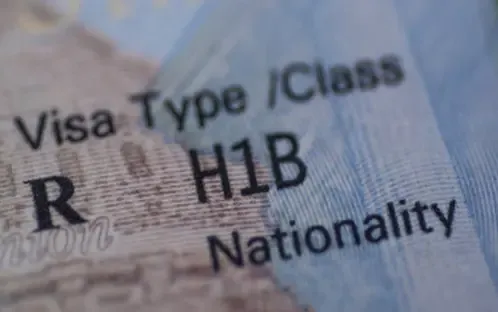
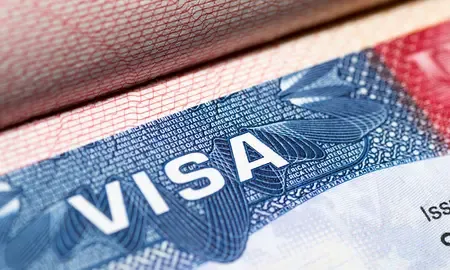
The H-1B visa program enables U.S. employers to hire foreign workers in specialized fields that typically demand advanced education or technical expertise. This program has been widely utilized by technology companies, healthcare facilities, and academic institutions, and has been a persistent topic of immigration discussions in Washington.
The suspension implemented by Texas represents one of the most extensive state-level actions targeting the use of H-1B visas in public institutions. This occurs amid intensified federal scrutiny of employment-based visas under the Trump administration.
Point of View
It is essential to provide a balanced perspective on Governor Abbott's recent freeze on H-1B visa applications. This move highlights ongoing tensions surrounding immigration and employment practices in Texas. While prioritizing local workers is important, it is crucial to consider the broader implications for the economy and the potential impact on industries reliant on foreign talent.
NationPress
5 Oct 2026
Frequently Asked Questions
What is the reason behind the freeze on H-1B visas?
Governor Abbott ordered the freeze to ensure that taxpayer-funded jobs are prioritized for Texans and to review potential abuses of the H-1B visa program.
How long will the freeze on new H-1B petitions last?
The freeze is set to last until the end of the Texas Legislature's 90th Regular Session on May 31, 2027.
What will agencies and universities need to report?
They are required to submit reports by March 27, 2026, detailing the number of H-1B workers they sponsor and their recruitment efforts for U.S. candidates.
Why is this freeze significant?
This is one of the most extensive state-level actions targeting H-1B usage, reflecting a broader scrutiny of employment-based visas.
What industries typically utilize the H-1B visa program?
The H-1B visa program is commonly used by technology companies, hospitals, and academic institutions to hire foreign workers with specialized skills.