When Does Early Voting for Thailand's House of Representatives Election Begin?

Synopsis
Discover the crucial early voting event for Thailand's House of Representatives election, which began today. With over 2 million eligible voters participating, this election is pivotal for the country's political future. Explore the key details and implications of this significant democratic process.
Key Takeaways
Early voting commenced on February 1 at 8 a.m.
Over 2 million voters are participating early.
A total of 500 members will be elected to the House of Representatives.
57 political parties are contesting for seats.
Final results must be released by April 9 .
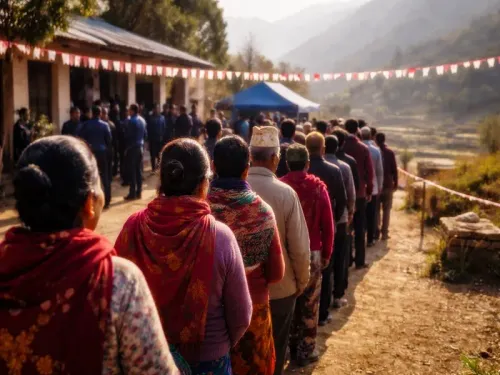
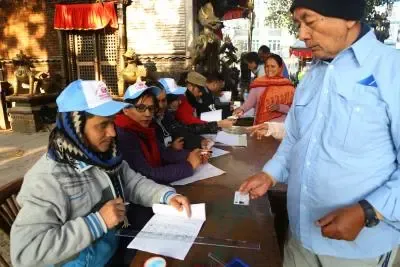
Bangkok, February 1 (NationPress) The early voting process for the House of Representatives election in Thailand commenced at 8 a.m. local time on Sunday. This initiative allows over 2 million eligible voters, who are unable to participate on the official polling date of February 8, to cast their votes early.
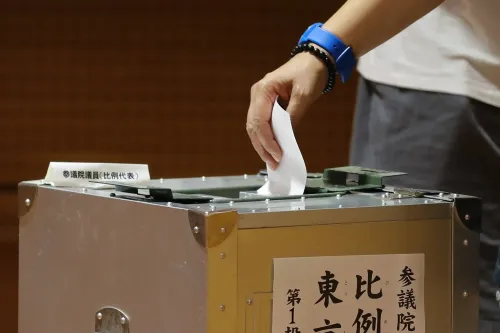
Participants in the early voting received two ballot papers at the polling stations: one for selecting a constituency candidate for the House of Representatives and another for voting for their favored political party. The early voting period ended at 5 p.m. on the same day, and all ballots will be counted collectively after February 8, according to reports from the Xinhua news agency.
In total, over 50 million Thai voters will elect 500 members of the House of Representatives, with 400 being elected from local constituencies and the remaining 100 allocated to political parties based on the proportion of their popular votes.
As stated by the Election Commission of Thailand, 57 political parties are competing for the House seats and have nominated over 90 candidates for the prime ministerial position. Official results of the final vote count must be released no later than April 9. The newly elected parliament will convene within 15 days to elect a speaker, after which the House of Representatives will select a new prime minister.
Leading up to the election, political parties and their candidates for parliamentary seats and the premiership have been conducting campaign rallies nationwide, with campaign advertisements visible throughout the streets and alleys.
Pre-election opinion polls from various institutions indicate that the conservative Bhumjaithai Party, led by caretaker Prime Minister Anutin Charnvirakul, is in close competition with the People's Party, which is the successor to the progressive Move Forward Party that secured the most seats in the last general election. The populist Pheu Thai Party, associated with the family of former Prime Minister Thaksin Shinawatra, is also closely trailing the frontrunners.
Current public opinion analysis suggests that no single party is likely to achieve an outright majority, making the formation of a new government contingent upon post-election negotiations among political factions.
The last general election in Thailand took place in May 2023, with caretaker Prime Minister Anutin being appointed as the third prime minister since then. He assumed office in September 2025 with the backing of the People's Party, following an agreement to initiate a constitutional amendment process.
However, a constitutional amendment proposal advanced by the People's Party did not succeed in parliament on December 11, 2025. Subsequently, the party introduced a no-confidence motion against Anutin's administration, leading to Anutin's immediate dissolution of the House of Representatives.
Point of View
My perspective aligns with the importance of democratic participation in Thailand. The early voting initiative is a significant step in ensuring that every citizen's voice is heard, especially for those unable to vote on the main polling day. This election represents a pivotal moment in shaping the nation's political landscape.
NationPress
30 Sept 2026
Frequently Asked Questions
What is early voting?
Early voting allows eligible voters to cast their ballots before the official election day, ensuring greater participation.
How many members will be elected in this election?
A total of 500 members will be elected to the House of Representatives.
What is the deadline for the final vote count?
The official vote count results are required to be released by April 9.
How many political parties are contesting?
There are 57 political parties contesting in this election.
What was the outcome of the last general election?
The last general election was held in May 2023, and it resulted in significant changes in the political landscape.