When Does Early Voting Begin for Japan's Lower House Election?
Synopsis
The early voting period for Japan's House of Representatives election has commenced, with voters both abroad and domestically participating ahead of the crucial February 8 vote. Political sentiments run high as citizens express their views on pressing issues, reflecting on the importance of their voices in shaping the nation's future.
Key Takeaways
Early voting has started for Japan's House of Representatives election.
Polling stations are available for 103,000 overseas voters .
Concerns about voter turnout are rising due to recent weather impacts.
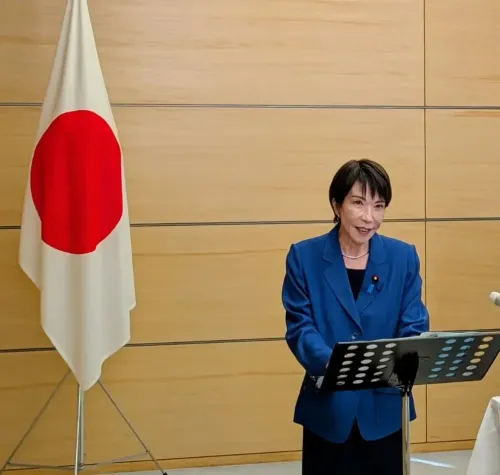
Prime Minister Sanae Takaichi has called for a snap election.
Debates will focus on crucial political and economic issues.
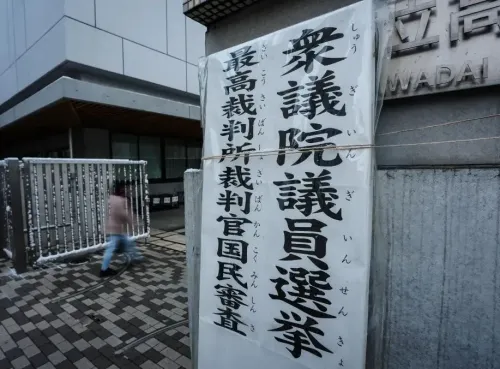
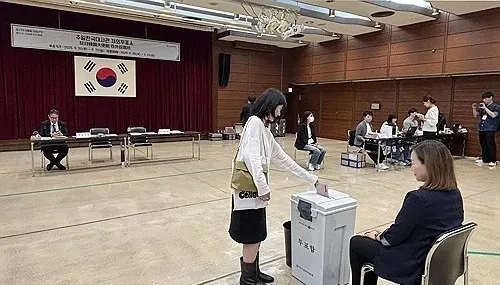
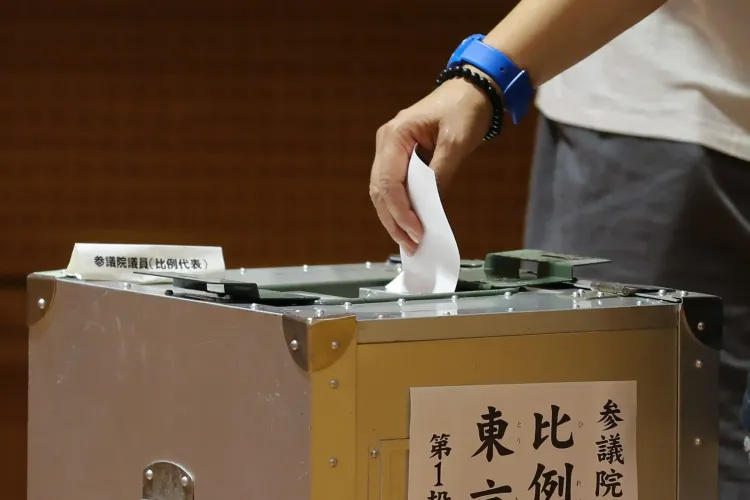
Tokyo, Jan 28 (NationPress) Early voting for Japan's House of Representatives election, which is set for February 8, commenced at Japanese diplomatic missions across the globe and at specific locations within Japan on Wednesday, as reported by local news outlets.
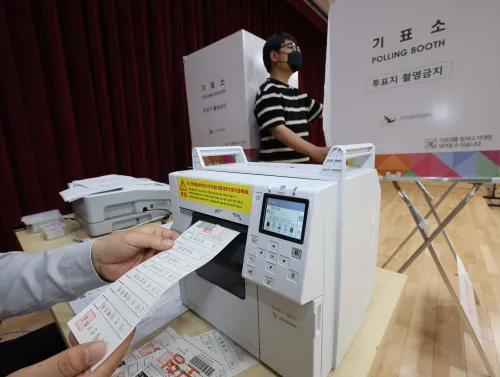
Polling stations have been established in 233 locations abroad, including embassies and consulates, to cater to approximately 103,000 registered overseas voters, according to the Japanese government and Kyodo News. Additionally, voters within Japan can participate in early voting at designated sites if they are unable to cast their votes on February 8.
At the Japanese Embassy in Seoul, graduate student Naoya Maeda shared his hopes that politicians would heed the voices of ordinary citizens. He remarked, "Every time I travel back to Japan, I'm struck by how costly everything has become." Maeda noted that his experience as a foreigner in South Korea heightened his interest in related policies and that he could not support parties with exclusionary views.
Seiji Funamoto, a 74-year-old resident of Sydney, emphasized the importance of policies affecting foreigners, such as land acquisition regulations. While voting at the consulate, he stated, "I want Japan to stand firm without yielding to pressures from other nations, including China."
In the previous lower house election in 2024, around 20.95 million individuals participated in early voting. However, there are worries that voter turnout may decrease this election, as the gap between the dissolution of the lower chamber and the voting date is the shortest in the post-war period, compounded by heavy snowfall affecting some regions, which has led to delays in the delivery of polling station tickets.
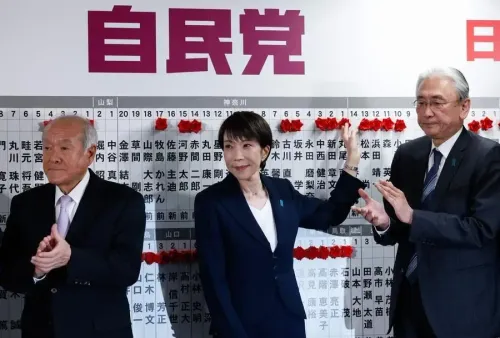
On January 23, Japanese Prime Minister Sanae Takaichi announced the dissolution of the House of Representatives for a snap election scheduled for February 8. Takaichi's cabinet approved the dissolution of the 465-member chamber, as reported by Kyodo News. Notably, this is the first time in sixty years that a lower house has been dissolved at the beginning of a regular session.
Takaichi has emphasized her decision to hold the elections stems from her lack of public support since taking office last October. The ruling coalition has proposed suspending the consumption tax on food, while the opposition alliance has suggested eliminating it entirely for such products. Upcoming election debates will address topics like politics and finances, which have garnered attention due to a slush fund scandal involving the Liberal Democratic Party (LDP) in recent years, as well as issues related to foreign residents and tourists.
Although Takaichi's cabinet enjoys a high support rating, the ruling coalition holds a slim majority in the lower chamber and is a minority in the House of Councillors, necessitating cooperation with opposition lawmakers to pass legislation. Opposition parties have criticized Takaichi for calling an election prior to the parliament's approval of the initial budget for fiscal 2026, commencing in April, accusing her of prioritizing political motives.
Point of View
It is imperative to highlight that the upcoming election reflects the evolving sentiments of the Japanese populace. Citizens are actively engaging in the democratic process, emphasizing the importance of representation and transparency in governance. It is critical that the voices of all voters, both domestic and overseas, are accounted for in shaping Japan's future.
NationPress
29 Sept 2026
Frequently Asked Questions
What is the date of the House of Representatives election in Japan?
The House of Representatives election in Japan is scheduled for February 8.
Where can overseas voters cast their ballots?
Overseas voters can cast their ballots at polling stations set up in embassies and consulates worldwide.
How many registered voters are there overseas?
There are approximately 103,000 registered overseas voters in Japan.
What issues are being debated in the upcoming election?
The upcoming election debates will cover topics such as the economy, consumption tax on food, and foreign policies affecting residents and tourists.
Who is the current Prime Minister of Japan?
The current Prime Minister of Japan is Sanae Takaichi.