Will Thailand's military operations continue until all threats are eliminated?
Synopsis
Thailand's Prime Minister Anutin Charnvirakul has stated that military operations will continue until threats to the country's territory and people are fully addressed. This announcement follows recent tensions with Cambodia and comments from US President Donald Trump regarding the conflict. Stay informed about this evolving situation.
Key Takeaways
Thailand continues military operations until threats are neutralized.
Cambodia calls for an end to military actions against its territory.
Both nations have suffered casualties due to the ongoing conflict.
International community urges peaceful dialogue and adherence to laws.
Potential for escalation exists without diplomatic resolution.
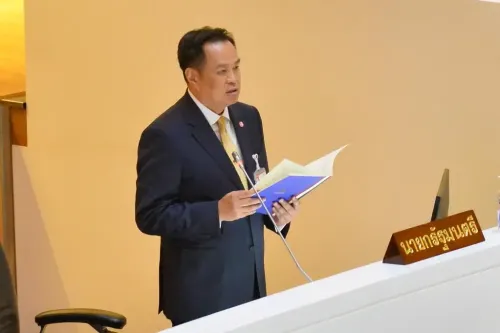
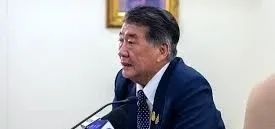
Bangkok, Dec 13 (NationPress) The Prime Minister of Thailand, Anutin Charnvirakul, declared in a social media update on Saturday that the nation's military operations will persist until the safety of Thailand's territory and its people is assured.
Anutin also addressed remarks made by US President Donald Trump, clarifying, "This is certainly not a mere accident on the roadside." Trump had previously described the roadside bomb incident that resulted in multiple casualties among Thai military personnel as an "accident," while acknowledging that Thailand's reaction was "very strong."
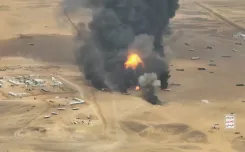
"Our actions this morning have already conveyed our stance," Anutin stated, according to reports from the Xinhua news agency. Sources from the military indicated on Saturday that the Royal Thai Air Force launched two F-16 fighter jets to target locations along the Cambodia border.
In response, Cambodia urged Thailand to halt military actions against its territory and civilian structures, as stated by Cambodian Minister of Information Neth Pheaktra on Saturday.
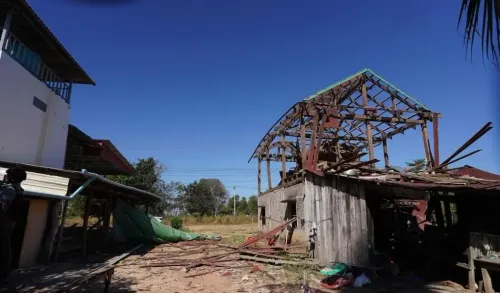
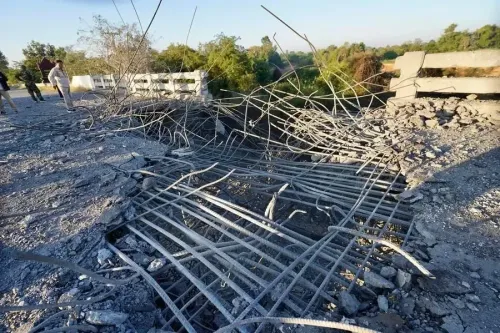
On Saturday morning, Thai forces employed two F-16 fighter jets to attack a hotel and two bridges at the Thmor Da checkpoint in the Veal Veng District of Pursat Province, he noted.
Pheaktra remarked, "Thai forces have broadened their attacks to include Cambodian civilians and residential areas, targeting civilian structures." He added that, as of Friday, Thai military operations have resulted in 11 civilian fatalities and 59 injuries.
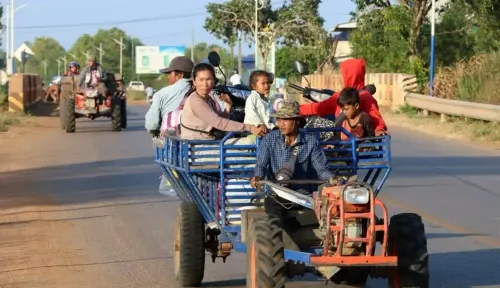
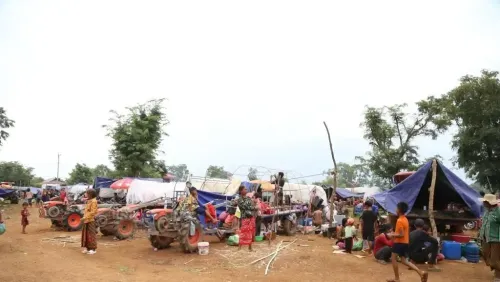
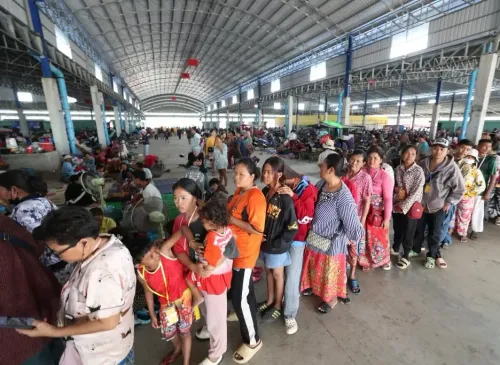
Currently, there are 89,687 displaced families across five provinces, totaling 303,213 individuals.
The minister emphasized that Thailand has consistently violated Cambodia's sovereignty and disrupted the ceasefire with ongoing military actions within Cambodian territory.
Pheaktra reiterated Cambodia's commitment to peace, dialogue, and adherence to international law.
Thailand's caretaker Prime Minister Anutin Charnvirakul and Cambodian Prime Minister Hun Manet each held phone discussions with US President Donald Trump on Friday regarding their border dispute. Trump later mentioned that both leaders had agreed to a ceasefire effective that Friday evening, a claim that was denied by the Thai side on Saturday.
Following armed confrontations in late July, the border dispute between Thailand and Cambodia reignited on December 7. Both nations accused each other of instigating attacks and confirmed casualties. At least 10 Cambodian civilians and 11 Thai soldiers lost their lives, with hundreds of thousands compelled to evacuate.
The armed clashes between Cambodian and Thai forces commenced on July 24 along their border, leading to numerous casualties, with both sides accusing one another of breaching international law.
A consensus on a ceasefire was reached on August 7, with both parties signing an agreement during an extraordinary meeting of the General Border Committee held in Kuala Lumpur, Malaysia.
On October 26, the two leaders signed a joint declaration for peace at the 47th ASEAN Summit in the Malaysian capital.
Point of View
It is crucial to acknowledge the ongoing tensions and the potential for escalation in military actions between Thailand and Cambodia. The focus should remain on diplomatic dialogue and conflict resolution to ensure peace and stability in the region, emphasizing the need for adherence to international law.
NationPress
20 Sept 2026
Frequently Asked Questions
What is the reason for Thailand's military operations?
Thailand's military operations are aimed at addressing threats to the nation's territory and its people, as stated by Prime Minister Anutin Charnvirakul.
What has Cambodia's response been to Thailand's actions?
Cambodia has urged Thailand to immediately cease military actions against its territory and civilian infrastructure.
What casualties have occurred due to the conflict?
The ongoing military actions have resulted in 11 civilian deaths and 59 injuries on the Cambodian side, with many families displaced.
Is there a ceasefire agreement in place?
While President Trump claimed that a ceasefire was agreed upon, the Thai side has denied this, indicating ongoing tensions.
What was the international response to the conflict?
International calls for peace and dialogue have emerged, emphasizing the importance of resolving the conflict through diplomatic means.