Does the US still face an ISIS threat despite territorial losses?
Synopsis
As the U.S. grapples with persistent threats from ISIS and al-Qaida, new insights from Gregory D. LoGerfo reveal the evolving landscape of terrorism and the need for global cooperation. Discover the implications of these findings on national security and international relations.
Key Takeaways
ISIS and al-Qaida remain active despite territorial losses.
The U.S. is committed to dismantling terrorist networks.
Recent violence highlights the ongoing threat.
Cooperation with international allies is critical.
Iran continues to destabilize the Middle East .
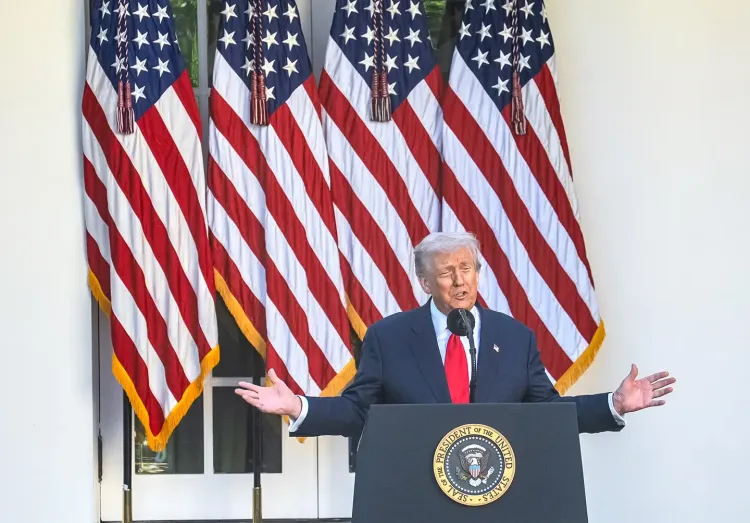
Washington, Dec 13, (NationPress): The United States is still contending with a shifting threat posed by ISIS and al-Qaida, despite extensive counterterrorism efforts, according to President Donald Trump’s candidate for the top counterterrorism position at the State Department.
Gregory D. LoGerfo, nominated as the coordinator for counterterrorism and ambassador-at-large, informed the Senate Foreign Relations Committee that these extremist factions remain operational, capable of inciting attacks on a global scale.
“Both ISIS and al-Qaida persist in recruiting, radicalizing, and motivating their followers around the world to execute assaults within their home nations,” LoGerfo stated during his confirmation hearing.
He pointed to recent outbreaks of violence as indicators of the ongoing threat.
“The New Year’s Day incident in New Orleans serves as a stark reminder of ISIS’s enduring reach, capabilities, and ambitions,” he remarked.
LoGerfo emphasized that the Trump administration is dedicated to thwarting attacks by dismantling terrorist networks and holding accountable those who sponsor them.
“The Trump administration is devoted to averting a significant terrorist attack on American soil,” he noted, mentioning strategies such as “disrupting and dismantling terrorist networks, securing our borders, and degrading the operational capacity of these groups.”
He remarked that the current threat landscape has evolved from that experienced in the post-9/11 era.
“The terrorist threats we encounter today are distinct from those present after the September 11 attacks,” LoGerfo explained.
Additionally, he cautioned that Iran and its affiliates continue to be destabilizing forces.
“While Iran has faced significant weakening, Tehran and its terrorist proxies, such as the Houthis, Hezbollah, and Hamas, continue to undermine stability in the Middle East,” he asserted.
LoGerfo mentioned that the U.S. is vigilant about potential global threats aimed at “U.S. officials, journalists, Jewish entities, and Iranian dissidents.”
In relation to Africa, he indicated that ISIS and al-Qaida affiliates are expanding their presence in the Sahel, necessitating closer collaboration with regional and European allies.
“When we share risks, we must also share burdens,” he stated.
On the subject of Afghanistan, he noted that the U.S. continues to confront ISIS Khorasan despite prior successes.
For India, U.S. evaluations that ISIS and al-Qaida remain active align with New Delhi’s long-standing belief that extremist networks endure despite territorial setbacks, highlighting the necessity for ongoing global counterterrorism cooperation.
Point of View
It's essential to recognize that while the U.S. has made strides in combating terrorism, the evolving nature of threats from ISIS and al-Qaida necessitates a reevaluation of strategies. Continued vigilance and cooperation among nations are critical in addressing these challenges effectively.
NationPress
20 Sept 2026
Frequently Asked Questions
What are the current threats from ISIS and al-Qaida?
ISIS and al-Qaida continue to recruit and inspire attacks globally, despite territorial losses.
How is the U.S. responding to these threats?
The U.S. is focused on dismantling terrorist networks and holding state sponsors accountable.
What role does Iran play in global terrorism?
Iran and its proxies, including Hezbollah and Hamas, are considered destabilizing forces in the Middle East.
What is the significance of the Sahel region in this context?
ISIS and al-Qaida affiliates are expanding in the Sahel, requiring closer cooperation with regional partners.
How does this impact international relations?
The ongoing threat from extremist groups underscores the need for sustained global counterterrorism cooperation.