Tharparkar District Still Awaiting Development Promised by Thar Coal Project
Synopsis
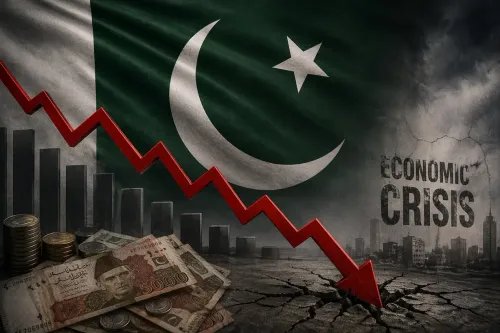
Despite promises made in 2019 by key political figures, the Thar Coal project has not yielded the expected benefits for Tharparkar district. With significant royalty earnings, the lack of investment underscores a failure in governance and accountability.
Key Takeaways
Promises of development from the Thar Coal project remain unfulfilled.
The Sindh government has earned significant royalties, yet investment in Tharparkar is minimal.
Tharparkar continues to be one of Pakistan's poorest districts.
The Thar Foundation's budget is insufficient compared to coal-derived revenues.
A formal mechanism for fund allocation is lacking, causing governance issues.
New Delhi, March 31 (NationPress) Promises made in 2019 by PPP Co-chairperson Bilawal Bhutto-Zardari and Sindh Chief Minister Murad Ali Shah that all royalties from the Thar Coal project would be allocated to the development of Tharparkar district in Sindh have yet to be realized, as reported by the Business Recorder based in Karachi.
From 2023 to 2025, the provincial government is projected to have earned around Rs 50 billion in royalties from coal mining, and also profited from its 54.7 percent stake in the Sindh Engro Coal Mining Company, making it a key beneficiary of the project's financial success. However, the report highlights that public investment in the district remains notably low compared to these substantial earnings.
The allocation for the Annual Development Programme for Tharparkar was approximately Rs 10 billion in FY2024-25, which is merely a fraction of the revenues generated from the region, the report observes.
Despite claims from representatives of the Sindh government regarding investments in roads, hospitals, and schools in the area, Tharparkar continues to be one of the poorest districts in Pakistan, exhibiting a staggering poverty rate of 76.9 percent, according to a 2025 World Bank report.
The gap is especially evident in the social sector. The Thar Foundation, which oversees welfare efforts in the district, operates on an annual budget of Rs 750 million. Although this may appear considerable in isolation, it pales in comparison to the tens of billions procured from the coal reserves, the report notes.
At the core of the issue is a fundamental institutional failure. There currently exists no formal mechanism, backed by legislation, that clearly defines how the funds generated from the Thar Coal project should be allocated from provincial accounts to the entities responsible for spending them in Tharparkar.
The initial promise that the district's coal wealth would bring about real development for its marginalized communities has largely remained unfulfilled, as the absence of a structured, transparent, and legally binding system signifies a serious oversight by the Sindh government, the report concludes.
Point of View
It's essential to recognize the stark contrast between the financial gains from the Thar Coal project and the lack of developmental progress in Tharparkar district. This situation calls for accountability and a structured approach to ensure that the wealth generated benefits the local communities.
NationPress
1 Oct 2026
Frequently Asked Questions
What was promised to the Tharparkar district?
In 2019, it was promised that 100% of the royalties from the Thar Coal project would be used for the development of Tharparkar district.
How much has the Sindh government earned from coal royalties?
The Sindh government is estimated to have collected around Rs 50 billion in royalties from coal extraction between 2023 and 2025.
What is the current poverty rate in Tharparkar?
According to a 2025 World Bank report, Tharparkar has a poverty rate of 76.9%.
What is the budget of the Thar Foundation?
The Thar Foundation operates on an annual budget of Rs 750 million.
What is the main issue highlighted in the report?
The report emphasizes a lack of a formal mechanism for allocating funds from Thar Coal royalties to Tharparkar, resulting in unfulfilled promises of development.