US, South Korea, Japan reaffirm North Korea denuclearisation at UN talks
Synopsis
On the sidelines of the UN General Assembly, the top diplomats of the US, South Korea, and Japan issued a joint call for North Korea's complete denuclearisation — even as President Trump pursues a personal summit with Kim Jong-un. The same statement pushed back on China's Taiwan posture just days before a Trump-Xi White House summit, making this a quietly high-stakes diplomatic signal on two fronts at once.
Key Takeaways
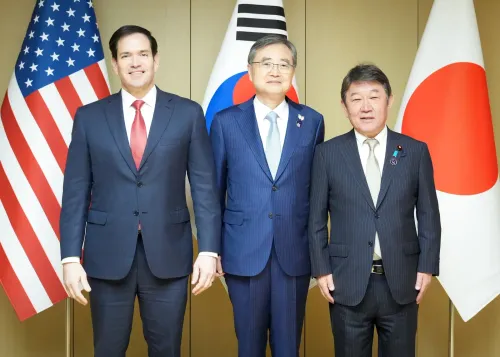
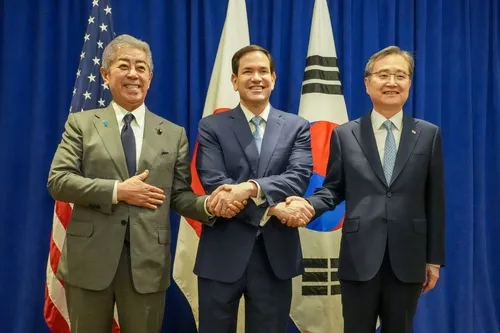
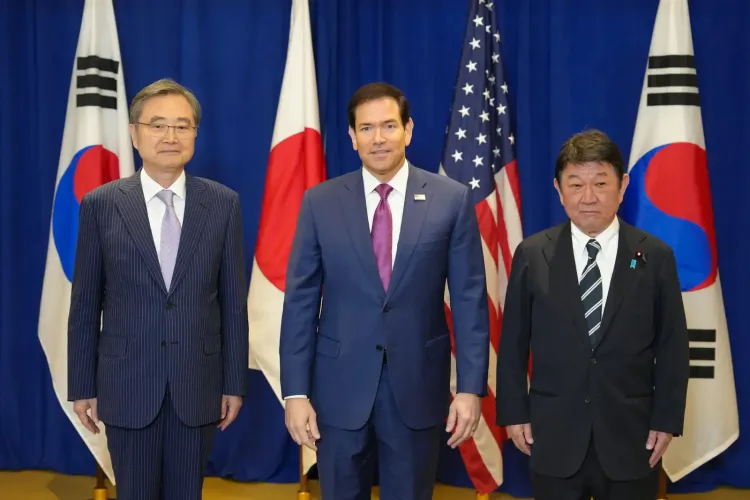
US Secretary of State Marco Rubio , South Korean Foreign Minister Cho Hyun , and Japanese Foreign Minister Toshimitsu Motegi held trilateral talks in New York on 22 September 2026 on the sidelines of the UN General Assembly .
The three governments reaffirmed 'resolute' commitment to the 'complete' denuclearisation of North Korea (DPRK) and called on Pyongyang to resume dialogue.
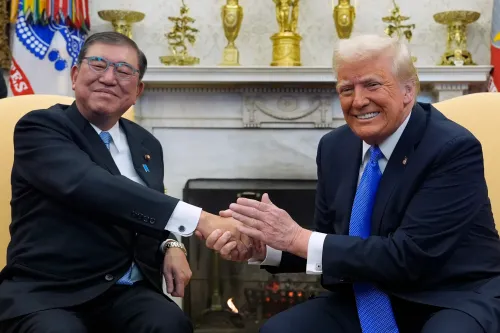
US President Trump reportedly hopes to meet North Korean leader Kim Jong-un later this year to revive personal diplomacy.
The statement opposed any unilateral change to the status quo across the Taiwan Strait , days ahead of a Trump-Xi summit at the White House on Thursday.
The three sides welcomed the Multilateral Sanctions Monitoring Team (MSMT) 's work and committed to a trilateral supply chain early warning system and small modular reactor (SMR) deployment cooperation.
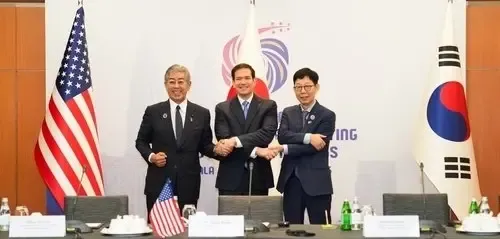
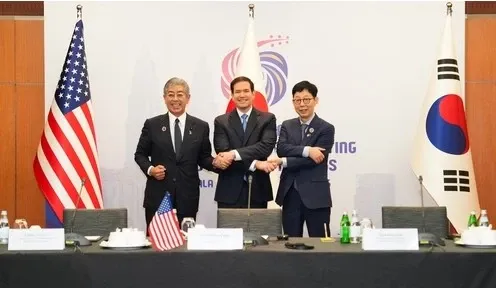
This was the third such trilateral meeting in 2026 , following sessions at the NATO summit in Turkey on 7 July and in the Philippines on 22 July .
South Korean Foreign Minister Cho Hyun, US Secretary of State Marco Rubio, and Japanese Foreign Minister Toshimitsu Motegi met on the sidelines of the UN General Assembly High-Level Week in New York on 22 September 2026, issuing a joint statement reaffirming their 'resolute' commitment to the 'complete' denuclearisation of North Korea and calling on Pyongyang to resume dialogue. The trilateral statement marks the third such meeting of the three nations' top diplomats this year, underscoring the durability of this diplomatic alignment amid shifting geopolitical currents.
Core Commitment on North Korea
The three governments stated that they 'reaffirmed their resolute commitment to the complete denuclearisation of the Democratic People's Republic of Korea (DPRK) and the prohibition on support for revenue generation for the DPRK's nuclear and ballistic missile programs in accordance with the relevant UN Security Council (UNSC) resolutions.' They simultaneously declared that 'the path to dialogue remains open,' calling on Pyongyang to re-engage.
The statement comes as US President Donald Trump reportedly hopes to arrange a personal meeting with North Korean leader Kim Jong-un later this year — an attempt to revive the personal diplomacy that characterised his earlier engagements with the Kim regime. Washington simultaneously reiterated its 'ironclad' defence commitments to both Seoul and Tokyo, 'backed by America's unmatched military strength, including its nuclear capabilities.'
Sanctions Monitoring and Cyber Threats
The three nations welcomed the work of the Multilateral Sanctions Monitoring Team (MSMT), established in 2024 to track North Korea's evasions and breaches of UNSC resolutions. They specifically welcomed alerts issued to countries, companies, and entities regarding North Korean IT workers believed to generate illicit revenue for Pyongyang's weapons programmes. The statement also cited progress in countering DPRK cyber threats, including through a trilateral working group session held in June.
Taiwan Strait and Indo-Pacific Stability
The diplomats underlined the importance of peace and stability across the Taiwan Strait, where tensions persist as Beijing has not ruled out the use of force to bring Taiwan — a self-governing democracy — under its control. The three sides 'encouraged the peaceful resolution of cross-Strait issues and opposed any attempts to unilaterally change the status quo,' while expressing support for Taiwan's meaningful participation in appropriate international organisations.
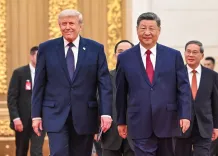
Notably, the statement's Taiwan language was issued just days before US President Trump and Chinese President Xi Jinping are scheduled for a summit at the White House on Thursday, at which the leaders are expected to cover a range of bilateral and geopolitical issues. The three governments also underscored their support for freedom of navigation and overflight in the Indo-Pacific, in line with international law as reflected in the UN Convention on the Law of the Sea.
Economic Security and Supply Chains
Beyond security, the three sides resolved to push back against 'economic coercion and non-market policies and practices leading to harmful overcapacity and market distortion, including arbitrary export restrictions that disrupt supply chains.' They committed to enhancing a trilateral supply chain early warning system and welcomed the launch of a new trilateral consultation on economic security.
The diplomats also pledged to implement the July 7 trilateral Memorandum of Cooperation to accelerate small modular reactor (SMR) deployments in third countries under the highest standards of nuclear safety, security, and nonproliferation. Cooperation on advanced technologies — including artificial intelligence, quantum technology, digital infrastructure, and biotechnology — was also highlighted as a priority.
Pattern of Trilateral Engagement
This was the third trilateral meeting of the three nations' chief diplomats in as many months. Previous sessions were held on the margins of the NATO summit in Turkey on 7 July and on the sidelines of an ASEAN-linked regional forum in the Philippines on 22 July. The frequency signals a deliberate institutionalisation of this format as a counterweight to growing uncertainties in the international security environment, particularly those emanating from Northeast Asia and the Middle East.
Frequently Asked Questions
What did the US, South Korea, and Japan agree on at the UN General Assembly talks?
The three nations reaffirmed their commitment to the complete denuclearisation of North Korea and called on Pyongyang to resume dialogue, in a joint statement issued after trilateral talks in New York on 22 September 2026. They also underlined peace and stability across the Taiwan Strait and pledged deeper cooperation on economic security and supply chains.
Why are the US, South Korea, and Japan pushing for North Korea dialogue now?
The call comes as US President Trump reportedly hopes to arrange a personal meeting with North Korean leader Kim Jong-un later in 2026. The trilateral statement ensures allies publicly align with a denuclearisation-first position even as Washington pursues personal diplomacy with Pyongyang.
What is the Multilateral Sanctions Monitoring Team (MSMT)?
The MSMT is a monitoring body established in 2024 to track North Korea's evasions and violations of UN Security Council sanctions. The three nations welcomed its ongoing work, including alerts to companies and countries about North Korean IT workers used to generate illicit revenue for weapons programmes.
Why did the three countries mention Taiwan in this statement?
The three diplomats expressed support for the peaceful resolution of cross-Strait issues and opposed any unilateral change to the status quo, as tensions between Beijing and Taiwan remain elevated. The statement is particularly notable because it was issued days before a scheduled Trump-Xi summit at the White House on Thursday.
How often have these three nations held such trilateral diplomatic meetings in 2026?
This was the third trilateral meeting of the chief diplomats of the US, South Korea, and Japan in 2026. Previous sessions were held at the NATO summit in Turkey on 7 July and at an ASEAN-linked forum in the Philippines on 22 July.