Exiled East Turkistan govt urges Trump to raise Uyghur genocide with Xi at Washington summit
Synopsis
With Xi Jinping arriving in Washington for a state visit on 23 September, the East Turkistan Government-in-Exile is making a calculated pitch — framing Xinjiang not as a distant human rights cause but as the resource-rich, missile-silo-studded strategic heartland underpinning China's rivalry with the US. The ask: don't trade Uyghur accountability for a trade deal.
Key Takeaways
The East Turkistan Government-in-Exile (ETGE) has urged President Trump to raise the Xinjiang genocide issue directly with Xi Jinping during their 23–25 September Washington summit.
The ETGE argues Xinjiang holds ~30% of China's onshore petroleum, 34% of natural gas, and over 40% of its coal resources.
The exiled government alleges China has built approximately 110 ICBM silos near Qumul in the region.
ETGE President Mamtimin Ala and Foreign Minister Salih Hudayar called on the US to reject agreements that weaken forced-labour restrictions or accountability mechanisms.
Trade, AI, and critical minerals are expected to dominate the Xi–Trump talks, raising fears that human rights concerns could be sidelined.
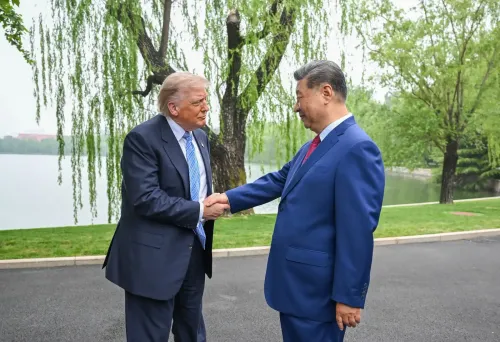
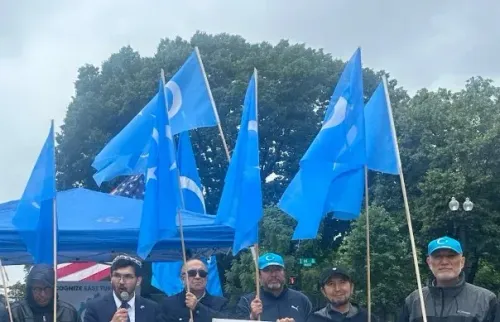
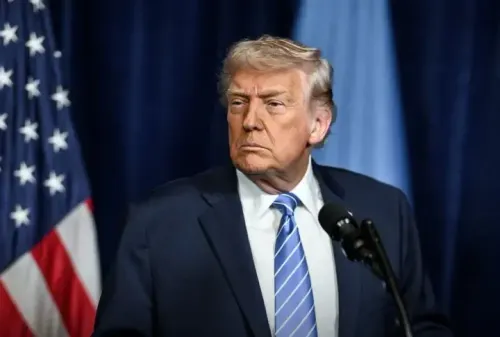
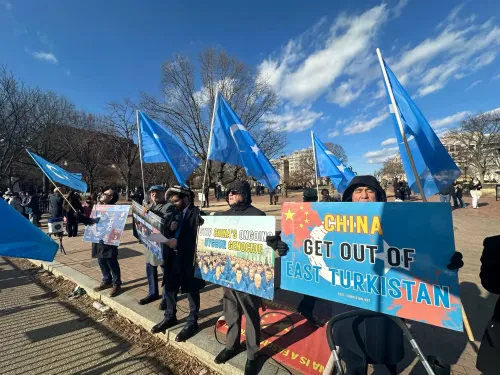
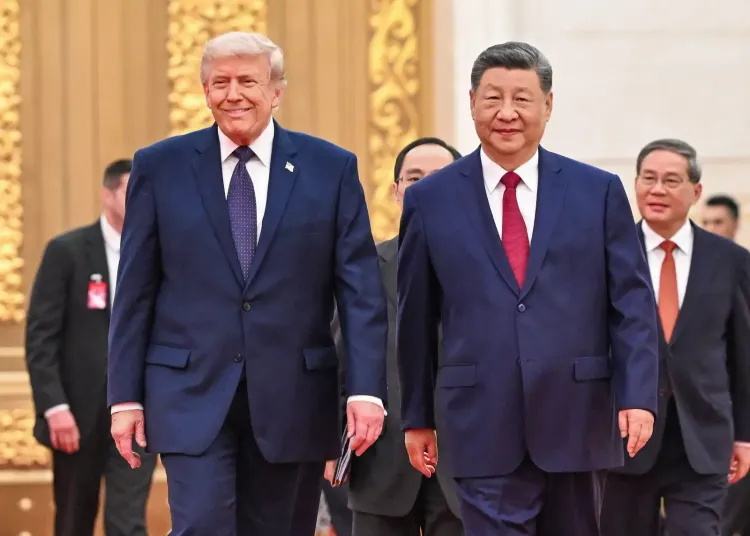
The East Turkistan Government-in-Exile (ETGE) has urged US President Donald Trump to directly confront Chinese President Xi Jinping over Beijing's alleged 'ongoing genocide' against Uyghurs, Kazakhs, Kyrgyz, and other Turkic peoples in East Turkistan — also known as the Xinjiang Uyghur Autonomous Region — during their upcoming bilateral meeting in Washington. The appeal was issued ahead of Xi's state visit to the United States from 23–25 September, during which the two leaders are expected to discuss bilateral ties, world peace, and development, according to China's Foreign Ministry.
The Strategic Stakes Behind the Plea
The ETGE argues that Xinjiang is far from a peripheral human rights issue — framing it instead as a central node in China's economic and military power. According to Chinese government figures cited by the exiled authorities, approximately 30 percent of China's onshore petroleum resources, 34 percent of its natural-gas reserves, and more than 40 percent of its coal resources lie within the region. Beijing itself, the ETGE noted, designates the territory a 'core area' and key gateway of the Belt and Road Initiative linking China with Central Asia and wider Eurasia.
The exiled government also highlighted what it described as significant military infrastructure in the region. Near Qumul, it alleged, the Chinese military has constructed a field containing approximately 110 intercontinental ballistic-missile silos, while Lop Nur historically served as China's nuclear testing ground. Chinese authorities, the ETGE added, are reportedly expanding large-scale computing and artificial intelligence infrastructure across the territory.
What the ETGE Is Asking of Trump
The exiled body called on the Trump administration to ensure that any agreement reached with Beijing does not come at the cost of the East Turkistani people. Trade, artificial intelligence, and critical minerals are widely expected to dominate the Washington talks. The ETGE specifically urged the US President to reject deals that weaken accountability mechanisms or forced-labour restrictions, press Beijing to release arbitrarily detained East Turkistanis, and formally support the people's 'right to decolonisation and the restoration of national independence and sovereignty.'
Mamtimin Ala, President of the East Turkistan Government-in-Exile, said Trump should make clear to Xi that 'genocide, colonial occupation, and the exploitation' of the region cannot be separated from the broader strategic challenge China poses to the United States.
The Strategic Argument for US Intervention
Salih Hudayar, Foreign Minister of the ETGE and President of the East Turkistan National Movement, articulated the case in explicitly strategic terms: 'The critical minerals, energy resources, trade routes, and military infrastructure Beijing controls through Occupied East Turkistan are pillars of Chinese strategic power. East Turkistan's independence is therefore not only essential to the survival of our people, but also directly relevant to America's long-term strategic interests.'
The ETGE's framing — linking humanitarian concerns to US geopolitical self-interest — reflects a deliberate effort to move the Xinjiang issue from the margins of human rights advocacy into the centre of great-power competition discourse. This comes amid heightened global scrutiny of China's policies in the region, with the United States, United Kingdom, and European Union having previously imposed sanctions over documented abuses.
What Happens Next
Whether the Trump administration heeds the ETGE's appeal remains to be seen. Trade and technology are expected to dominate the Washington agenda, with critics warning that human rights concerns risk being traded away for economic concessions. The outcome of the Xi–Trump summit on 23–25 September will be closely watched by Uyghur diaspora groups, human rights organisations, and geopolitical analysts alike.
Point of View
Critical minerals, and Belt and Road geography, the exiled government is trying to make Xinjiang impossible to trade away quietly in a back-room tariff deal. The uncomfortable truth, however, is that every major US–China summit since 2015 has seen human rights concerns subordinated to economic priorities. If trade and AI dominate the Washington agenda — as widely expected — the ETGE's appeal may be noted, filed, and forgotten, no matter how strategically it is framed.
NationPress
22 Sept 2026
Frequently Asked Questions
What is the East Turkistan Government-in-Exile asking of President Trump?
The ETGE is urging Trump to directly confront Xi Jinping over China's alleged ongoing genocide against Uyghurs and other Turkic peoples in Xinjiang during their Washington summit on 23–25 September 2026. Specifically, it wants the US to reject deals that weaken forced-labour restrictions, press Beijing to free detained East Turkistanis, and support the region's right to self-determination.
Why does the ETGE say Xinjiang matters to US strategic interests?
The ETGE argues that Xinjiang contains roughly 30% of China's onshore oil, 34% of its natural gas, and over 40% of its coal, and hosts approximately 110 intercontinental ballistic-missile silos near Qumul. It contends that China's control of this territory directly underpins Beijing's strategic competition with Washington, making Xinjiang's status a US security concern, not just a human rights one.
When is Xi Jinping's state visit to the United States?
Chinese President Xi Jinping's state visit to the United States runs from 23 to 25 September 2026. During the visit, Xi and Trump are expected to hold a bilateral meeting covering major issues including trade, artificial intelligence, critical minerals, and bilateral relations, according to China's Foreign Ministry.
Who leads the East Turkistan Government-in-Exile?
The East Turkistan Government-in-Exile is led by President Mamtimin Ala. Its Foreign Minister is Salih Hudayar, who also serves as President of the East Turkistan National Movement. Both officials have issued the current appeal to the Trump administration.
What is the genocide allegation against China in Xinjiang?
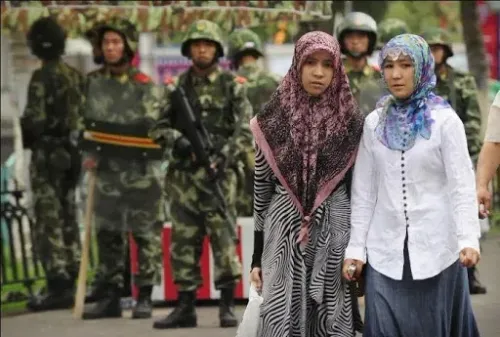
The ETGE and several Western governments allege that China is committing genocide against Uyghurs, Kazakhs, Kyrgyz, and other Turkic peoples in the Xinjiang Uyghur Autonomous Region, which the exiled government calls East Turkistan. Alleged abuses include mass detention, forced labour, and cultural suppression. China denies the genocide characterisation, calling its policies counter-terrorism and vocational training measures.