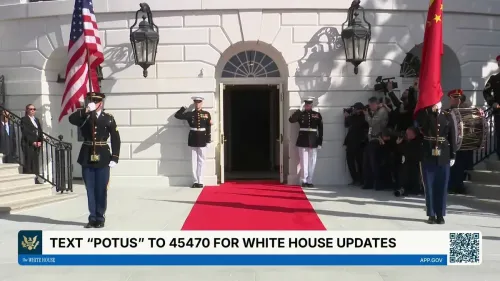
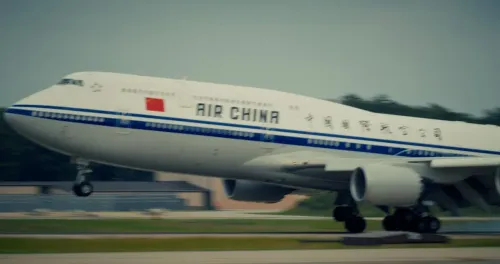
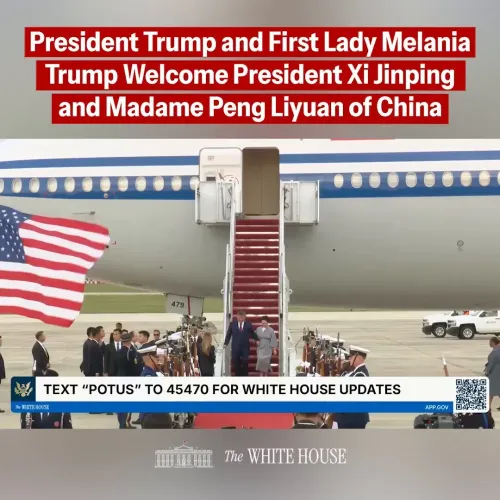
Trump Accepts Xi's China Invite Over Tea With First Ladies
Synopsis
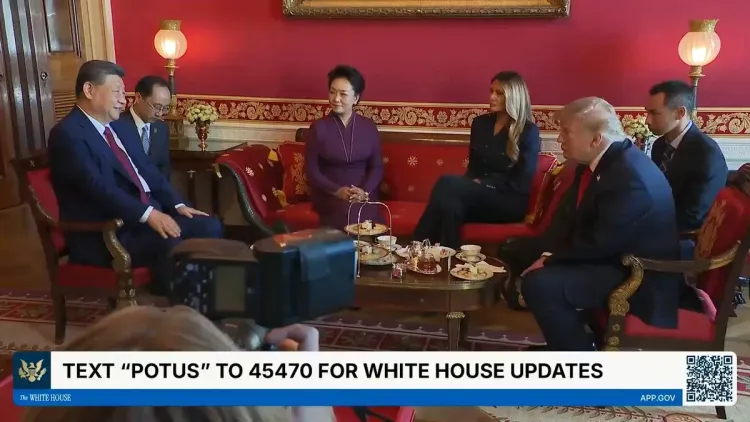
President Trump accepted a future invitation to visit China following a personal tea meeting with President Xi Jinping, Madame Peng Liyuan, and First Lady Melania Trump, with Trump declaring 'great things for both countries' — a warm diplomatic signal with major geopolitical stakes.
Key Takeaways
President Trump publicly accepted a future invitation to visit China at a personal meeting with President Xi Jinping .
The setting included Madame Peng Liyuan and First Lady Melania Trump , adding a deliberate personal warmth to the diplomatic exchange.
Trump declared 'America is very happy about this visit, and I'm sure China is very happy also.
Great things for both countries.' Trump-Xi personal engagements date to the April 2017 Mar-a-Lago summit, which laid the groundwork for the Phase One trade deal signed in January 2020 .
No specific date, location, or agenda for the future China visit has been confirmed.
A presidential visit to Beijing would carry significant weight on trade, technology, and Indo-Pacific security issues.
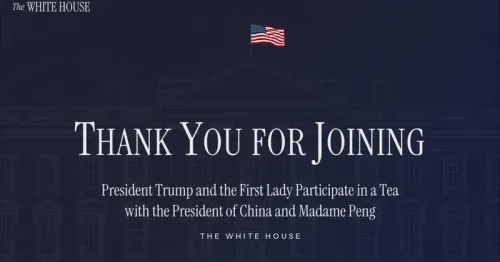
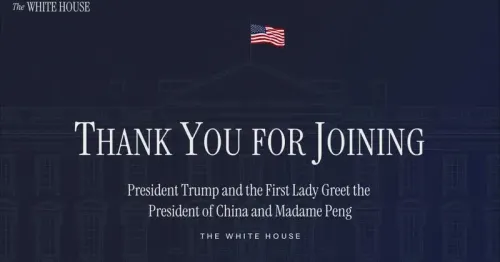
A cup of tea, two first ladies at the table, and a headline that redraws the diplomatic map. President Donald Trump accepted a future invitation to visit China during what the White House described as a warm personal exchange with President Xi Jinping, Madame Peng Liyuan, and First Lady Melania Trump — a setting that signals far more than small talk.
Trump's own words captured the mood: 'America is very happy about this visit, and I'm sure China is very happy also. Great things for both countries.' The phrasing — optimistic, symmetrical, almost theatrical in its warmth — was a deliberate public signal that both Washington and Beijing want this moment to land well.
Tea, Symbolism, and the Art of the Personal Reset
Leader-level meetings between Trump and Xi have rarely been purely ceremonial. The informal summit at Mar-a-Lago in April 2017 opened the channel for direct bilateral dialogue on trade and security; the Phase One trade agreement signed in January 2020 was its most concrete product. Tea ceremonies and personal invitation exchanges have been a recurring feature of this relationship — choreographed intimacy designed to soften the harder edges of economic competition and strategic rivalry. By including Madame Peng Liyuan and Melania Trump in the frame, both sides are reaching for the kind of human warmth that formal communiqués cannot manufacture. It is a proven playbook: when the leaders sit down with their spouses over tea, the message to markets, allies, and adversaries alike is that the relationship has a personal floor — a level below which neither side intends to let things fall.What a Future Beijing Visit Would Signal
The acceptance of an invitation to visit China is not a scheduled trip — it is a commitment in principle, and its diplomatic weight should not be understated. A sitting US president setting foot in Beijing would represent one of the highest-profile bilateral moments in recent memory, carrying enormous symbolic freight on questions of tariffs, technology access, and regional security in the Indo-Pacific. The specific timing, format, and agenda of any future visit remain open. Diplomatic watchers will track whether the trip gets anchored to a multilateral forum — a G20 or APEC summit, for instance — or whether it stands alone as a bilateral state visit, each option carrying a different political message. For now, a tea setting has produced the most consequential handshake of the season. The cup is half full — and both capitals are telling the world to notice.Point of View
Spousal settings to signal mutual intent when formal channels are strained. The inclusion of both first ladies elevates this beyond a courtesy exchange: it is a public commitment that raises the political cost of relationship deterioration for both sides. For the broader US-China arc, this moment echoes the Mar-a-Lago pattern — personal warmth as a scaffold for hard negotiations on tariffs and technology that will follow. The real test will be whether the invitation crystallises into a state visit on its own terms or gets quietly folded into a multilateral forum, a choice that will itself carry a diplomatic message.
NationPress
26 Sept 2026
Frequently Asked Questions
Has Trump accepted an invitation to visit China?
Yes. President Trump publicly accepted a future invitation to visit China during a personal meeting with President Xi Jinping, as announced by the White House on September 25, 2026 .
Who was present at the Trump-Xi tea meeting?
The meeting included President Trump , President Xi Jinping , Madame Peng Liyuan (First Lady of China), and Melania Trump (First Lady of the United States).
What did Trump say about the meeting with Xi Jinping?
Trump said: 'America is very happy about this visit, and I'm sure China is very happy also. Great things for both countries,' framing the exchange in optimistic, bilateral terms.
What is the history of Trump-Xi personal diplomacy?
Trump and Xi held an informal summit at Mar-a-Lago in April 2017 that opened direct leader-level dialogue, eventually leading to the US-China Phase One trade agreement signed in January 2020 .
When will Trump visit China?
No specific date or agenda has been confirmed. The White House announcement describes an acceptance of a future invitation; scheduling and agenda details remain to be announced.