Trump Declares 'America is BACK' After G7 Summit
Synopsis
President Donald J. Trump declared 'America is BACK' following the G7 summit, with the White House amplifying the statement on June 17, 2026. The remark signals a confident US re-engagement with the leading advanced-economy forum, echoing a recurring presidential narrative of restored global leadership after major multilateral summits.
Key Takeaways
Trump declared 'America is BACK' following his participation in the G7 summit , as shared by The White House on June 17, 2026 .
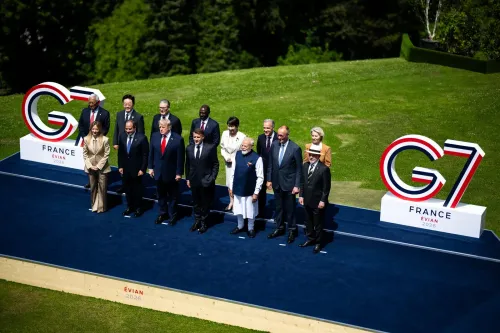
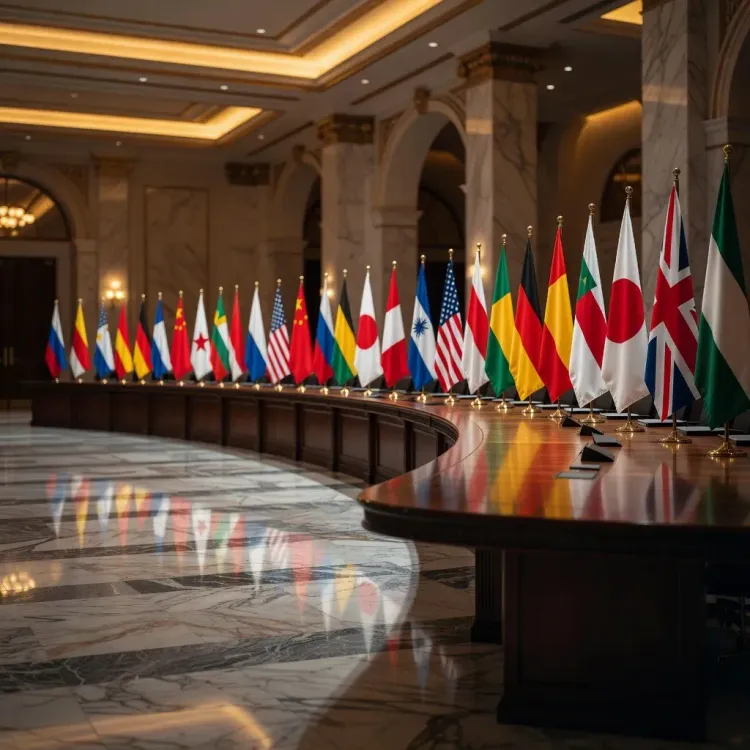
The G7 comprises seven of the world's leading advanced economies: the US, Canada, UK, France, Germany, Italy, Japan , and the EU .
Trump's previous G7 engagement — notably the 2018 Charlevoix summit — was marked by disputes over US steel tariffs and climate policy, with the US rejecting the joint communique.
The declaration follows a long-standing US presidential pattern of projecting renewed global leadership following major-economy summits dating back to the 1970s .
Follow-on bilateral engagements and communique implementation steps will be key indicators of whether the rhetorical assertion translates into concrete multilateral outcomes.
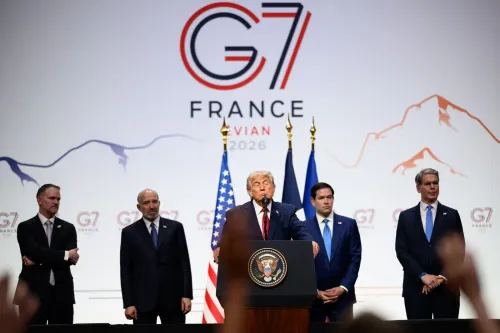
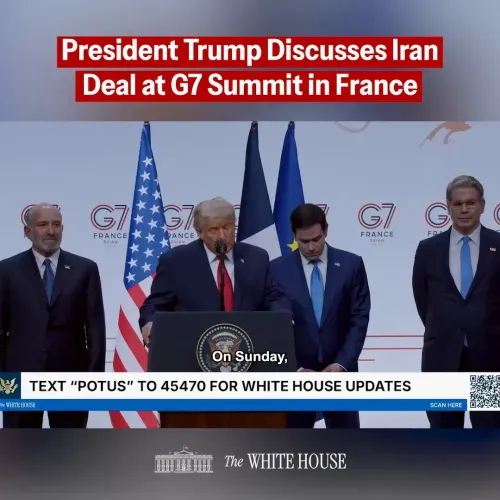
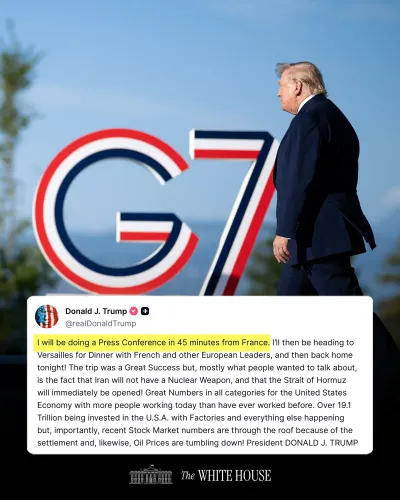
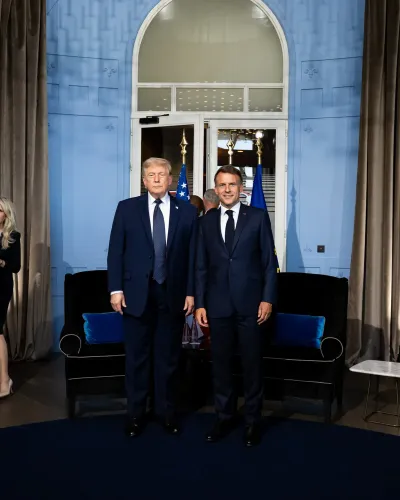
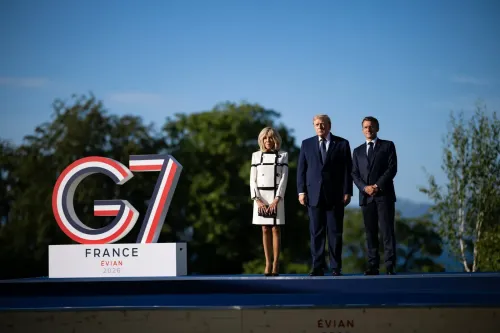
The White House on Wednesday, June 17, 2026, shared a pointed declaration from President Donald J. Trump following his participation in the G7 summit, asserting a renewed assertion of American global leadership on the world stage.
Context
The post quotes President Trump directly: 'It's very clear this week, America is BACK.' The statement was made in the immediate aftermath of the G7 summit, signalling what the White House framed as a confident re-engagement with the forum of leading advanced economies. The Group of Seven comprises the United States, Canada, United Kingdom, France, Germany, Italy, Japan, and representatives of the European Union.
The declaration is a pointed rhetorical signal — both to domestic audiences and G7 partners — that the Trump administration views its multilateral posture as one of strength and restored influence. The use of the word 'BACK' in uppercase underscores the deliberate, emphatic tone of the messaging.
Policy Backdrop
Trump's relationship with the G7 has historically been marked by tension and assertiveness. During the 2018 G7 summit in Charlevoix, Canada, his administration clashed with partners over US steel tariffs and climate commitments, with the US ultimately declining to endorse the joint communique. That episode became a defining moment in how the world perceived America First foreign policy in multilateral settings.
The current declaration follows a well-established pattern across US administrations of projecting restored global leadership after major-economy summits. Since the G7's formation in the 1970s, summit conclusions have routinely been used by sitting presidents to signal alignment — or, in Trump's case, dominance — in shaping the global agenda.
Stakeholders and Impact
The statement carries weight for G7 partner nations, whose diplomatic teams will parse the tone for signals about US positions on trade, security, and multilateral cooperation in the coming months. For India, which maintains a strategic partnership with the United States and engages closely with G7 processes as an invited partner economy, the tenor of American multilateral engagement directly affects bilateral and plurilateral diplomacy.
Markets and foreign policy establishments across allied nations will watch for follow-on communique implementation steps and any bilateral engagements announced in the summit's wake. The framing of 'America is BACK' also carries implicit messaging for geopolitical rivals, reinforcing a posture of US primacy in the global order.
What's Next
Attention will now turn to the specific policy outcomes and bilateral agreements that emerge from the G7 process — the communique language on trade, climate, artificial intelligence governance, and security will define whether the summit's rhetoric translates into durable multilateral commitments. Follow-on bilateral engagements between the US and fellow G7 members in the days ahead will be closely tracked by diplomatic observers worldwide.
For India, the posture of an assertive, re-engaged Washington creates both opportunities and pressure points — particularly on trade negotiations, defence procurement, and technology partnerships that sit at the heart of the India-US strategic relationship.
Point of View
And G7 partners who must calibrate their own positions accordingly. The emphatic uppercase framing is consistent with the White House's social-media-first communications strategy, designed to dominate the post-summit news cycle before formal communique details emerge. For countries like India, which navigate a careful balance between US alignment and strategic autonomy, an assertive Washington is a variable that reshapes the cost-benefit calculus of every pending bilateral negotiation. The declaration's staying power will ultimately depend on the policy substance that follows — rhetoric without deliverables has historically failed to sustain the 'leadership restored' narrative beyond the summit week.
NationPress
18 Sept 2026
Frequently Asked Questions
What did Trump say after the G7 summit in 2026?
President Donald J. Trump declared 'It's very clear this week, America is BACK' following the G7 summit, a statement amplified by The White House on June 17, 2026.
What is the G7 and why does it matter?
The G7, or Group of Seven, is a forum of the world's leading advanced economies — the US, Canada, UK, France, Germany, Italy, and Japan, along with EU representatives — that coordinates on global economic, security, and policy issues.
What was Trump's history with the G7 before 2026?
Trump's most notable prior G7 moment was the 2018 summit in Charlevoix, Canada, where the US clashed with partners over steel tariffs and climate commitments and declined to endorse the joint communique.
How does Trump's G7 statement affect India?
An assertive US re-engagement with multilateral forums like the G7 directly influences India's diplomatic and trade calculus, as India participates in G7 processes as an invited partner economy and holds a close strategic partnership with Washington.
What should we watch for after Trump's G7 declaration?
Key indicators will be the G7 communique's language on trade, security, and technology, as well as any follow-on bilateral agreements between the US and partner nations announced in the days following the summit.