Trump and Xi Jinping Deliver Joint Remarks at Bilateral Meet
Synopsis
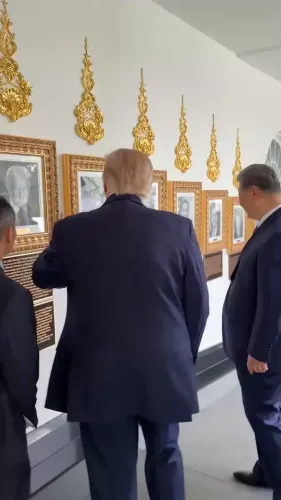
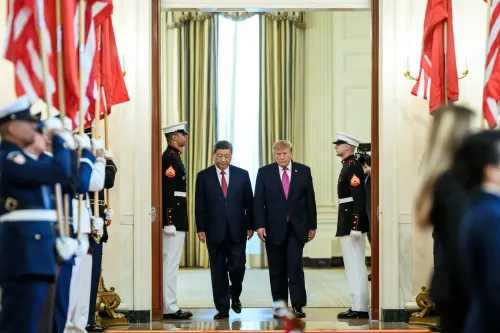
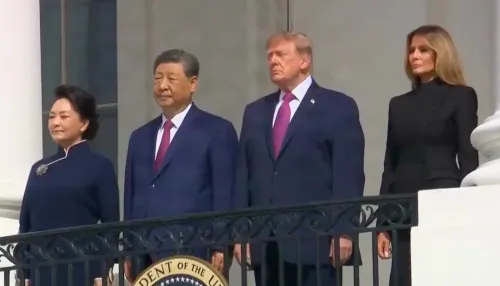
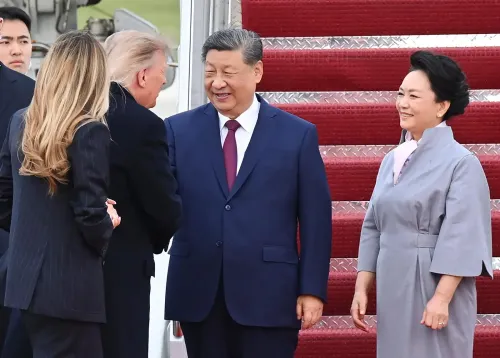
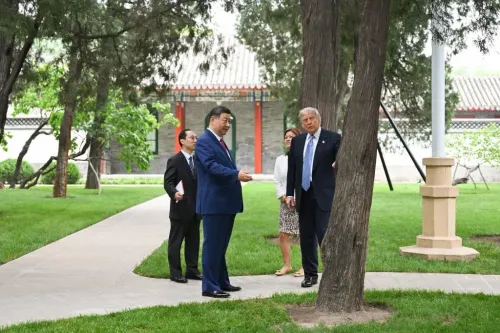
US President Donald Trump and Chinese President Xi Jinping delivered joint remarks on September 24, 2026, in a high-visibility bilateral appearance broadcast live by the White House — reigniting scrutiny of trade, technology, and Indo-Pacific security between the world's two largest economies.
Key Takeaways
President Donald Trump and President Xi Jinping delivered joint remarks on September 24, 2026 , in a major bilateral appearance.
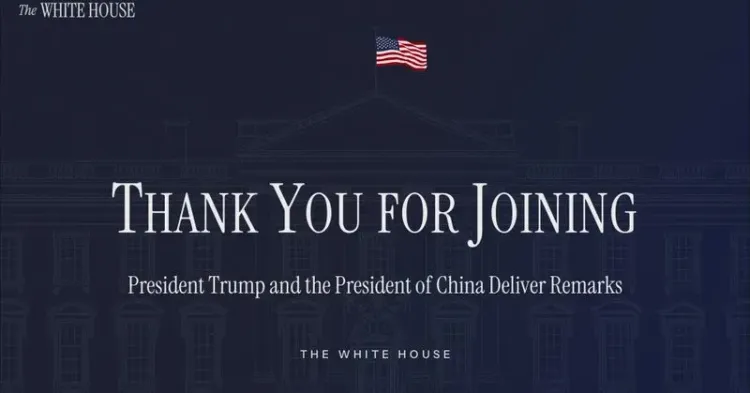
The White House broadcast the event live on X, signalling its significance as a formal diplomatic moment.
Previous Trump-Xi summits at the 2018 and 2019 G20 addressed trade deficits and technology controls, culminating in the Phase One trade deal of January 2020 .
Joint presidential remarks are a deliberate format — placing both leaders on record in real time on shared issues of trade, security, and regional stability.
Follow-on developments to watch include any joint statement, new working-group announcements, and references to Indo-Pacific security frameworks.
The outcome carries direct strategic implications for India , whose own US-China triangulation shapes everything from border security to semiconductor supply chains.
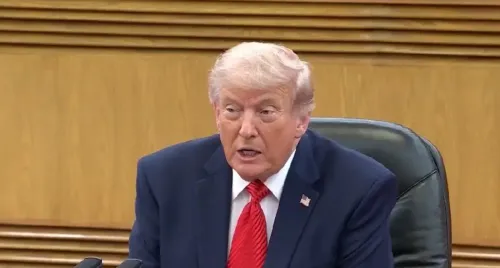
Two of the world's most consequential leaders stood before cameras together — US President Donald Trump and Chinese President Xi Jinping delivered joint remarks on Thursday, September 24, 2026, in a high-stakes bilateral appearance that immediately commanded global attention. The White House broadcast the event live on X, signalling Washington's intent to frame the moment as a milestone in the turbulent arc of US-China relations.
A Face-to-Face That Markets and Capitals Were Watching
Joint presidential remarks between Washington and Beijing are never routine. Every word, every gesture, every pause in a Trump-Xi appearance carries weight across global supply chains, currency markets, and the security architectures of the Indo-Pacific. The last time the two leaders engaged at this level of visibility, the world was parsing the fine print of the Phase One trade agreement signed in January 2020 — a deal that reshaped tariff schedules and agricultural purchase commitments but left deeper structural tensions unresolved.
This appearance picks up a thread that has never fully gone quiet. Trump's first presidency saw landmark face-offs with Xi at the 2018 and 2019 G20 summits, where trade deficits, technology export controls, and regional security were the live wires running beneath every handshake. Those same fault lines — semiconductors, rare earths, Taiwan, the South China Sea — remain the architecture of the relationship today.
Why This Moment Is Different From a Routine Diplomatic Exchange
A joint delivery of remarks — as opposed to a communiqué or a readout — is a deliberate choice. It places both leaders on the same stage, on record, in real time. For Trump, who has built much of his political identity around confronting Beijing on trade and manufacturing, standing alongside Xi signals at minimum a willingness to negotiate optics, if not policy. For Xi, the appearance affirms a channel of direct access to the White House that Beijing has consistently valued even through periods of maximum friction.
Analysts watching US-China dynamics have long noted that bilateral presidential engagements serve a dual function: they communicate resolve to domestic audiences while simultaneously sending a signal of managed competition — rather than open hostility — to allies, investors, and multilateral institutions.
What Comes Next in the US-China Diplomatic Calendar
The immediate watch-points are specific: whether a joint statement is released, whether follow-on working-group talks are announced on trade or technology, and whether either side references existing agreements or proposes new frameworks. Any reference to the Indo-Pacific security posture or Taiwan — even oblique — will be parsed with extraordinary care in New Delhi, Tokyo, Seoul, and Canberra.
For India, a country that has spent years navigating its own delicate triangulation between Washington and Beijing, a thaw — or a fresh friction — in the world's most consequential bilateral relationship has direct strategic consequences. The balance of pressure on the Line of Actual Control, trade terms, and technology supply chains all shift when the two superpowers change their register toward each other.
The remarks have been delivered. The transcript — and what it does not say — will be studied for weeks.
Point of View
Allies, and markets simultaneously. The decision to deliver remarks together rather than through a written communiqué suggests both sides saw value in a visible, real-time demonstration of diplomatic engagement. For the broader rules-based order, the tone and substance of what was said — and what was pointedly left out — will shape expectations around trade negotiations, technology decoupling, and Indo-Pacific security for months. India, sitting at the strategic intersection of both relationships, will be among the most attentive readers of the transcript.
NationPress
25 Sept 2026
Frequently Asked Questions
When did Trump and Xi Jinping meet in September 2026?
US President Donald Trump and Chinese President Xi Jinping delivered joint bilateral remarks on Thursday, September 24, 2026 , in an event broadcast live by the White House on X.
What is the significance of a Trump-Xi joint remarks appearance?
A joint delivery of remarks places both leaders on record in real time, signalling a willingness to engage directly on trade, technology, and security — and communicating managed competition rather than open hostility to allies and markets.
What did past Trump-Xi summits cover?
Previous Trump-Xi meetings at the 2018 and 2019 G20 summits focused on the US-China trade war, technology export controls, and regional security, ultimately producing the Phase One trade agreement signed in January 2020 .
How does the Trump-Xi meeting affect India?
Any shift in US-China relations directly impacts India's strategic calculus — influencing dynamics along the Line of Actual Control , technology supply chains, and India's careful balancing act between Washington and Beijing.
What should we watch for after the Trump-Xi joint remarks?
Key signals to follow include the release of a joint statement, announcements of follow-on trade or security working groups, and any references — direct or oblique — to Taiwan , Indo-Pacific security, or existing bilateral agreements.