Trump blasts Supreme Court tariff ruling, says it cost US hundreds of billions
Synopsis
Trump turned a reporter's question about a $2 trillion deficit into a broadside against the Supreme Court, blaming its tariff ruling for costing the government hundreds of billions. At the same time, he pledged $5,000 to every adult American — financed by tariff revenues — if Republicans win both chambers in November. The claims were largely unverified, but the political framing ahead of the midterms was unmistakable.
Key Takeaways
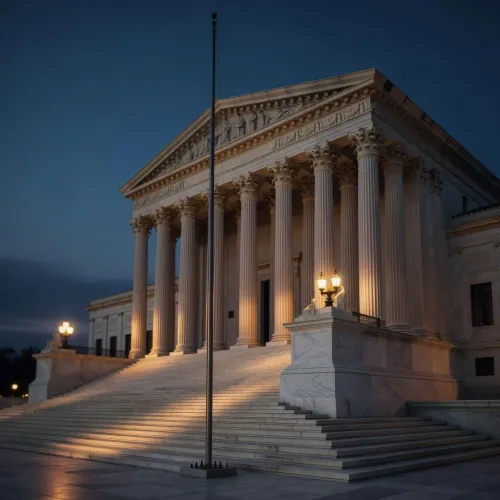
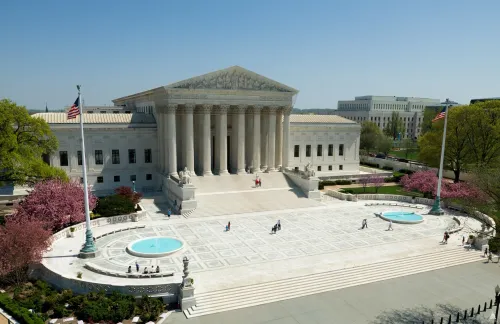
President Trump on 11 October attacked the Supreme Court ruling that invalidated a category of his tariffs, calling it 'very, very bad' for the country.
Trump claimed the ruling cost the federal government hundreds of billions of dollars in revenue, without providing a specific accounting.
At a rally in Clarksville, Tennessee , he pledged $5,000 to every adult American citizen if Republicans win both chambers of Congress in the 3 November midterms .
The $5,000 payment programme was estimated to cost approximately $1 trillion , to be funded through tariff revenues.
Korea Zinc ( $6 billion+ ) and General Motors ( $275 million ) investments in Tennessee were cited as evidence of tariff-driven manufacturing revival.
Trump's claim of $21 trillion in secured investment commitments was not independently verified.
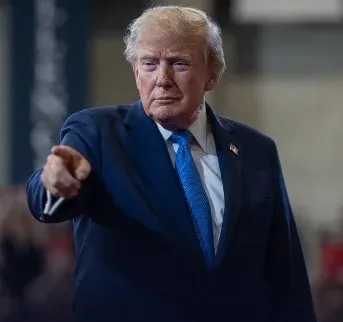
US President Donald Trump on Saturday, 11 October renewed his attack on the Supreme Court's ruling that struck down a category of his tariffs, asserting that the decision had deprived the federal government of hundreds of billions of dollars in revenue and damaged the American economy. The remarks came as Trump faces growing scrutiny over a federal deficit that reporters put at $2 trillion for the last fiscal year.
What Trump Said About the Ruling
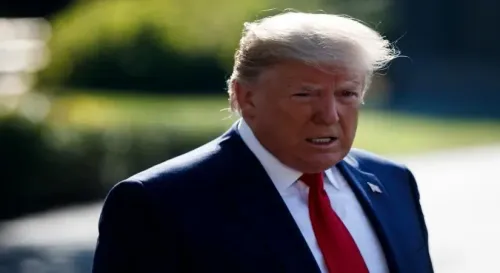
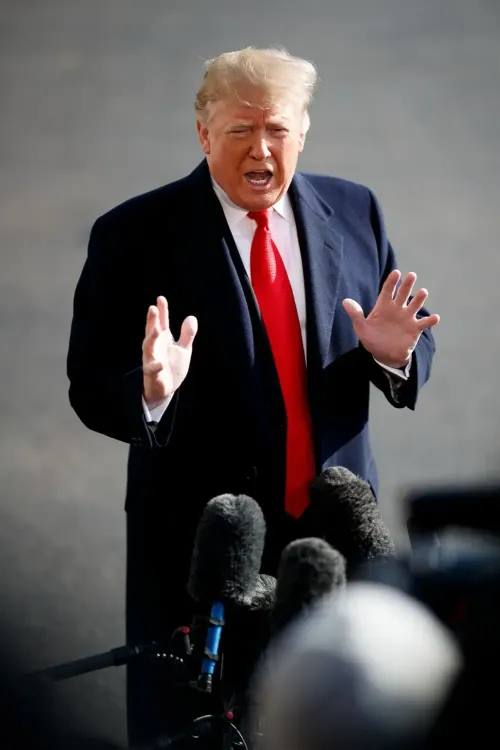
Speaking to reporters at Joint Base Andrews after returning from a campaign rally in Clarksville, Tennessee, Trump blamed the court when pressed on the deficit figure. 'The Supreme Court hurt very badly because they wanted us to give back a certain form. You know, I have numerous forms of tariffs, but they wanted us to give back a certain form of tariff. And that was hundreds of billions of dollars,' Trump said. He added: 'So the Supreme Court decision was very bad for our country. Very, very bad for our country.' Trump did not specify the precise tariff revenue figure affected by the ruling, nor did he provide a detailed accounting of its impact on the deficit.
Tariff Claims at the Tennessee Rally
Hours earlier, Trump had defended his trade policies at a Republican campaign rally in Clarksville, Tennessee, portraying import duties as a cornerstone of his administration's economic programme. 'We're getting rich because of tariffs,' he told supporters, claiming the government was collecting trillions of dollars. He also asserted that his administration had secured $21 trillion in investment commitments — a figure that was not independently verified.
The $5,000 Citizen Payment Pledge
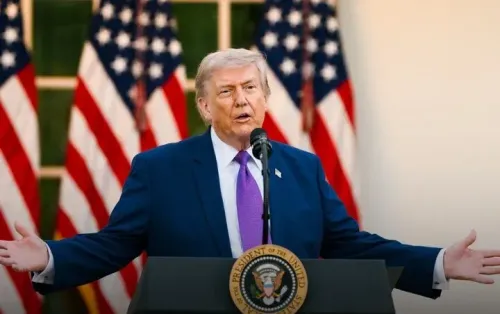
Trump linked his tariff revenue claims to a campaign promise to distribute $5,000 to every adult American citizen, contingent on Republicans winning control of both chambers of Congress in the 3 November midterm elections. 'I am going to give all adult citizens in the United States of America $5,000 everywhere,' he said. He estimated the programme's total cost at approximately $1 trillion, to be financed through tariff receipts.
Manufacturing Investments Cited as Proof
Trump pointed to two specific investment announcements in Tennessee as evidence that his tariff policy was reshaping domestic manufacturing. He said Korea Zinc was investing more than $6 billion in facilities in Montgomery and Smith counties, while General Motors had announced a $275 million investment in its Spring Hill manufacturing operations. The president argued that tariffs were persuading companies to produce goods domestically rather than import them, though critics have questioned whether such investment timelines are directly attributable to trade policy alone.
Political Stakes Ahead of Midterms
The Supreme Court ruling has become a recurring flashpoint in Trump's defence of his economic record, particularly as Republicans head into the midterm cycle campaigning on tariffs, manufacturing revival, and cost-of-living concerns. With the deficit at a reported $2 trillion and the court having curtailed one category of tariffs, the administration faces the challenge of reconciling its revenue claims with independently verifiable fiscal data. How voters in manufacturing states receive these arguments could prove decisive in November.
Point of View
000 citizen pledge follow a familiar playbook: frame a trade policy with mixed results as an unqualified success, then attach a voter-friendly sweetener tied to midterm outcomes. What is missing from the framing is any independent audit of how much the struck-down tariff category actually generated, which makes it impossible to assess whether the court's ruling materially changed the fiscal picture or whether the deficit would have grown regardless.
NationPress
11 Oct 2026
Frequently Asked Questions
What did the Supreme Court rule on Trump's tariffs?
The Supreme Court struck down a specific category of Trump's tariffs, requiring those duties to be returned. Trump claims the ruling cost the federal government hundreds of billions of dollars in revenue, though he did not provide a precise figure or independent verification.
What is Trump's $5,000 citizen payment plan?
Trump pledged at a Tennessee rally to distribute $5,000 to every adult American citizen if Republicans win control of both the Senate and the House of Representatives in the 3 November midterm elections. He estimated the programme's cost at approximately $1 trillion, to be financed through tariff revenues.
How much is the US federal deficit?
A reporter at Joint Base Andrews put the federal deficit at $2 trillion for the last fiscal year. Trump responded by attributing a significant portion of the shortfall to the Supreme Court's tariff ruling, though he did not provide supporting data.
What manufacturing investments did Trump cite in Tennessee?
Trump pointed to a $6 billion-plus investment by Korea Zinc in Montgomery and Smith counties, Tennessee, and a $275 million investment by General Motors in its Spring Hill manufacturing plant as evidence that his tariff policies are driving domestic production.
Why is the Supreme Court tariff ruling politically significant?
The ruling has become a key flashpoint in Trump's defence of his economic record ahead of the midterm elections, as Republicans campaign on tariffs, manufacturing growth, and cost-of-living issues. By blaming the court, Trump seeks to deflect scrutiny of the federal deficit while keeping tariffs central to his electoral message.