Are Tariffs Indispensable? Trump Discusses Workarounds If Courts Intervene
Synopsis
In a strong defense of tariffs, President Trump emphasizes their vital role in boosting US manufacturing and investment. He vows to find alternative methods if the Supreme Court restricts his tariff authority. Discover how tariffs are reshaping the economic landscape and their implications for various sectors.
Key Takeaways
Trump views tariffs as essential for economic success.
He claims tariffs have boosted domestic manufacturing.
Alternative strategies will be explored if courts intervene.
Tariff revenues support various domestic programs.
The long-term benefits for farmers are anticipated.
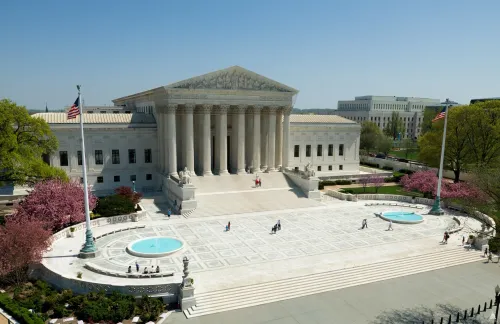
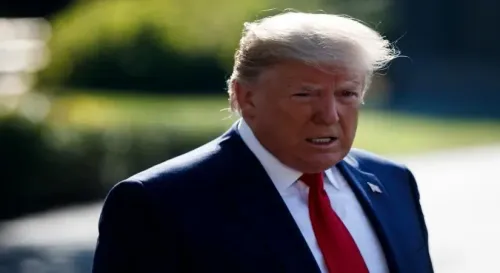
Washington, Jan 28 (NationPress) In a bid to maintain trade pressure as a cornerstone of his economic and foreign policy strategy, US President Donald Trump indicated he would explore alternative measures if the Supreme Court seeks to limit tariffs, which he termed "indispensable" for achieving success.
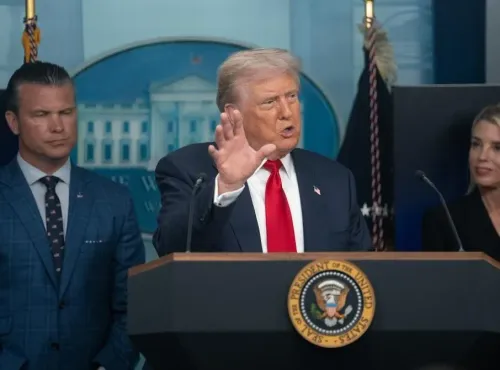
During an interview with Fox News host Will Cain, Trump defended tariffs as a fundamental catalyst for investment and manufacturing expansion in the United States. He argued that this policy has compelled companies to establish facilities domestically rather than manufacturing overseas and importing into the US market.
“The tariffs have been indispensable towards success,” Trump asserted. He mentioned, “We’ve collected $600 billion in tariffs.”
When questioned about the implications of a Supreme Court ruling against his tariff authority, Trump acknowledged the potential risks but affirmed that the overall strategy would remain unchanged. “We’ll have to find another way,” he noted, adding that it might be “more inconvenient; it won’t be as easy.” He suggested that the administration would seek “some other way of achieving a similar outcome.”
Trump stated that tariffs have encouraged foreign manufacturers to shift production to the United States. He cited firms from Germany, Mexico, and Canada, claiming substantial investments are pouring into sectors like automotive and artificial intelligence. “The only way they can do that is by building their plants here,” he explained.
He asserted that this approach has sparked a construction boom. Trump claimed that thousands of new businesses are emerging nationwide and that hundreds of major manufacturing facilities are under development. He reiterated a broader assertion that the US has secured “$18 trillion coming into the country.”
Trump linked tariff revenue to domestic support programs, particularly for farmers. He stated that his administration recently allocated “$12 billion” in farm assistance funded through tariff revenue. “We’re generating so much income from the tariffs that we can afford to do that,” he remarked.
While acknowledging farmers' concerns regarding short-term disruptions, he assured that the long-term benefits would become evident. “It’s going to take a little time to materialize,” he said, suggesting that farmers would be “the biggest beneficiary” once trade measures are fully implemented.
Trump argued that tariffs have rectified years of unfair trade practices, contending that foreign nations had long imposed barriers on US products while enjoying unrestricted access to the American market. “For years, it was the opposite,” he emphasized. “I’ve completely reversed it.”
Additionally, he portrayed tariffs as a geopolitical instrument. When asked if he viewed them as beneficial beyond economic aspects, Trump replied, “For world peace, yes, we have to use it for world peace.” He did not elaborate further.
Trump claimed that tariffs have shielded US industries from what he termed unfair competition. He maintained that companies could no longer depend on low-cost labor abroad and then sell products in the US without repercussions.
Point of View
It's crucial to remain objective and provide a balanced view. President Trump’s commitment to tariffs as a tool for economic growth and national interest raises significant questions about trade policies and their broader implications. While his administration touts benefits for domestic industries, potential repercussions on global trade dynamics warrant careful consideration.
NationPress
19 Sept 2026
Frequently Asked Questions
How have tariffs affected US manufacturing?
Tariffs have incentivized companies to establish manufacturing operations in the US, leading to increased domestic investment.
What happens if the Supreme Court limits Trump's tariff powers?
Trump has indicated that he would seek alternative methods to maintain trade pressure, despite potential challenges.
How are tariffs linked to farmer support programs?
Tariff revenues have been utilized to fund assistance programs for farmers, providing financial support amid trade tensions.
What is the long-term outlook for farmers affected by tariffs?
While there may be short-term disruptions, Trump claims that farmers will ultimately benefit as trade measures take effect.