Trump defends tariffs, claims $19.2 trillion in US investment
Synopsis
Trump claimed his tariffs have drawn $19.2 trillion in investment to the US in a single year — a figure that dwarfs anything on record and has not been independently verified. With the Supreme Court forcing a legal pivot and a fresh EU trade probe underway, his tariff agenda is entering its most contested phase yet.
Key Takeaways
Donald Trump defended his tariff agenda at a White House session on 25 July , calling the duties legally sound and economically transformative.
Trump claimed tariffs have attracted $19.2 trillion in US investment in one year, contrasting it with what he called less than a trillion under the Biden administration over four years.
Following a Supreme Court ruling, the administration shifted to alternative statutory authorities to underpin its tariff actions.
The USTR cited child labour as one factor behind a recent trade action, though Trump did not identify any specific country.
A fresh trade probe involving the European Union is underway, with major economies watching Washington's next moves closely.
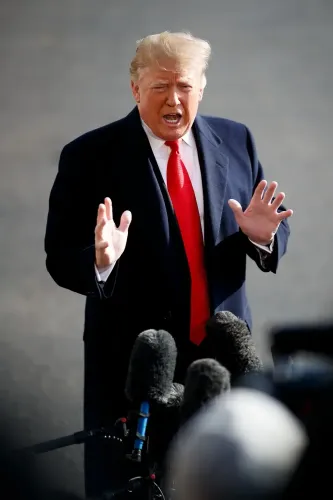
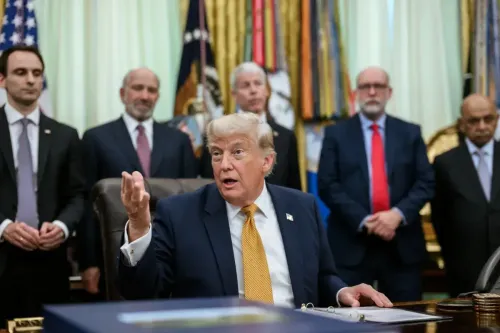
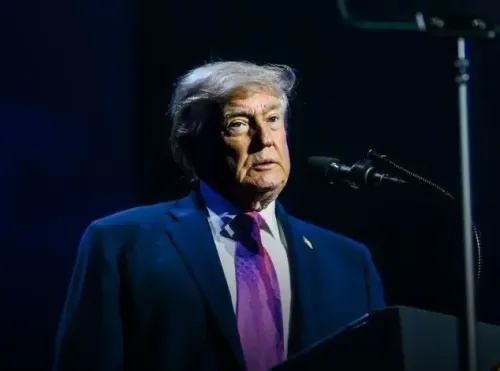
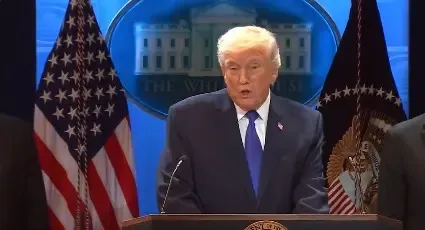
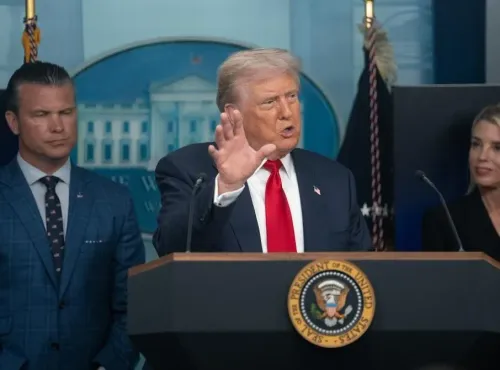
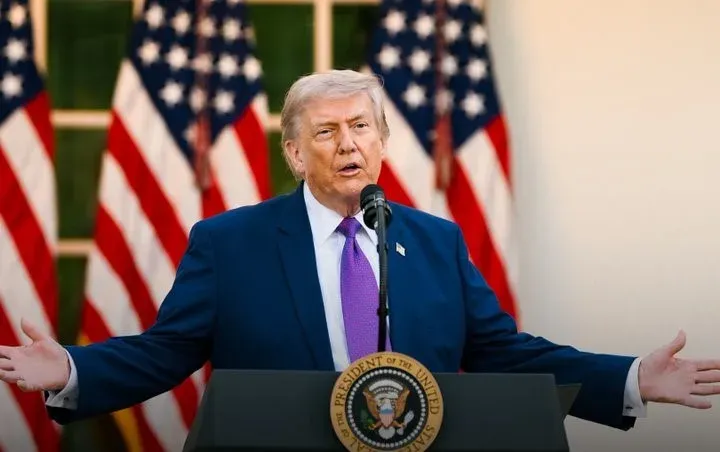
US President Donald Trump on 25 July vigorously defended his administration's latest tariff measures at a White House question-and-answer session, asserting that the duties would survive legal challenges and had already attracted $19.2 trillion in investment to the United States. The remarks came after an event on civilian nuclear energy and addressed a range of trade flashpoints, including a fresh probe involving the European Union.
Trump's Claims on Investment and Tariff Impact
Trump credited his tariff agenda with an unprecedented surge in foreign and domestic investment. 'Because of tariffs, largely... we have $19.2 trillion being invested in our country,' he said, contrasting the figure with what he described as less than a trillion dollars invested during the Biden administration over four years. 'We have $19.2 trillion for one year. There's never been anything like it in history,' he added. Independent economists have not verified this figure, and the basis of the calculation was not elaborated upon during the session.
Legal Basis After Supreme Court Ruling
Asked whether newly announced tariffs and the EU trade probe would survive judicial scrutiny, Trump acknowledged that his administration had adjusted its legal approach following a recent Supreme Court ruling. 'I thought the decision by the Supreme Court was not a good one,' he said. 'But we have many forms of tariffs and all we did is... follow the line.' He maintained that the administration had pivoted to alternative statutory authorities previously used by prior governments. 'The Supreme Court said, please do it a different way. You have other ways to do it and we did that last month,' Trump explained. This comes amid ongoing legal scrutiny of the administration's trade actions, with courts having questioned the statutory grounds for some of the earlier tariff orders.
Child Labour Cited in Trade Action
During the session, a reporter noted that the Office of the United States Trade Representative (USTR) had cited child labour as one of the reasons behind a recent trade action. Trump confirmed it appeared to be among the factors considered. 'They go all over the world and they look and they examine... and child labour was one of the reasons,' he said, without identifying any specific country or elaborating further on the scope of the probe.
Broader Trade Policy Context
Tariffs have been a cornerstone of Trump's economic agenda since his return to office, with the administration arguing that import duties incentivise companies to relocate manufacturing to the US while generating federal revenue. Major economies — including China, the European Union, and several Asian trading partners — continue to monitor Washington's trade actions closely as negotiations and legal disputes over tariff authorities evolve. Critics argue that the duties raise costs for American consumers and businesses that depend on imported inputs, while supporters contend they are rebuilding domestic industrial capacity. The administration's repeated emphasis on tariffs as an economic driver signals that trade policy will remain a defining feature of US economic strategy in the months ahead.
Point of View
But it demands scrutiny — no independent body has validated the figure, and the methodology was not disclosed. More consequentially, the administration's admission that it had to reroute its legal strategy after the Supreme Court ruling signals real institutional friction with the tariff agenda, not just political noise. The child labour citation in a USTR trade action is also underreported: it opens a new front that could be used selectively against trading partners, with implications that go well beyond the current EU probe. The broader pattern is an executive branch pushing trade authority to its statutory limits while courts and allies push back — a tension that will define US trade policy through the next election cycle.
NationPress
23 Oct 2026
Frequently Asked Questions
What did Trump say about tariffs on 25 July 2025?
Trump defended his administration's tariffs at a White House session on 25 July, saying they would withstand legal challenges and had attracted $19.2 trillion in US investment in a single year. He argued that without tariffs, the US economy would be 'in big trouble.'
What was the Supreme Court ruling on Trump's tariffs?
The Supreme Court issued a ruling that prompted the Trump administration to adjust the legal basis for its tariff actions. Trump acknowledged the decision was 'not a good one' but said the administration had since relied on alternative statutory authorities used by previous governments.
Why did Trump mention child labour in the trade context?
A reporter noted that the USTR had cited child labour as a reason behind a recent trade action. Trump confirmed it appeared to be among the factors considered, saying officials 'go all over the world and they look and they examine,' but he did not name any specific country.
What is the EU trade probe Trump referred to?
The Trump administration has launched a fresh trade probe involving the European Union, the details of which are still emerging. The EU, along with China and several Asian trading partners, is closely monitoring Washington's tariff actions as legal and diplomatic disputes continue to evolve.
How do critics view Trump's tariff policy?
Critics argue that tariffs raise costs for American consumers and businesses reliant on imported inputs, and that employment and investment claims have been overstated. Supporters, including the administration, contend the duties are rebuilding domestic manufacturing capacity and generating federal revenue.