US defends UN overhaul: $1.1 billion in cuts, 4,000 jobs axed under America First
Synopsis
The Trump administration has claimed the first-ever net budget reduction in the UN's history — $1.1 billion cut, 4,000 jobs axed, peacekeeping deployments slashed by a quarter. But Democrats warn the real cost is strategic: every dollar pulled back is a vacancy China is ready to fill in global institutions.
Key Takeaways
The Trump administration claims $1.1 billion in UN budget cuts — described as the first overall reduction in the organisation's 80-year history.
4,000 UN headquarters civilian positions have been eliminated, including personnel accused of sexual exploitation and abuse.
Global peacekeeping deployments have been reduced by 25 per cent ; the UN Interim Force in Lebanon (UNIFIL) was specifically called out to 'stand down.' New equipment reimbursement rules require gear to be operational before payment, projected to save $30 million annually.
Ranking Member Gregory Meeks called the moves 'retreat, not reform,' warning of growing Chinese influence in vacated multilateral spaces.
The US funds 25 per cent of the UN's total budget, making it the organisation's largest single contributor.
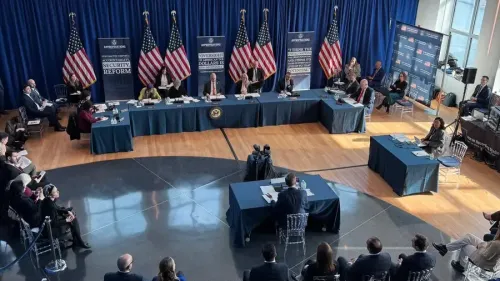
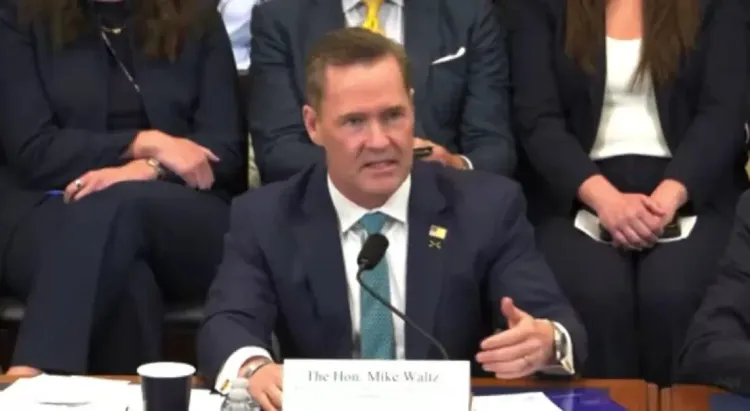
US Ambassador to the United Nations Mike Waltz and Ambassador for UN Management and Reform Jeffrey Bartos appeared before the House Foreign Affairs Committee on Wednesday to defend the Trump administration's sweeping restructuring of the United Nations — a campaign that has delivered what officials describe as the largest budget reduction in the organisation's history, cutting more than $1.1 billion from UN budgets and eliminating 4,000 civilian headquarters positions.
Scale of the Overhaul
According to Waltz, the administration worked with member states over the past six months to achieve what he called the first overall budget reduction in the UN's 80-year history. Bartos put the precise figure at $1.1 billion across the regular and peacekeeping budgets, calling it 'historic reform.'
Beyond the budget, the restructuring has reduced global peacekeeping deployments by 25 per cent and ended several missions that officials say failed to meet their mandates. Among those singled out was the UN Interim Force in Lebanon (UNIFIL), which Waltz said 'needs to stand down.'
Bartos also highlighted changes to the peacekeeping equipment reimbursement system. Previously, troop-contributing countries could receive payments for deploying equipment regardless of whether it was operational. Under the new rules, 'to get reimbursed you have to put the equipment into use. It has to be used. It has to be working. It has to be effective,' Bartos said, estimating annual savings of roughly $30 million.
What the Administration Said
'We are getting the United Nations back to basics, back to maintaining the peace and maintaining security around the world,' Waltz told lawmakers. He argued the organisation had expanded well beyond its founding mandate: 'The UN has tried to become all things to all people and has literally done nothing but grow.'
Waltz also said the 4,000 eliminated positions included personnel accused of sexual exploitation and abuse, framing the cuts as both fiscal and ethical reform. In his closing remarks, he declared: 'Our charge is to make the UN great again,' adding that American taxpayers — who fund 25 per cent of the UN's bill — deserve measurable outcomes.
Republican Support, Democratic Pushback
Republican lawmakers largely backed the administration's position. Committee Chairman Brian Mast described the UN as 'a corrupt, entrenched den of snakes' and argued that American taxpayers should not finance programmes that fail to advance US interests.
Democratic members sharply contested that view. Ranking Member Gregory Meeks warned that aggressive funding cuts risked ceding influence to rivals, particularly China, in international institutions. 'This is not reform. This is retreat,' Meeks said, accusing the administration of abandoning multilateral engagement rather than improving it.
Broader Context
The United States has historically been the largest financial contributor to the UN, covering a significant share of both the regular budget and peacekeeping operations. Multiple administrations have called for greater accountability and management reform, though they have differed sharply on how aggressively to pursue those changes. The Trump administration has made UN reform a central pillar of its foreign policy, explicitly tying American funding to performance benchmarks, reduced bureaucracy, and alignment with US strategic interests.
With the reforms now before Congress for scrutiny, the administration's next challenge will be demonstrating that the cuts have improved — rather than diminished — the UN's operational effectiveness on the ground.
Point of View
000 posts may reduce the budget line, but it also reduces Washington's operational footprint in conflict zones where China and Russia are expanding theirs. The UNIFIL call-out is particularly telling — it signals a preference for bilateral security arrangements over multilateral ones, a shift with long-term consequences for US soft power. Democrats are right to flag the China vacuum risk, even if their own record on UN reform was hardly aggressive.
NationPress
21 Oct 2026
Frequently Asked Questions
What UN budget cuts has the Trump administration achieved?
The Trump administration says it has cut $1.1 billion from the UN's regular and peacekeeping budgets over six months, which officials describe as the first overall budget reduction in the organisation's 80-year history. The cuts also include the elimination of 4,000 civilian headquarters positions.
Why is the US cutting UN peacekeeping operations?
The administration argues that several peacekeeping missions have failed to meet their mandates and that the UN had expanded beyond its original purpose of maintaining international peace and security. Global peacekeeping deployments have been reduced by 25 per cent as part of the 'America First' reform agenda.
What did Democrats say about the UN overhaul?
Democratic members of the House Foreign Affairs Committee warned that deep cuts risk weakening US leadership in international institutions and creating space for rivals like China to expand their influence. Ranking Member Gregory Meeks called the approach 'retreat, not reform.'
What is happening to UNIFIL under the Trump reforms?
Ambassador Mike Waltz specifically called out the UN Interim Force in Lebanon (UNIFIL), saying it 'needs to stand down,' signalling the administration's intent to wind down missions it considers ineffective or misaligned with US strategic interests.
How much does the US contribute to the UN budget?
The United States is the UN's largest single financial contributor, funding approximately 25 per cent of the organisation's total budget, covering both the regular operating budget and peacekeeping operations.