Trump Administration Advocates for Streamlined UN Focus
Synopsis
The Trump Administration is pushing for significant reforms in the United Nations, emphasizing a return to its core mission of maintaining international peace and security. Top diplomat Mike Waltz outlines budget cuts and a strategic overhaul to enhance effectiveness.
Key Takeaways
Streamlined Focus: The Trump Administration seeks to refocus the UN on its original mission.
Budget Cuts: A 15% reduction in the UN budget is planned for 2026.
Peacekeeping Reform: A proposal for a 25% reduction in peacekeeping troops is underway.
Accountability: Future US funding will depend on efficiency and effectiveness.
Private Investment: A shift towards prioritizing private investment over traditional aid is emphasized.
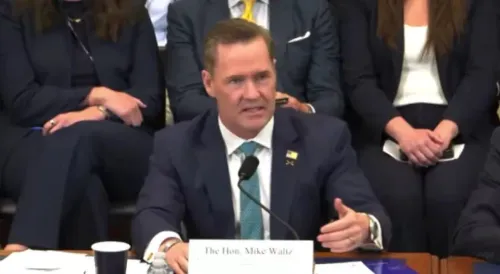
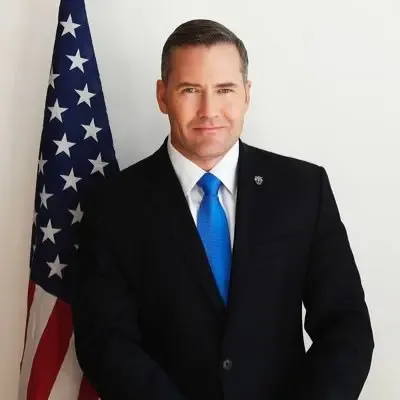
Washington, March 21 (NationPress) The Trump Administration is advocating for a more streamlined and purpose-driven United Nations. Mike Waltz, the administration's chief diplomat to the UN, informed lawmakers that the organization needs to refocus on its fundamental role of fostering international peace and security.
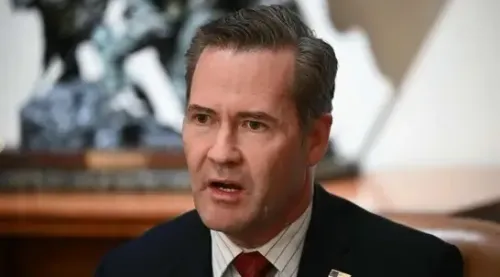
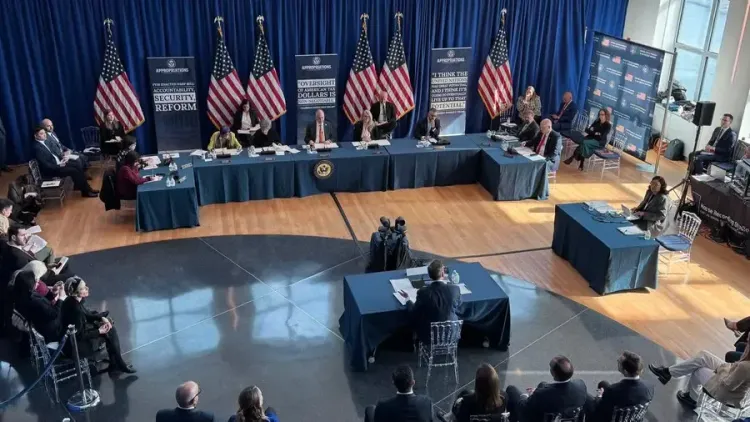
During his testimony at a congressional hearing in New York, Waltz defended the administration's initiative to reform the UN, contending that years of expansion have not yielded equivalent benefits.
“The UN genuinely requires what we refer to as a return to basics,” he stated, emphasizing the need to revert “to its foundational mission of maintaining international peace and security.”
Waltz highlighted a significant increase in expenditures, noting that “the UN’s budget has quadrupled over the past 25 years,” without a corresponding enhancement in global stability.
“We have not observed a quadrupling of peace and security worldwide in proportion to those hard-earned funds,” he remarked.
The ambassador clarified that Washington now regards its financial contributions as a tool for driving reform rather than as automatic support.
“The US will not finance organizations that act against our interests,” Waltz asserted, indicating a more assertive stance on entities perceived as ineffective or misaligned with US objectives.
He outlined a series of reforms already in motion, including a 15 percent reduction in the UN's regular budget for 2026, totaling $570 million. This cut is projected to eliminate nearly 3,000 positions and reduce US contributions.
“For our share, it will decrease our assessment by $126 million,” he explained.
Waltz also indicated that the administration is advocating for a 25 percent reduction in peacekeeping personnel and a comprehensive restructuring of long-standing missions.
“Some of them have existed for 30, 50, even 80 years,” he cautioned, suggesting that such operations risk becoming permanent without delivering political resolutions.
Recent measures include winding down or terminating missions in Iraq and Yemen, as well as reviewing operations in Lebanon and Western Sahara.
He also underscored changes to peacekeeping reimbursements, stating that countries will now receive payments only if their equipment is actively utilized, rather than merely deployed.
“These are the types of sensible reforms that are difficult to contest,” Waltz stated.
In addition to peacekeeping, the US is addressing perceived duplication and inefficiency across UN agencies. Waltz described scenarios where multiple organizations manage overlapping programs in the same regions.
“We’ve now redirected much of our funding to compel these agencies to share resources such as warehouses, aviation, and vehicle fleets,” he noted.
The overarching strategy, he added, is to enhance operational efficiency while boosting accountability and oversight.
Waltz also indicated a shift in development policy, prioritizing private investment over conventional aid channels.
“What we aim to do… is to engage the private sector,” he said, outlining efforts to align UN initiatives with economic development and job creation.
He stated that future US funding would hinge on “efficiency, effectiveness, and accountability,” reiterating that organizations failing to meet these criteria could lose support.
At the same time, Waltz emphasized that the US remains dedicated to engaging with the UN, even as it advocates for reform.
“If we were to withdraw tomorrow… it would be reestablished elsewhere,” he argued, asserting that a continued US presence is vital for influencing global outcomes.
Point of View
The Trump Administration's initiative to reform the United Nations reflects a significant shift towards prioritizing efficiency and accountability. By advocating for budget cuts and a return to core missions, the administration aims to reshape the UN's effectiveness in maintaining global peace.
NationPress
21 Sept 2026
Frequently Asked Questions
What is the main goal of the Trump Administration's reform of the UN?
The primary goal is to streamline the organization and refocus on its core mission of maintaining international peace and security.
How much is the UN's budget expected to be cut?
The UN's budget is set to be reduced by 15 percent for 2026, which amounts to approximately $570 million.
What changes are being made to peacekeeping operations?
The administration is pushing for a 25 percent reduction in peacekeeping troops and a review of long-standing missions.
Why does the US view its funding as leverage?
The US sees its financial contributions as a means to drive reform within the UN, rather than as automatic support.
Is the US committed to the UN despite these reforms?
Yes, the US remains committed to engaging with the UN while advocating for necessary reforms.