Did Mike Waltz Just Secure a Major UN Victory on Gaza and Toughen Stance on Iran?
Synopsis
In a significant diplomatic breakthrough, US Ambassador Mike Waltz announces that Trump’s Gaza peace plan received unanimous support from the UN Security Council. This moment not only highlights a rare consensus on a contentious issue but also indicates a strategic shift in the US approach towards Iran. What does this mean for global politics?
Key Takeaways
Unanimous support for Trump’s Gaza peace plan at the UN.
Establishment of an international security force and a Palestinian authority.
Increased pressure on Iran regarding its nuclear activities.
Countries previously supporting Hamas are now aligning with the US.
Ongoing unrest in Iran raises humanitarian concerns.
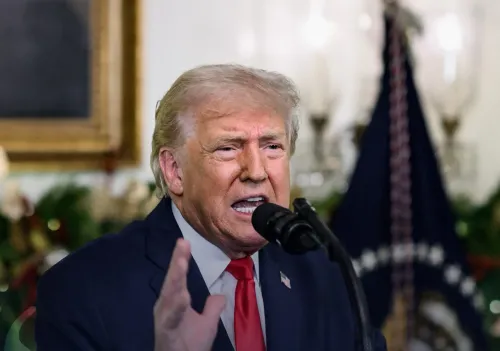
Washington, Feb 18 (NationPress) US Ambassador to the United Nations Mike Waltz stated that President Donald Trump's Gaza peace initiative received unanimous support from the UN Security Council, marking a pivotal diplomatic achievement for the United States and signaling enhanced pressure on Iran.
"We didn’t just get it through; we got it through unanimously," Waltz remarked during an interview with Hugh Hewitt on the Salem News Channel. He noted that the resolution passed with a vote of "13 to zero," highlighting it as a validation from the international community on "perhaps the most contentious issue facing the UN: the Israel-Palestine conflict."
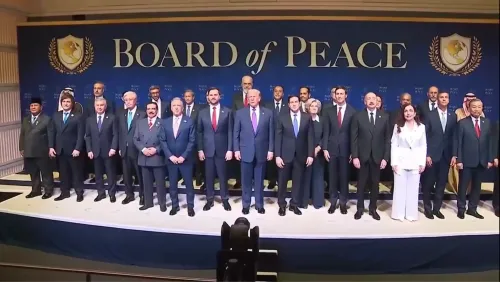
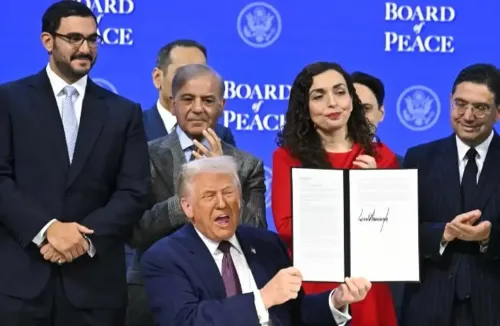
Waltz explained that the framework establishes "an international security force," creates "the Palestinian technocratic authority," and initiates "a World Bank fund." He also mentioned that Indonesia has publicly committed 8,000 troops and previewed $5 billion in funding ahead of the first Board of Peace meeting.
In response to criticism from some European nations, he emphasized that the President's approach is generating results where past efforts have failed.
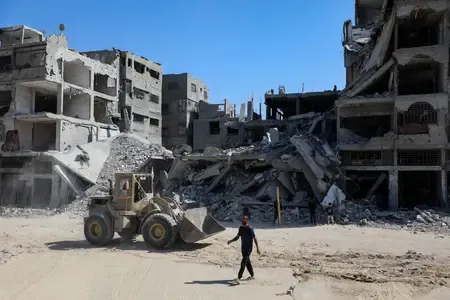
He noted that hostages have been released, a ceasefire is currently active, and humanitarian assistance is being delivered, with negotiations now transitioning into a second phase focused on Hamas.
"We’ve made it clear that they will disarm either the hard way or the easy way," Waltz asserted.
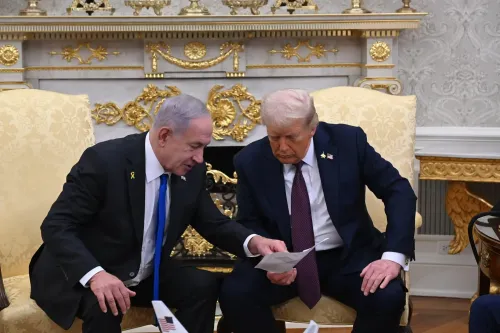
He also highlighted a diplomatic realignment, stating that Qatar, Türkiye, and Egypt—nations previously relied upon by Hamas—are now participating in the Board of Peace, aligning with the United States' stance. Israel is also involved in this initiative.
Regarding Iran, Waltz affirmed that UN snapback sanctions remain in effect, despite resistance from Russia and, to a lesser degree, China. "The snapback sanctions are active, and engaging in business with the Iranian regime would constitute a violation of those sanctions," he stated.
He pointed out that the Islamic Revolutionary Guard Corps controls "40 to 50 percent of the Iranian economy," suggesting that the regime is feeling financial pressure.
When discussing enforcement against Iran's so-called "ghost fleet," Waltz expressed confidence that the United States has the authority under UN sanctions to seize vessels, although he acknowledged that the issue is contentious. He called for more decisive actions through UN-affiliated entities like the International Maritime Organization.
On the topic of unrest in Iran, Waltz referenced figures presented at a UN session, which were verified by multiple NGOs, indicating that "18" individuals were killed. He described the events as a "wholesale massacre by the regime against its own citizens." The session included dissidents, among them Masih Alinejad.
When asked about a timeline for actions against Iran, Waltz refrained from specifying a deadline but mentioned that Trump has offered Iran a "very clear choice" to cease its enrichment activities, long-range missile development, and backing for "terrorist proxies."
The UN Security Council has frequently been divided on Israel-Palestine matters, with vetoes common among permanent members. A unanimous vote on such a contentious issue is considered diplomatically significant.
Point of View
My perspective is clear: this development underscores the US's commitment to a diplomatic resolution in one of the world's most challenging conflicts. While the unanimous vote showcases a rare moment of international unity, it also highlights the complexities of US-Iran relations that demand careful navigation.
NationPress
22 Sept 2026
Frequently Asked Questions
What is the significance of the UN Security Council's unanimous vote?
The unanimous vote is a rare diplomatic achievement regarding the Israel-Palestine issue, indicating broad international support for the proposed peace framework.
What does the Gaza peace plan entail?
The plan establishes an international security force, a Palestinian technocratic authority, and a World Bank fund to support the region.
How does this affect US-Iran relations?
The plan signals increased pressure on Iran, maintaining that UN snapback sanctions remain in effect despite objections from some nations.
What role do other countries play in the peace initiative?
Countries like Qatar, Türkiye, and Egypt are now part of the Board of Peace, aligning their positions with that of the United States.
What are the implications of the ongoing unrest in Iran?
The unrest reflects significant internal strife, with reports of violence against citizens, which the US is monitoring closely in the context of international diplomacy.