Trump vows to keep Hegseth as GOP's Massie pushes impeachment
Synopsis
Trump publicly backed Defence Secretary Pete Hegseth on 5 November even as Republican Congressman Thomas Massie threatened to reintroduce eight impeachment articles — three tied directly to alleged unauthorised military hostilities against Iran lasting over 90 days. With a lame-duck House vote potentially days away and Democrats poised to take control of Congress in January, the standoff puts presidential war powers squarely in the crosshairs.
Key Takeaways
President Donald Trump on 5 November said he had 'every intention' to retain Defence Secretary Pete Hegseth .
Republican Congressman Thomas Massie threatened to reintroduce eight articles of impeachment unless Hegseth resigned.
Three articles invoke the War Powers Resolution of 1973 , alleging unauthorised US military operations against Iran for more than 90 days .
Five additional articles allege unlawful strikes on drug traffickers, retaliation against Senator Mark Kelly , the unauthorised seizure of Nicolás Maduro , and an unauthorised campaign in Yemen .
Massie first introduced the articles on 15 September and was seeking a House vote the following week, within the current lame-duck Congress.
Conviction in the Senate requires 67 votes — a two-thirds majority — a threshold considered extremely difficult to achieve.
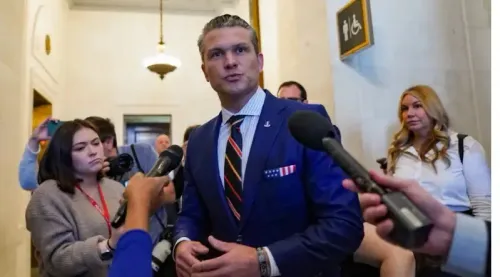
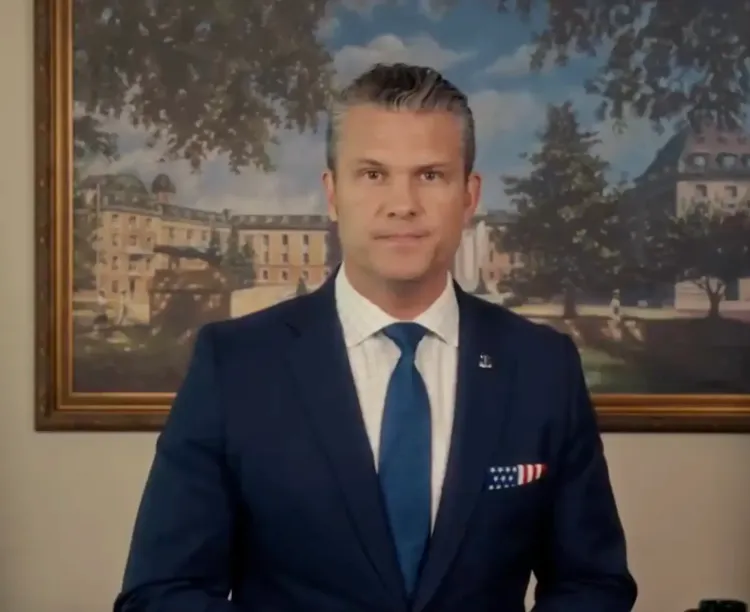
US President Donald Trump on Thursday, 5 November declared he intended to retain Defence Secretary Pete Hegseth, even as Republican Congressman Thomas Massie of Kentucky renewed his push to impeach the Pentagon chief over his conduct of the war with Iran and other controversial military operations.
Trump's Backing for Hegseth
'I have every intention to keep him,' Trump told ABC News journalist Jonathan Karl, who reported the exchange on X. Karl noted that Trump acknowledged receiving calls from people who were unhappy with Hegseth — a sign that pressure on the Defence Secretary is building even within the President's own orbit. The public endorsement, however, signals that Trump is not yet prepared to abandon his Pentagon chief.
Massie's Impeachment Push
Massie responded swiftly, arguing on X that if Trump did plan to replace officials such as Hegseth, he should act while their successors could still be confirmed by the Senate. Massie also predicted that Democrats would pursue far more aggressive hearings and trials once they took control of Congress. His statement on Wednesday evening had set an ultimatum: 'There is one contingency in which I won't reintroduce the articles of impeachment: Hegseth resigns.'
Massie told a television network he planned to seek a House vote when Congress returned the following week — a vote that would take place in the current Congress, during the lame-duck session before the new Congress is seated in January.
Eight Articles of Impeachment: What They Allege
Massie first brought eight articles of impeachment to the House floor on 15 September. Three centre on the War Powers Resolution of 1973, accusing Hegseth of initiating or sustaining military operations against Iran without congressional authorisation. The first article alleges Hegseth directed US forces into hostilities against Iran on 28 February without a declaration of war, specific statutory authorisation, or a national emergency triggered by an attack on the United States. The second alleges operations continued after Congress agreed in June to a concurrent resolution directing the president to remove US forces from unauthorised hostilities. The third alleges combat continued past the statutory deadline.
'By engaging in hostilities in Iran for more than 90 days without congressional authorisation, Secretary Hegseth is breaking the law and must be held accountable,' Massie said in a September statement.
The remaining five articles allege that Hegseth disregarded laws designed to minimise civilian casualties, oversaw unlawful lethal strikes on suspected drug traffickers at sea, retaliated against Senator Mark Kelly over a speech, directed the seizure of Venezuelan President Nicolás Maduro and his wife without legal authority, and launched an unauthorised military campaign in Yemen.
Constitutional Process and What Comes Next
Under the US Constitution, the House of Representatives holds the sole power to impeach federal officials and can adopt articles of impeachment by a simple majority. Each article then goes before the Senate, which has the sole power to conduct a trial. Conviction and removal require the support of two-thirds of senators present — meaning 67 votes if all 100 senators were in attendance, a threshold that would be extraordinarily difficult to reach given the current partisan composition of the chamber.
Massie has framed his eight articles as comparatively restrained, arguing that the incoming Democratic-controlled Congress would pursue even harsher charges. Whether the House acts before the new Congress is seated in January will determine the immediate political stakes for Hegseth — and for the broader debate over presidential war powers.
Point of View
But the fact that a sitting Republican congressman is driving impeachment articles — not the opposition — signals a fracture the White House cannot entirely dismiss. The core constitutional question buried inside the political noise is serious: whether the executive can sustain offensive military operations beyond the War Powers Resolution's 90-day clock without Congress. That question has been dodged by administrations of both parties for decades, and the Iran case may finally force a reckoning. India and other countries with significant exposure to West Asian stability should watch this closely — any escalation or abrupt de-escalation in US-Iran hostilities carries direct energy and security consequences.
NationPress
6 Nov 2026
Frequently Asked Questions
Why does Thomas Massie want to impeach Pete Hegseth?
Massie has filed eight articles of impeachment against Hegseth, three of which allege that the Defence Secretary directed and continued military operations against Iran for more than 90 days without congressional authorisation, in violation of the War Powers Resolution of 1973. The remaining five articles allege other unlawful military and administrative actions, including unauthorised strikes on drug traffickers, retaliation against a senator, and an unauthorised campaign in Yemen.
What did President Trump say about keeping Hegseth?
Trump told ABC News journalist Jonathan Karl on 5 November that he had 'every intention' to keep Hegseth as Defence Secretary. Trump acknowledged receiving calls from people unhappy with Hegseth but showed no inclination to remove him.
What is the War Powers Resolution and why does it matter here?
The War Powers Resolution of 1973 requires the US president to notify Congress within 48 hours of committing armed forces to military action and prohibits them from remaining in hostilities for more than 60 days — extendable by 30 days — without congressional authorisation. Massie's articles allege Hegseth directed operations against Iran beyond this limit without a declaration of war or specific statutory approval.
Could Hegseth actually be removed through impeachment?
Removal is considered extremely unlikely under the current Senate composition. The House can pass articles of impeachment by a simple majority, but conviction and removal in the Senate require a two-thirds majority — 67 votes if all 100 senators are present. That threshold would demand substantial bipartisan support that does not currently appear to exist.
When could a House vote on impeachment happen?
Massie indicated he planned to seek a House vote when Congress returned the week of 5 November, within the lame-duck session before the new Congress is seated in January. Any vote taken before January would occur in the current Congress.