US AG Blanche defends Hegseth as GOP lawmaker files 8 impeachment articles
Synopsis
A Republican congressman has filed eight impeachment articles against Defence Secretary Pete Hegseth — accusing him of illegal Iran operations, extrajudicial killings, kidnapping a foreign leader, and retaliating against a senator. With the US Attorney General stepping in to defend him at the White House, the standoff has turned into a direct collision between the executive branch and a corner of Congress over who controls America’s war-making power.
Key Takeaways
Republican Representative Thomas Massie introduced eight articles of impeachment against Defence Secretary Pete Hegseth on Tuesday, 16 September 2026 .
The first three articles allege Hegseth violated the War Powers Resolution of 1973 by continuing Iran hostilities beyond 90 days without congressional authorisation.
Additional articles accuse Hegseth of authorising extrajudicial killings, retaliating against Senator Mark Kelly , acting without legal authority in the capture of Nicolás Maduro , and ordering strikes in Yemen .
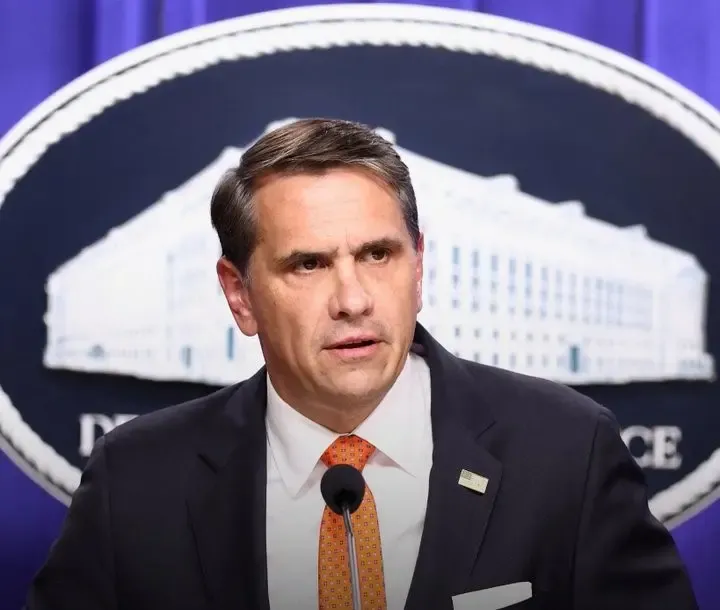
Attorney General Todd Blanche publicly defended Hegseth at the White House, disputing the characterisation of Iran operations as a war.
Pentagon Press Secretary Kingsley Wilson called Hegseth ‘a transformative leader’ and said the department was unified behind him.
Passage of the impeachment resolution requires a simple House majority ; removal would need a two-thirds Senate majority — a high bar in a Republican-controlled Congress.
US Attorney General Todd Blanche on Tuesday, 16 September 2026 publicly backed Defence Secretary Pete Hegseth after Republican Representative Thomas Massie of Kentucky introduced eight articles of impeachment against Hegseth, accusing him of unlawfully conducting military operations in Iran and abusing the powers of his office. The move marks a rare impeachment push against a sitting Cabinet secretary and sharpens the battle over congressional war powers in the Trump administration.
What the Impeachment Articles Allege
The first three articles charge Hegseth with violating separate provisions of the War Powers Resolution of 1973 by continuing hostilities against Iran without congressional authorisation. The first article alleges that the Iran operation began without a declaration of war, statutory authorisation, or evidence of an attack on or imminent threat to the United States.
The second article accuses Hegseth of pressing on with the operation after Congress directed the removal of US forces. The third alleges that military action continued beyond the statutory 60-day period and a possible 30-day withdrawal window. The remaining five articles broaden the scope considerably: they accuse Hegseth of failing to minimise civilian casualties, authorising extrajudicial killings during operations against suspected drug traffickers, retaliating against Democratic Senator Mark Kelly over his public comments about military orders, acting without legal authority in the US operation that captured Venezuelan leader Nicolás Maduro and his wife Cilia Flores, and conducting military strikes in Yemen.
Massie's Case for Accountability
Representative Massie introduced the resolution as a privileged measure, a procedural manoeuvre that forces the Republican-controlled House to schedule a vote on the matter. “By engaging in hostilities in Iran for more than 90 days without congressional authorization, Secretary Hegseth is breaking the law and must be held accountable,” Massie said.
He pressed further, arguing that the constitutional violations extended beyond Iran. “He is abusing the power of his office to ignore congressional war powers resolutions, to kidnap foreign leaders, and to intimidate critics of the Trump administration by retaliating against them for exercising free speech,” Massie said, adding: “If we are to remain true to our oath to ‘support and defend the Constitution of the United States,’ Congress must not turn a blind eye to Secretary Hegseth’s unconstitutional and illegal actions.”
Blanche and the Pentagon Push Back
Attorney General Blanche, speaking to reporters at the White House, dismissed the allegations and characterised Hegseth as a disciplined operator. “Secretary Hegseth is doing a phenomenal job, and the secretary of war doesn’t just go off and do things. So he follows the law,” Blanche said. He added that the Department of Justice (DOJ) plays an active role in ensuring legal compliance across military operations.
Blanche also challenged the framing of the Iran campaign as a war. “You called it a war. I disagree with that characterization, as does most of Congress,” he told reporters. Pentagon Press Secretary Kingsley Wilson echoed the defence, calling Hegseth “a transformative leader” and saying the department stood behind him. “The entire Department is unified behind the Secretary’s vision and will continue working to put our warfighters and America first,” Wilson said.
The War Powers Resolution: Background
The War Powers Resolution was enacted in 1973 to curtail a president’s ability to sustain prolonged military action without legislative approval. It requires the administration to notify Congress within 48 hours of deploying US forces into hostilities, and mandates that unauthorised operations cease within 60 days, with a further 30-day withdrawal window. Critics have long argued that successive administrations have skirted the resolution, making Massie’s bid a test of whether Congress will assert its war-powers authority.
What Happens Next
For impeachment to proceed, a simple majority of the full House must vote in favour. Conviction and removal would then require a two-thirds majority of senators present at trial. Impeachment of Cabinet secretaries is historically rare in the United States. With Republicans controlling the House, the resolution faces a steep path to passage, though Massie’s privileged measure compels a floor debate that could embarrass the administration regardless of the outcome. The episode is expected to intensify congressional scrutiny of the administration’s military decision-making in the weeks ahead.
Point of View
But that may not be its primary purpose. By forcing a privileged floor vote, Massie compels every Republican member to go on the record on questions of war powers, civilian casualties, and the capture of a foreign head of state — all deeply uncomfortable terrain for the party’s mainstream. Blanche’s appearance at the White House to personally rebut the charges signals that the administration views the political optics as serious enough to warrant top-level intervention. The deeper issue is one that predates the Trump era: successive administrations have stretched the War Powers Resolution to near irrelevance, and Congress has repeatedly baulked at enforcing it. Whether this episode finally tests that enforcement mechanism, or merely produces a party-line vote that buries the question, will say a great deal about the current balance of war-making authority in Washington.
NationPress
16 Sept 2026
Frequently Asked Questions
What are the eight impeachment articles filed against Pete Hegseth?
The eight articles accuse Defence Secretary Pete Hegseth of violating three separate provisions of the War Powers Resolution of 1973 over Iran, failing to minimise civilian casualties, authorising extrajudicial killings against suspected drug traffickers, retaliating against Senator Mark Kelly, acting without legal authority in the capture of Venezuelan leader Nicolás Maduro, and ordering military strikes in Yemen. Republican Representative Thomas Massie of Kentucky introduced the resolution on 16 September 2026.
What is the War Powers Resolution and why does it matter here?
The War Powers Resolution of 1973 limits a president’s ability to sustain military operations without Congress. It requires notification within 48 hours of deploying forces and mandates that unauthorised operations end within 60 days, with a further 30-day withdrawal window. Massie alleges Hegseth continued Iran hostilities for more than 90 days without authorisation, directly breaching those limits.
What did Attorney General Todd Blanche say in defence of Hegseth?
Blanche told reporters at the White House that Hegseth ‘is doing a phenomenal job’ and ‘follows the law.’ He added that the Department of Justice plays an active role in ensuring legal compliance and disputed the characterisation of the Iran operations as a war, saying most of Congress shared his view.
Can the impeachment of Pete Hegseth actually succeed?
It faces a steep path. Passage requires a simple majority of the Republican-controlled House, and conviction and removal would then need a two-thirds majority in the Senate. Impeachment proceedings against Cabinet secretaries are historically rare in the United States, and no current indication suggests the Republican leadership supports the measure.
What procedural tactic did Massie use to force a vote?
Massie introduced the impeachment resolution as a privileged measure, a parliamentary mechanism that compels the House to schedule a floor vote on the matter regardless of leadership’s wishes. This forces every member to go on the record, even if the resolution ultimately fails.