Trump Stands Firm Behind FBI Chief Kash Patel Amid Democrat Calls to Resign
Synopsis
President Trump is standing firm behind embattled FBI Director Kash Patel as Democrats demand his resignation following an Atlantic Magazine exposé. The White House cites a 125-year murder rate low as proof of success, while Patel counters with a $245 million lawsuit — turning a political firestorm into a full-blown legal battle.
Key Takeaways
President Trump reaffirmed his full support for FBI Director Kash Patel on April 24, 2025 , through White House Press Secretary Karoline Leavitt .
The White House claims the U.S. has reached a 125-year low in murder rates , with Washington, D.C. seeing murders fall by nearly 60 percent .
Senate Democratic Leader Chuck Schumer demanded Patel's immediate resignation on the Senate floor , calling him unfit to lead the FBI .
Kash Patel has filed a USD 245 million lawsuit against Democrats following their public calls for his resignation.
A federal investigation into the Federal Reserve's financial management has not been dropped but transferred to a different oversight authority, per the White House .
The controversy follows investigative reporting by The Atlantic Magazine that intensified scrutiny of Patel's leadership and judgment.
Washington, April 24 — President Donald Trump is firmly standing behind FBI Director Kash Patel despite mounting pressure from Democratic lawmakers demanding his resignation, the White House confirmed. Press Secretary Karoline Leavitt defended Patel's leadership on Wednesday, pointing to historically low crime rates nationwide as evidence that the administration's law enforcement strategy is working.
White House Defends Patel's Leadership
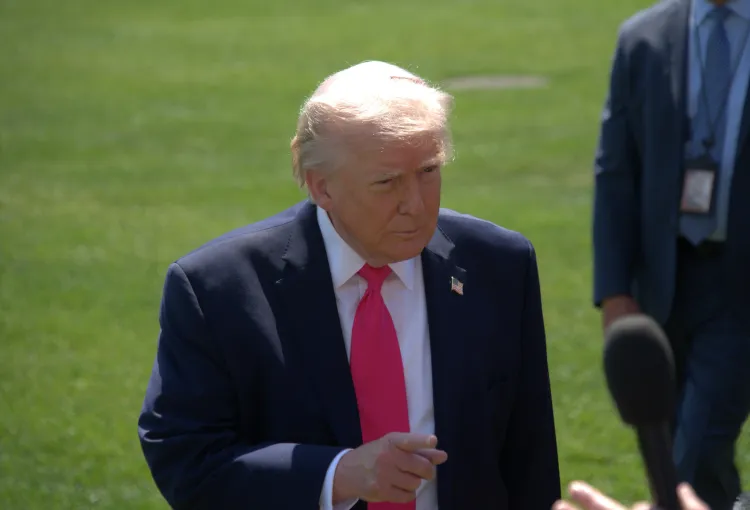
Karoline Leavitt told reporters that President Trump "does still have confidence in the FBI Director and in our law and order team to do what they've been doing so well over the course of the last year and a half." Her statement was unequivocal, signaling no imminent change at the top of the nation's premier federal law enforcement agency.
Leavitt emphasized measurable results under the current administration's oversight. "The crime rates in this country have completely plummeted," she said, adding that the United States is now at a 125-year low in murder rates — a claim that, if accurate, would represent the most significant reduction in violent crime in modern American history.
She also highlighted progress in the nation's capital specifically. "Murders are down nearly 60 per cent in Washington, D.C.," Leavitt said, crediting federal law enforcement personnel for the trend. "The great men and women of the FBI… are helping make this happen," she added.
Federal Reserve Probe Update
Separately, Leavitt addressed questions about a federal investigation into financial management at the Federal Reserve, clarifying that the probe has not been abandoned. "The investigation still continues. It's just under a different authority," she said, without elaborating on which agency or office now holds jurisdiction.
This development is notable because it suggests the administration is reshuffling oversight responsibilities rather than dropping scrutiny of the Fed — a move that could have significant implications for monetary policy independence and financial regulatory oversight going forward.
Democrats Demand Patel's Immediate Resignation
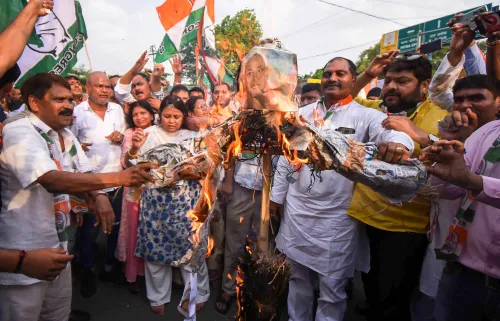
The political storm around Kash Patel intensified following investigative reporting by The Atlantic Magazine, the details of which prompted Senate Democratic Leader Chuck Schumer to take to the Senate floor and call for Patel's immediate removal.
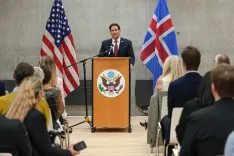
"Every day Kash Patel remains in this job is another day that undermines the FBI and its mission," Schumer declared. He went further, questioning Patel's fundamental fitness for the role: "He is not a serious person. He has not demonstrated the skills required for the job."
Schumer also directed sharp criticism at Trump's broader appointment philosophy. "This is what happens when Trump just chooses acolytes, people who suck up to him for important jobs," he said. "It seems to be Trump's only criterion, and it puts him in trouble over and over again by choosing people whose only criterion is loyalty to him."
Patel Fires Back With $245 Million Lawsuit
Kash Patel has not remained silent under the pressure. He has filed a USD 245 million lawsuit against his Democratic critics in response to their calls for his resignation — a legally aggressive countermove that signals he intends to fight back rather than step down voluntarily.
Patel, a longtime Trump ally, has been a polarizing figure since his appointment. His tenure at the FBI has been characterized by a stated focus on crime reduction and internal accountability, but critics argue his loyalty to the president compromises the bureau's institutional independence — a tension that has defined much of his time in office.
Broader Implications for FBI Independence
This standoff reflects a deeper, ongoing battle over the independence of America's federal law enforcement institutions. Historically, FBI directors have served 10-year terms specifically designed to insulate the bureau from political cycles. The current controversy reignites longstanding debates about whether that structural protection is sufficient when a president and his allies are directly embedded in the agency's leadership.
Analysts note that the Democrats' strategy — combining public pressure, Senate floor speeches, and leveraging investigative journalism — mirrors tactics used during earlier battles over FBI leadership, including the firing of James Comey in 2017. Whether this pressure campaign gains traction will depend heavily on whether independent Republicans in the Senate choose to weigh in.
With Patel's lawsuit now in the legal pipeline and Trump's public backing firmly in place, the political and legal fight over the future of the FBI directorship is likely to intensify in the coming weeks, with potential implications for federal oversight, law enforcement credibility, and the 2026 midterm elections.
Point of View
The line between law enforcement and political loyalty becomes dangerously blurred. Democrats are right to raise accountability concerns, but their strategy risks being perceived as partisan theater unless backed by bipartisan Senate action. The deeper irony: the very crime statistics the White House cites as Patel's vindication are being disputed by independent analysts — suggesting both sides are weaponizing data in a fight that is ultimately about power, not public safety.
NationPress
7 Oct 2026
Frequently Asked Questions
Why are Democrats calling for Kash Patel's resignation?
Democrats are demanding Kash Patel's resignation following investigative reporting by The Atlantic Magazine that raised serious questions about his conduct and judgment as FBI Director . Senate Minority Leader Chuck Schumer said Patel lacks the skills and judgment to lead the agency.
Does President Trump still support Kash Patel as FBI Director?
Yes. President Trump continues to back Kash Patel as FBI Director , according to White House Press Secretary Karoline Leavitt . She confirmed on April 24, 2025 that the president has full confidence in Patel and the administration's law enforcement team.
What lawsuit has Kash Patel filed and against whom?
Kash Patel has filed a USD 245 million lawsuit against Democrats who have publicly called for his resignation. The lawsuit appears to be a defamation-related legal action, signaling Patel's intent to fight back legally rather than step down from his role.
What crime statistics did the White House cite in defense of Kash Patel?
The White House cited a 125-year low in U.S. murder rates and a nearly 60 percent drop in murders in Washington, D.C. as evidence of successful law enforcement under the current administration. Press Secretary Karoline Leavitt credited FBI personnel for these results.
What is the status of the Federal Reserve investigation mentioned by the White House?
The White House clarified that the federal investigation into financial management at the Federal Reserve has not been dropped. It has been moved to "a different authority," according to Press Secretary Karoline Leavitt , though she did not specify which agency now oversees the probe.