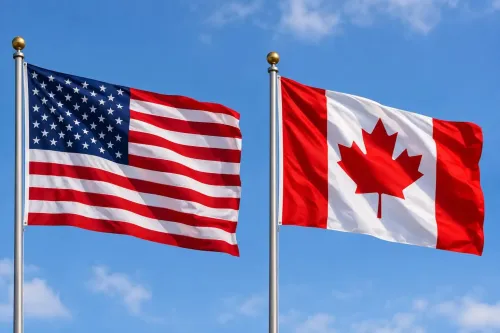
Trump bans Canadian liquor, dairy and motorcycles from September 29
Synopsis
Trump's latest Canada trade salvo goes beyond tariffs — it is an outright ban on Canadian spirits, dairy, and large motorcycles from 29 September, backed by a confirmed 50% auto tariff from 1 January. The White House says talks are 'constructive', but the clock is ticking and the economic pressure is asymmetric, with the administration arguing the measures touch just 0.1% of US consumption while hitting Canada far harder.
Key Takeaways
US President Donald Trump has ordered import bans on Canadian alcoholic beverages, dairy products , and motorcycles over 800cc , effective 29 September at 12:01 a.m.
Banned beverages include packaged beer, sparkling wine, whisky, bourbon, rum, gin, vodka, tequila, brandy , and other spirits.
Dairy bans cover whey protein concentrates, modified whey, fluid whey, dried whey , and several forms of molasses .
Revised 50 per cent tariff lists — adding paper, steel, aluminium, furniture, mattresses, and more — take effect on 15 September .
The 50 per cent tariff on Canadian vehicles is confirmed to take effect on 1 January .
The White House said talks with Canada have been 'constructive' and a further discussion is expected within days, leaving room for a negotiated deal.
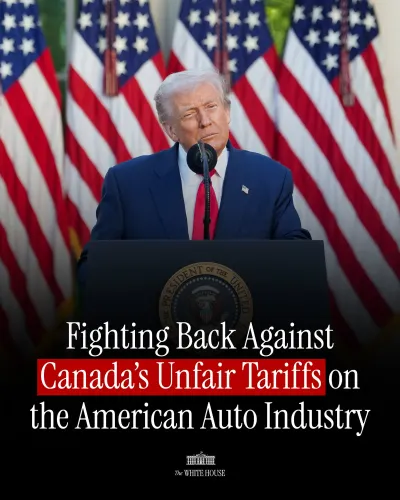
US President Donald Trump has ordered sweeping import bans on a wide range of Canadian alcoholic beverages, dairy products, and motorcycles, with the prohibitions set to take effect at 12:01 a.m. Eastern Time on 29 September. The move marks a significant escalation in the ongoing trade confrontation between Washington and Ottawa, following the expiry of an earlier suspension and Canada's failure — according to the White House — to remove disputed measures.
What Is Banned and When
The prohibited alcoholic beverages span virtually the full spectrum of spirits and fermented drinks: packaged beer, sparkling wine, cider, sake, whisky, bourbon, rum, gin, vodka, tequila, brandy, liqueurs, and other spirits. Non-alcoholic beer is also covered under the ban.
On the dairy side, the proclamations bar whey protein concentrates, modified whey, fluid whey, dried whey, and several forms of molasses. A separate proclamation prohibits the import of Canadian motorcycles and cycles fitted with engines exceeding 800cc. Canadian goods imported before 29 September but not yet cleared for consumption will remain subject to the existing 50 per cent duty.
Tariff List Revised From September 15
Alongside the outright bans, the administration has modified the range of Canadian products subject to the existing 50 per cent duties, with those changes taking effect on 15 September. The revised list adds several categories of paper, iron and steel structures, aluminium products, metal fittings, golf carts, small motor vehicles, outboard motorboats, furniture, mattresses, and lamps, as well as certain cheeses not made from cow's milk.
At the same time, the administration removed salt, Portland cement, refined lead, certain household paper products, switchgear assemblies, and some fishing rod parts from the tariff list. A senior administration official said the removals reflected business feedback and acknowledged that parts of the United States had a unique dependence on Canadian supplies that could not easily be replaced.
What the White House Said
A senior administration official told reporters on Tuesday that the measures were designed to counter Canadian retaliation, protect American production, and restore what the White House considers a level playing field. The official estimated that the import bans would affect Canadian trade valued in the 'single-digit billions' and cover roughly 0.1 per cent of overall US consumption.
'The actual economics of it is much more challenging for Canada than it is for us,' the official said. The official also confirmed that Trump's plan to raise tariffs on Canadian vehicles to 50 per cent on 1 January remains in effect: 'The President's position on autos going up to 50 per cent on January 1st, that remains, that remains in effect.'
Background: Section 338 and the Suspended Duties
Trump first imposed the additional duties under Section 338 of the Tariff Act of 1930 through proclamations issued on 20 July. Their implementation was briefly suspended after Canada expressed a commitment to address the disputed measures. The suspension expired on 22 August after the White House said Canada had failed to remove them. Section 338 allows the President to impose duties of up to 50 per cent and, under specified conditions, bar goods from a country that maintains discrimination against US commerce.
Door Left Open for Negotiations
Despite the escalation, the White House indicated it remains open to a negotiated resolution. The senior official described conversations with Canadian officials over the past several days as 'constructive' and confirmed that another discussion was expected within days. When asked whether an alternative agreement could be reached, the official said: 'Yes, that's always a possibility.' How much room remains for a deal — given the compressed timeline before 29 September — is, however, unclear.
Point of View
From Canadian whisky to dairy, are high-visibility and politically resonant on both sides of the border. The retention of Section 338, a Cold War-era instrument rarely deployed against allies, signals that Trump is treating Canada less as a partner and more as an adversary. The 'constructive talks' caveat is the only off-ramp visible, but with bans kicking in on 29 September and auto tariffs confirmed for 1 January, Ottawa has very little time and very little leverage. The deeper risk is that tit-for-tat escalation entrenches positions before any deal framework can take shape.
NationPress
24 Oct 2026
Frequently Asked Questions
What has Trump banned from Canada?
Trump has banned a broad range of Canadian alcoholic beverages — including packaged beer, sparkling wine, whisky, bourbon, rum, gin, vodka, tequila, brandy, and liqueurs — as well as dairy-related products such as whey protein concentrates, dried whey, and molasses, and motorcycles with engines exceeding 800cc. The bans take effect on 29 September.
When do the new US bans on Canadian goods take effect?
The import bans take effect at 12:01 a.m. Eastern Time on 29 September. A separate revision to the existing 50 per cent tariff list takes effect earlier, on 15 September. Canadian goods imported before 29 September but not yet cleared for consumption will still face the existing 50 per cent duty.
Why is the US imposing these bans on Canada?
The White House says the measures are designed to counter Canadian retaliation against earlier US tariffs, protect American production, and restore what it considers a level playing field. The legal basis is Section 338 of the Tariff Act of 1930, which allows duties of up to 50 per cent — and outright import bans — against countries deemed to discriminate against US commerce.
Is there still a chance of a US-Canada trade deal?
Yes, according to the White House. A senior administration official described recent conversations with Canadian officials as 'constructive' and confirmed that another discussion was expected within days. The official said an alternative agreement remained 'always a possibility', though no details of any framework have been disclosed.
What happens to Canadian vehicle tariffs?
The 50 per cent tariff on Canadian vehicles is confirmed to take effect on 1 January, according to a senior administration official. 'The President's position on autos going up to 50 per cent on January 1st, that remains, that remains in effect,' the official said.