Trump orders split MMR vaccine, reshapes US childhood immunisation policy
Synopsis
Trump has signed an executive order breaking up the combined MMR vaccine into three separate shots and cutting the universal childhood vaccine schedule from 18 diseases to 11 — the most dramatic restructuring of US immunisation policy in a generation. With flu and COVID-19 vaccines moved to 'shared decision-making' and states advised to rethink school mandates, the ripple effects on public health could be vast.
Key Takeaways
President Trump signed an executive order on 11 August recommending the combined MMR vaccine be replaced with three separate single-disease shots.
The change applies once domestically produced individual vaccines are available; the combined MMR remains in use until then.
The new 'Gold Standard' framework cuts routine childhood immunisation recommendations from 18 to 11 diseases.
Influenza and COVID-19 vaccines are moved to a 'shared clinical decision-making' category, no longer universally recommended.
HHS must submit an implementation plan to the president within 90 days .
States and territories have been advised to consider revising school vaccination laws in line with the new federal recommendations.
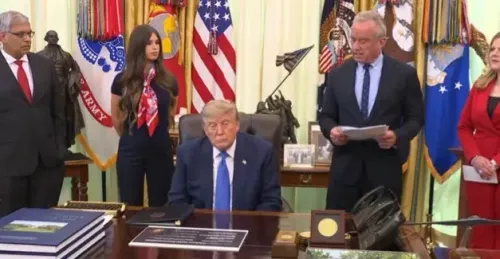
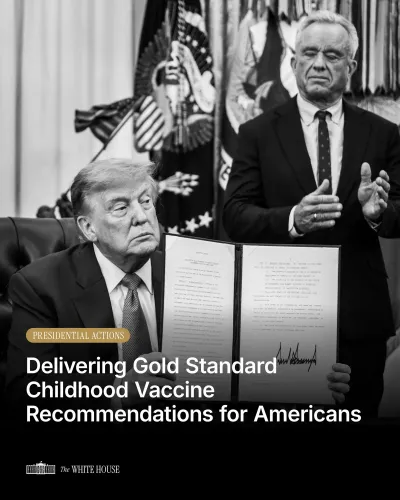
President Donald Trump on 11 August signed an executive order recommending that the combined measles, mumps and rubella (MMR) vaccine be replaced with three separate single-disease shots, marking the most sweeping overhaul of America's childhood immunisation policy in decades. The change will take effect once domestically produced single-disease versions of the vaccines become available; until then, the combined MMR vaccine remains in use.
What the Executive Order Directs
The order instructs the Health and Human Services (HHS) secretary to develop a plan for administering core childhood vaccines individually rather than through combination products, beginning with the MMR vaccine. HHS must submit its proposals to the president within 90 days through the White House domestic policy adviser. The department is permitted to work with private companies and other countries to make individual vaccines available.
Separately, the order recommends that childhood vaccines be administered during distinct medical visits 'to the maximum extent feasible', a move the White House says gives parents greater control over the timing and frequency of immunisations. Crucially, the continued availability of combination vaccines and clinician-recommended immunisations is explicitly guaranteed under the order.
The 'Gold Standard' Framework and Reduced Schedule
The MMR directive forms part of the administration's newly introduced 'Gold Standard Childhood Vaccine Recommendations'. Under this framework, the number of diseases for which immunisation is routinely recommended for all children has been reduced from 18 — as listed in the Centers for Disease Control and Prevention (CDC)'s 2024 schedule — to 11.
The 11 core vaccines retained for universal recommendation are: measles, mumps, rubella, diphtheria, tetanus, pertussis, polio, Haemophilus influenzae type B, pneumococcal disease, human papillomavirus (HPV), and chickenpox (varicella). Vaccines against influenza and COVID-19 have been moved to a 'shared clinical decision-making' category, alongside hepatitis A, hepatitis B, rotavirus, and meningococcal disease.
Immunisations against respiratory syncytial virus (RSV), hepatitis A, hepatitis B, meningococcal B, meningococcal ACWY, and dengue are now classified as recommended only for children in certain high-risk groups.
The Rationale: Comparing US Vaccines with Peer Nations
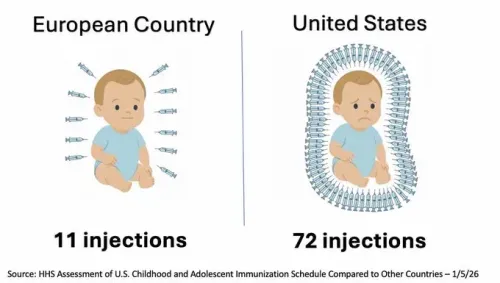
The administration said its approach was grounded in a January 2026 HHS scientific assessment that compared US childhood immunisation recommendations with those of other developed countries. According to the White House, the assessment found that the United States recommended more childhood vaccines than any peer country, and more than twice as many doses as some European nations. It identified 11 immunisations said to be consistently recommended across the countries studied.
This comes amid a broader push by the Trump administration — aligned with the agenda of HHS Secretary Robert F. Kennedy Jr. — to re-examine vaccine safety data, reduce aluminium-based adjuvants, and improve transparency in safety monitoring. The order also directs HHS to conduct comparative safety and efficacy studies and continuously assess vaccine risks and benefits using both American and international data.
Implications for States, Schools, and Public Health
Federal departments and agencies have been directed to review the new recommendations and take appropriate steps to advance them. States and territories were advised to consider updating laws governing vaccination requirements for school enrolment and attendance — a signal that the federal policy shift could cascade into state-level mandates.
Public health experts and medical associations have previously warned that any weakening of universal vaccine recommendations risks lowering herd immunity thresholds, particularly for highly contagious diseases such as measles. The United States recorded a significant measles outbreak earlier in 2025, adding urgency to the debate around the timing of this policy shift.
The administration's next steps — including the HHS plan due within 90 days and any revisions to the federal childhood and adolescent vaccine schedule — will be closely watched by paediatricians, state health departments, and public health bodies worldwide.
Point of View
Arriving months after a significant US measles outbreak. Moving flu and COVID-19 vaccines to 'shared decision-making' effectively hands the immunisation decision to individual consultations, which historically correlates with lower uptake. The administration's comparison with European schedules is selectively framed: several European countries have higher disease-specific coverage rates despite fewer mandated doses, because their delivery systems are more consistent. The real risk is not the policy on paper but the signal it sends — and whether states, reading the federal cue, begin loosening school entry requirements in ways that erode herd immunity before single-dose alternatives are even available.
NationPress
11 Aug 2026
Frequently Asked Questions
What did Trump's executive order on vaccines change?
The order recommends replacing the combined MMR vaccine with three separate shots for measles, mumps, and rubella, and cuts the list of diseases for which vaccination is universally recommended for all children from 18 to 11. It also moves flu and COVID-19 vaccines into a 'shared clinical decision-making' category.
When will the MMR vaccine be split into separate shots?
The change will take effect once single-disease versions of the vaccines are domestically available. Until that point, the combined MMR vaccine will remain accessible. HHS must submit an implementation plan within 90 days.
Which vaccines are still recommended for all children under the new US policy?
The 11 universally recommended vaccines cover measles, mumps, rubella, diphtheria, tetanus, pertussis, polio, Haemophilus influenzae type B, pneumococcal disease, HPV, and chickenpox. Flu and COVID-19 vaccines are no longer in the universal category.
Why did the Trump administration reduce the childhood vaccine schedule?
The administration cited a January 2026 HHS scientific assessment comparing US recommendations with those of other developed nations, which reportedly found the US recommended more vaccines than any peer country and more than twice as many doses as some European nations. It identified 11 immunisations consistently recommended across the countries studied.
How could the new vaccine policy affect schools and states?
States and territories have been advised to consider updating laws governing vaccination requirements for school enrolment and attendance to align with the new federal recommendations. Federal departments have also been directed to take steps to advance the new framework.