Trump rejects midterm backlash warning, attacks Karl Rove as 'a loser'
Synopsis
Trump publicly torched veteran Republican strategist Karl Rove — calling him 'a loser' — after Rove warned in The Wall Street Journal that Trump's campaign style risked a midterm backlash. The White House South Lawn exchange laid bare a live fault line inside the Republican Party just weeks before November's vote.
Key Takeaways
President Trump on Friday rejected warnings that his campaign style could hurt Republicans in the November midterms .
Trump called veteran strategist Karl Rove 'a loser' after Rove published a cautionary piece in The Wall Street Journal .
Trump cited packed rallies in Ohio and Iowa as proof his appearances were helping Republican candidates.
He claimed to be 'the only one that can get 25,000 people to show up' and described the campaign pace as demanding.
The remarks highlighted ongoing tension within the Republican Party over whether Trump's high-profile involvement helps or risks a voter backlash.
US President Donald Trump on Friday brushed aside warnings that his intensive campaign schedule could trigger a voter backlash against Republicans in the November midterm elections, turning his fire on veteran Republican strategist Karl Rove and insisting that packed rally crowds proved his approach was working.
The Attack on Rove
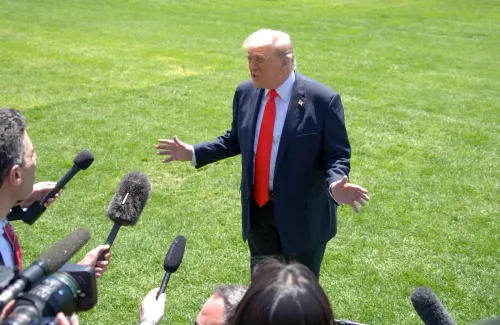
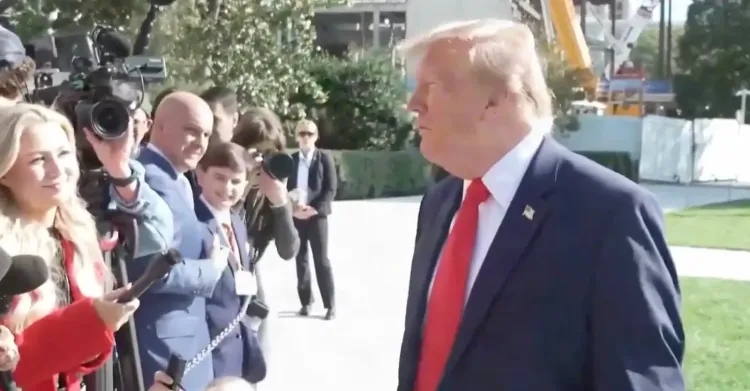
Speaking to reporters on the White House South Lawn before departing for Fort Myers, Florida, Trump was asked about a recent piece by Rove in The Wall Street Journal that argued Trump's campaign strategy risked producing a backlash among voters. Trump was dismissive and personal in his response. 'He's a loser,' Trump said of Rove. 'He's been a loser all his life,' he added. 'Karl Rove doesn't know what he's talking about,' Trump said.
Trump's Confidence in His Rally Pull
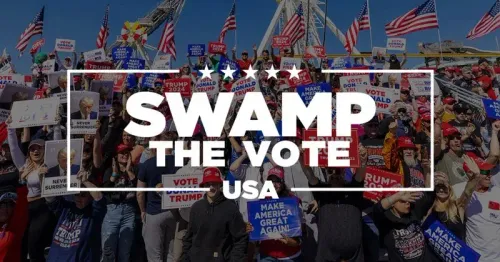
The President pointed to Ohio and Iowa as states where he believed his appearances were directly benefiting Republican candidates. He cited large crowd sizes as evidence that his campaigning was effective. 'Every place I'm going to, every place is full, loaded with people,' he said. Referring specifically to his scheduled Fort Myers appearance, Trump quoted organisers as telling him: 'There's a line of people that's five miles long.'
The One-Man Campaign Argument
When asked whether other Republican figures should take a more prominent role in the midterm push, Trump argued that his crowd-drawing ability was singular and unmatched within the party. 'I'm the only one that can get 25,000 people to show up,' he said. He described this as an established feature of his political career and said he intended to deploy that popularity in support of candidates he deemed deserving. 'The one problem is I'm one person,' he acknowledged. 'This is a lot of work,' he added.
The Broader Midterm Context
Trump's remarks came as Republicans worked to defend their position in Congress ahead of the November vote. The exchange with reporters highlighted a persistent tension within the party: whether Trump's high-energy, personality-driven campaigning energises the base enough to offset any enthusiasm it may generate among opposing voters. Rove, a key architect of George W. Bush's presidential victories, carries considerable credibility as a Republican strategist, making Trump's public broadside against him notable even by the standards of intra-party friction. Historically, incumbent parties tend to lose seats in midterms, and the degree to which Trump's campaign involvement helps or hurts individual candidates has been a subject of debate among Republican operatives for months.
Point of View
It reflects either supreme confidence or a calculated refusal to share ownership of any midterm outcome. The 25,000-crowd boast also does rhetorical work: it pre-empts blame by asserting that turnout is his doing, not the party's. If Republicans underperform in November, this exchange will be revisited as the moment the warning was on record and ignored.
NationPress
24 Oct 2026
Frequently Asked Questions
Why did Trump attack Karl Rove ahead of the midterms?
Trump attacked Rove after the veteran Republican strategist published a piece in The Wall Street Journal warning that Trump's aggressive campaign style could produce a voter backlash in the November midterm elections. Trump rejected the assessment and called Rove 'a loser' who does not know what he is talking about.
What did Karl Rove argue in The Wall Street Journal?
According to Trump's account of the article, Rove suggested that Trump's campaign strategy carried the risk of a backlash among voters ahead of the November midterms. The specific details of Rove's argument were not elaborated upon by Trump in his remarks.
Where was Trump travelling when he made these remarks?
Trump made the comments on the White House South Lawn before departing for Fort Myers, Florida, where he was scheduled to hold a campaign rally. He cited reports from Fort Myers organisers of an unusually large queue of supporters.
What claim did Trump make about his rally attendance?
Trump claimed he is 'the only one that can get 25,000 people to show up' at campaign events, pointing to large crowds in Ohio and Iowa as evidence that his midterm campaigning was benefiting Republican candidates.
What is the broader significance of Trump's midterm campaigning?
Incumbent parties historically lose congressional seats in midterm elections, and Trump's heavy personal involvement in the Republican campaign has been a source of internal debate. His public dismissal of Rove's warning signals he intends to continue his current approach regardless of criticism from within the party.