Trump Declares End to $60B Annual Trade Deficit With Canada

Synopsis
President Trump declared via the White House that the US has lost $60 billion a year on average over the last decade in trade with Canada, vowing 'NO MORE' — a signal that echoes his first-term playbook of using deficit figures to justify tariffs or treaty renegotiation, arriving as the USMCA's 2026 review window opens.
Key Takeaways
President Trump declared an end to what he described as a $60 billion average annual trade deficit with Canada .
The statement was posted by The White House on August 25, 2026 .
Trump used near-identical deficit language to justify renegotiating NAFTA into the USMCA during his first term.
The USMCA contains a formal review mechanism due in 2026 , making the timing of this declaration strategically significant.
Possible follow-on actions include new tariff proposals or formal demands to reopen USMCA provisions on autos, agriculture, or energy.
US manufacturers and Canadian exporters with integrated cross-border supply chains face the most immediate exposure to any trade friction.
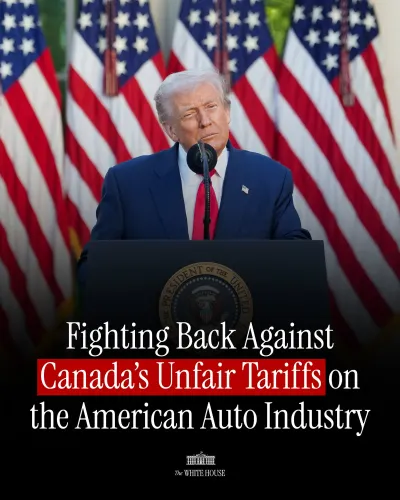
A blunt presidential declaration — and a warning shot aimed squarely at America's northern neighbour. The White House posted a statement from President Donald J. Trump on Tuesday, August 25, 2026, asserting that the United States has lost an average of $60 billion per year over the last decade in its trade relationship with Canada — and that era is now over.
Trump's exact words: 'Over the last 10 years, the United States lost, on average, 60 Billion Dollars a year with Canada. NO MORE!' The declaration carries the unmistakable grammar of a policy pivot — a public staking of ground that, in this administration's playbook, has historically been the opening move before tariffs, renegotiation demands, or both.
The Deficit Argument Trump Has Used Before
This is not a new rhetorical weapon. During his first term, Trump deployed bilateral trade deficit figures as the central justification for overhauling the North American Free Trade Agreement (NAFTA), eventually replacing it with the United States-Mexico-Canada Agreement (USMCA), which came into force in 2020. The USMCA tightened rules of origin in the auto sector and pried open Canadian dairy markets — both pressure points Trump had flagged using deficit language almost identical to Tuesday's post. The pattern is deliberate. By framing complex, integrated supply chains as a simple dollars-lost ledger, the administration builds a public case for unilateral action — tariffs, side agreements, or formal requests to reopen treaty provisions — before any formal negotiation begins.Why Canada and the US Are Economically Intertwined
Canada is among the United States' largest trading partners, with deeply integrated supply chains spanning automobiles, energy, and agriculture. Cross-border auto manufacturing, in particular, means that a single vehicle may cross the US-Canada border multiple times before it reaches a showroom. Tariffs or trade friction in this relationship do not land cleanly on one side — they reverberate through US manufacturers and Canadian exporters simultaneously. That complexity is precisely what makes the bilateral deficit figure a politically potent but economically contested measure. Trade economists note that goods deficits can coexist with services surpluses, and that integrated supply chains make simple 'win/loss' accounting misleading. The White House's framing strips that nuance out entirely — by design.What Comes Next for USMCA and North American Trade
The USMCA contains a formal review mechanism scheduled for 2026, making the timing of this statement significant. A presidential declaration of 'NO MORE' — in capital letters — signals that the administration intends to use that review window aggressively, potentially demanding concessions on autos, agriculture, or energy before agreeing to extend the agreement's terms. For Canadian exporters and US manufacturers with cross-border operations, the message is clear: the rules of North American trade are back on the table. Whether this opening salvo leads to formal tariff action or a renegotiated side deal will define the economic relationship between the two countries for the next decade. The 'NO MORE' is the headline. The fine print is still being written — and the next move is Washington's to make.Point of View
NO MORE' post is a textbook first-term echo — the same deficit-as-grievance framing that preceded NAFTA's dismantling is now arriving precisely as the USMCA's 2026 review clause comes due. The administration is publicly staking a maximalist position before formal talks begin, a negotiating tactic designed to shift the anchor point in its favour. For Canada, the challenge is familiar but no less urgent: a tweet from the Oval Office can move markets and mandate ministerial responses before any policy paper is drafted. The broader arc here is a US trade doctrine that treats allies and rivals with the same transactional lens — deficits as debts, and debts as leverage.
NationPress
25 Aug 2026
Frequently Asked Questions
What is the US trade deficit with Canada that Trump mentioned?
President Trump stated the US lost an average of $60 billion per year over the last decade in its trade relationship with Canada. Trade deficit figures can vary by methodology and source, and the specific figure cited by the White House has not been independently verified.
What is USMCA and how does it affect US-Canada trade?
The USMCA (United States-Mexico-Canada Agreement) replaced NAFTA in 2020 after renegotiation under Trump's first term. It governs trade rules across North America, including auto manufacturing rules of origin and agricultural market access, and is subject to a formal review in 2026 .
Will Trump impose tariffs on Canada?
No tariffs have been announced yet, but the White House statement mirrors the rhetoric Trump used before imposing tariffs and demanding renegotiation during his first term. Possible follow-on actions include new tariff proposals or demands to reopen USMCA provisions.
How does the US-Canada trade deficit affect India?
A significant disruption to North American trade — through tariffs or supply chain reshuffling — can affect global commodity prices, auto part supply chains, and energy markets, all of which have downstream effects on Indian importers and exporters.
What is the USMCA review in 2026?
The USMCA includes a built-in review mechanism that allows member countries to assess the agreement's terms in 2026 . Any party can signal changes it wants, and failure to agree can trigger a withdrawal process — giving Trump's statement significant formal weight beyond political messaging.