Trump Calls for Complete Ceasefire on All Fronts Including Lebanon
Synopsis
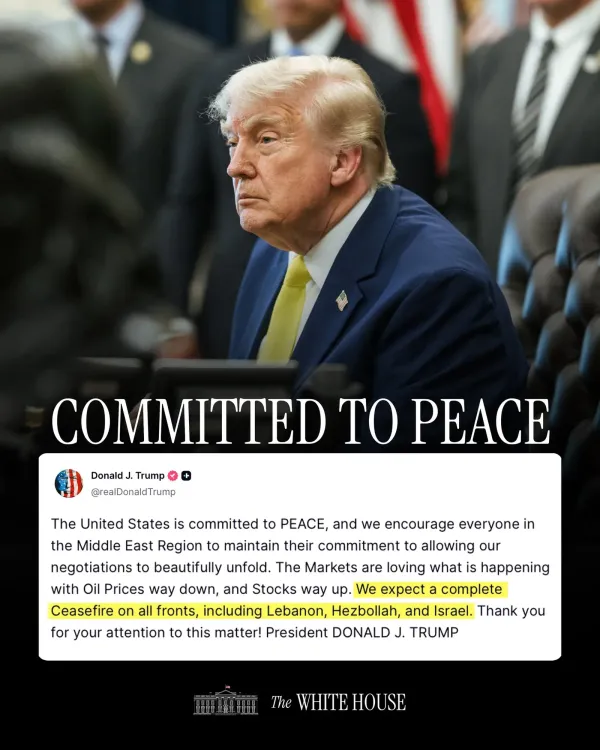
President Donald Trump, in a statement posted by the White House on 18 June 2026, declared the US is committed to peace and demanded a complete ceasefire on all fronts, explicitly naming Lebanon, Hezbollah, and Israel — extending his administration's assertive regional diplomacy.
Key Takeaways
The White House posted a direct quote from President Donald J.
Trump on 18 June 2026 calling for a 'complete Ceasefire on all fronts.' The statement explicitly names Lebanon , Hezbollah , and Israel , indicating a multi-front conflict is active.
Hezbollah is designated a foreign terrorist organisation by the United States and is backed by Iran .
The US previously supported UN Security Council Resolution 1701 after the 2006 Israel-Hezbollah war , calling for Hezbollah's withdrawal north of the Litani River .
Trump's first term saw the Abraham Accords (2020) , normalising Israel's ties with UAE , Bahrain , Morocco , and Sudan , forming the diplomatic backdrop to the current push.
Indian peacekeepers serving under UNIFIL in southern Lebanon give India a direct stake in any ceasefire outcome.
The White House on Thursday, 18 June 2026 quoted President Donald J. Trump declaring that the United States is committed to peace and demanding a 'complete ceasefire on all fronts,' explicitly naming Lebanon, Hezbollah, and Israel in the statement.
Context
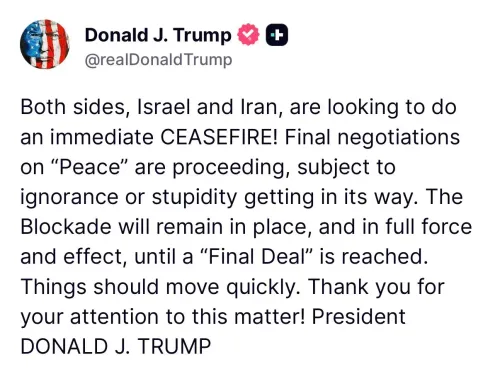
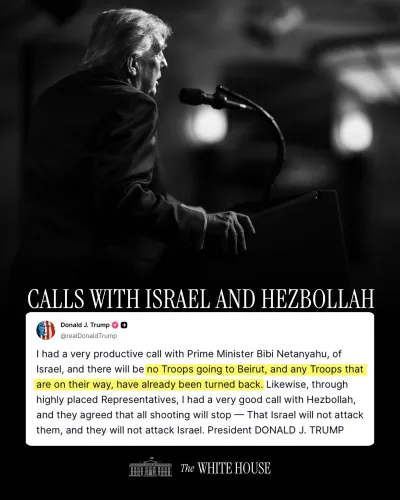
The statement, posted by the official White House account, carries the full weight of a presidential declaration on an active conflict zone. Trump's words — 'The United States is committed to PEACE... We expect a complete Ceasefire on all fronts, including Lebanon, Hezbollah, and Israel' — signal a direct American demand rather than a diplomatic suggestion. The use of 'expect' marks a notably assertive tone, implying US leverage over the parties involved.
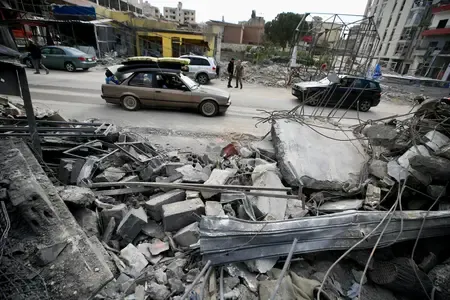
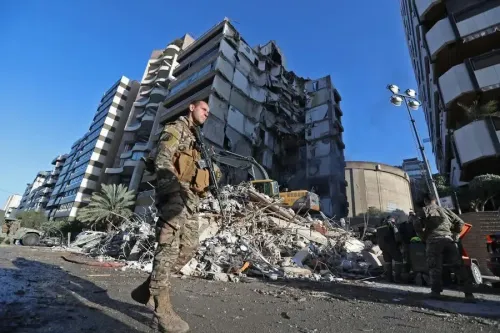
The call covers multiple simultaneous fronts, suggesting an escalation or continuation of hostilities along Israel's northern border with Lebanon, where Hezbollah — the Iran-backed Shiite militant and political organisation designated a foreign terrorist organisation by Washington — has long maintained a military presence.
Policy Backdrop
American involvement in Lebanon-Israel ceasefire diplomacy stretches back decades. After the 2006 Israel-Hezbollah war, the United States backed UN Security Council Resolution 1701, which called for a ceasefire and required Hezbollah to withdraw north of the Litani River. Compliance with that resolution has remained incomplete, leaving the border volatile.
During Trump's first term (2017–2021), his administration pursued a 'maximum pressure' strategy against Iran — Hezbollah's primary patron — while simultaneously brokering the Abraham Accords in 2020, normalising relations between Israel and the UAE, Bahrain, Morocco, and Sudan. The current multi-front ceasefire call extends that transactional diplomatic framework into what appears to be a broader regional flare-up.
Stakeholders and Impact
Israeli civilians in northern communities and Lebanese civilians caught in conflict zones stand as the most immediate stakeholders. Any ceasefire, if implemented, would pause hostilities that have historically displaced populations on both sides of the border.
For India, which maintains a significant diaspora in the Gulf and Lebanon and has historically supported a two-state solution and regional stability, a US-brokered ceasefire would ease pressure on evacuation logistics and trade routes through the eastern Mediterranean. Indian peacekeepers also serve under UNIFIL, the UN mission in southern Lebanon, giving New Delhi a direct operational stake in any ceasefire agreement.
What's Next
Diplomatic observers will watch for US shuttle diplomacy, possible engagement through the UN Security Council, or renewed consultations with regional partners to translate Trump's public demand into a binding ceasefire framework. Congressional action on supplemental security assistance — potentially tied to ceasefire compliance — is another lever Washington could deploy.
Whether the parties heed the call will test the credibility of American influence in a region where Washington's role as a guarantor of Israeli security and a mediator with Arab states remains central. A failure to achieve a ceasefire despite a presidential demand could complicate broader US diplomatic objectives, including any revival of Abraham Accords-style normalisation with Saudi Arabia.
Point of View
Using the word 'expect' to signal leverage rather than mere hope — a posture consistent with his transactional approach to Middle East diplomacy. By naming Hezbollah alongside Lebanon and Israel in the same breath, the statement implicitly treats the militant group as a party to negotiations, a framing that carries its own diplomatic risks. This fits a broader arc in which Washington attempts to use its security relationships with Israel and its economic pressure on Iran to simultaneously manage multiple conflict theatres. Whether the demand translates into a durable ceasefire will be a key test of American influence in a region growing accustomed to fragmented international mediation.
NationPress
19 Sept 2026
Frequently Asked Questions
What did Trump say about the ceasefire in Lebanon and Israel?
President Trump stated that 'The United States is committed to PEACE' and declared that Washington 'expects a complete Ceasefire on all fronts, including Lebanon, Hezbollah, and Israel,' as quoted by the White House on 18 June 2026.
Why is the US involved in the Lebanon-Israel conflict?
The United States has been a key mediator in Lebanon-Israel tensions for decades, backing UN Security Council Resolution 1701 after the 2006 war and maintaining a security alliance with Israel. Washington also designates Hezbollah a foreign terrorist organisation and applies pressure on its backer, Iran.
What is Hezbollah and why is it mentioned in Trump's ceasefire call?
Hezbollah is an Iran-backed Shiite militant and political organisation based in Lebanon, designated a foreign terrorist organisation by the United States. It is named in Trump's statement because it is a primary combatant in hostilities along Israel's northern border.
How does this affect India?
India has a direct stake because Indian peacekeepers serve under UNIFIL, the UN mission in southern Lebanon. A ceasefire would also ease pressure on the Indian diaspora in the Gulf and Lebanon and stabilise eastern Mediterranean trade routes important to Indian commerce.
What were the Abraham Accords and how do they relate to this ceasefire call?
The Abraham Accords, brokered by the Trump administration in 2020, normalised relations between Israel and the UAE, Bahrain, Morocco, and Sudan. The current ceasefire push is part of the same diplomatic framework aimed at stabilising the region and expanding Israel's acceptance in the Arab world.