Trump warns of '1929-style depression' if Democrats win Congress on Nov 3
Synopsis
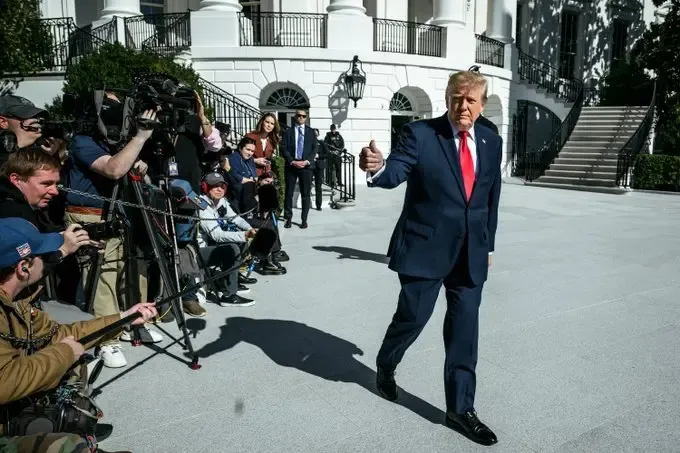
At a Mississippi rally, Trump raised the spectre of a 1929-style depression under Democratic control and dangled a $5,000 cash payment to every adult American if Republicans swept both chambers — a billion-dollar campaign promise with no distribution plan attached, delivered days before the 3 November midterms decide who controls Congress for the rest of his term.
Key Takeaways
President Trump warned at a Corinth, Mississippi rally on 27 October that a Democratic congressional win would cause a '1929-style economic depression.' Trump pledged $5,000 to every adult American citizen if Republicans retained both the House of Representatives and the Senate , estimating the cost at roughly $1 trillion .
He claimed US forces had destroyed 159 Iranian naval vessels and crippled Iran's air and nuclear capabilities, predicting the conflict would end soon.
Trump said his administration had secured $22.2 trillion in investment commitments and cited 400 per cent Canadian dairy tariffs in renewed criticism of Ottawa.
The 3 November midterms will decide control of Congress for the final two years of Trump's current term; the rally was held in support of Senator Cindy Hyde-Smith against Democrat Scott Colom .
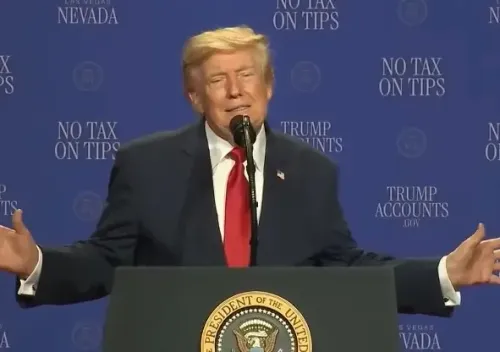
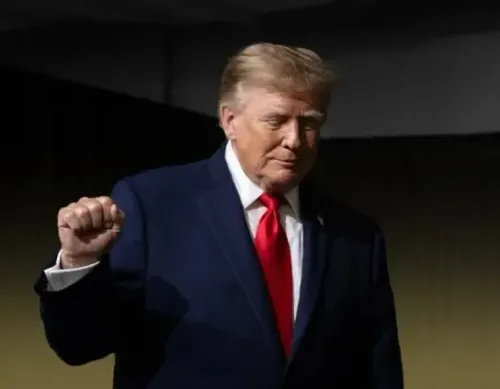
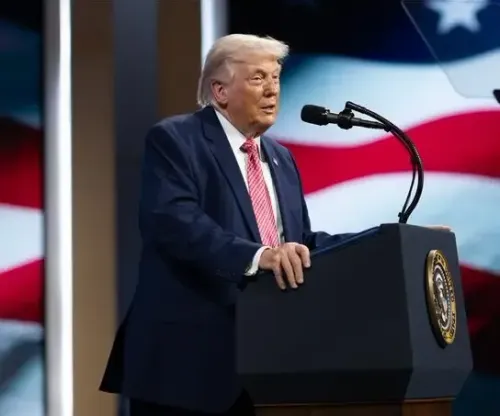
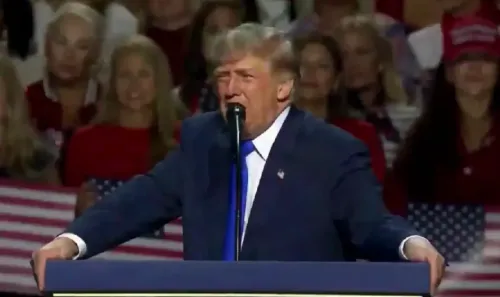
President Donald Trump warned at a campaign rally in Corinth, Mississippi on 27 October that a Democratic victory in the 3 November midterm elections could trigger a '1929-style economic depression' in the United States, as he sought to energise Republican voters with pledges of a $5,000 cash payment to every adult citizen, lower taxes, tighter immigration laws, and an early end to the ongoing conflict with Iran.
The Depression Warning and Cash Pledge
'If the Democrats win, you will have a 1929 style economic depression,' Trump told supporters gathered at the Crossroads Arena. The rally was organised to bolster Republican Senator Cindy Hyde-Smith, who faces Democratic challenger Scott Colom in the 3 November contest.
Trump promised a direct cash payment to all adult American citizens if Republicans retained control of both congressional chambers. 'If Republicans win the House of Representatives and Senate, I am going to give all adult citizens in the United States $5,000,' he said, adding the sole condition: 'The only caveat is you have to spend the money in the United States of America.'
Trump claimed tariff revenues and broader economic growth would finance the programme, estimating its total cost at approximately $1 trillion. He did not specify a distribution mechanism, whether congressional approval would be needed, or how the domestic-spending requirement would be enforced. The announcement was a campaign promise, not an approved federal payment programme.
Claims on Iran and Military Operations
Trump devoted a significant portion of his address to the conflict with Iran, defending American military operations and predicting an imminent end to hostilities. He claimed US forces had severely damaged Iran's naval, air and nuclear capabilities and established an effective maritime blockade, including control over the strategically vital Strait of Hormuz.
Trump asserted that 159 Iranian naval vessels had been destroyed and hundreds of Iranian fighter aircraft rendered inoperable. He said Iran had been close to developing a nuclear weapon before American intervention, and criticised earlier administrations for not confronting Tehran's nuclear ambitions more aggressively. He added that oil shipments through the Strait of Hormuz had recovered and predicted energy prices would fall further once the conflict concluded. These claims were not independently verified in the source material.
Economic Record and Canada Trade Criticism
Defending his economic stewardship, Trump said his administration had secured investment commitments worth $22.2 trillion, which he described as unprecedented. He credited tariffs with incentivising foreign manufacturers to establish production facilities on American soil.
Trump also turned his attention to Canada, accusing Ottawa of maintaining unfair trade barriers against American agricultural products, citing dairy tariffs he put at 400 per cent. 'Canada's treated us badly, but they want to make a deal badly, so we'll get that taken care of,' he said. He also repeated an earlier assertion that he had renamed a lake bordering Canada as Lake America.
Immigration, Law Enforcement and Legislative Agenda
Trump pledged that a Republican-controlled Congress would tighten restrictions on illegal immigration, pass stronger election identification requirements, crack down on sanctuary cities, and impose tougher penalties for drug traffickers, human traffickers, and those convicted of killing police officers.
'We will pass the voter Identification Proof of Citizenship and Save America Act to defend our American elections from theft and fraud,' he said. He also promised further legislative action on transgender participation in women's sports and gender-related medical procedures involving minors.
Trump attacked Democratic challenger Scott Colom over his record as a district attorney, alleging his policies would weaken law enforcement. Those allegations were made at a partisan campaign event and were not independently verified.
What Is at Stake on 3 November
The 3 November midterm elections will determine control of both the US House of Representatives and the Senate for the remaining two years of Trump's term. Historically, the party holding the White House tends to lose congressional seats at midterms — a pattern Trump explicitly acknowledged, urging his supporters: 'In this election, if you would, I'm asking you to pretend that I'm on the ballot.'
Mississippi Governor Tate Reeves, Senator Hyde-Smith, and several Republican lawmakers also addressed the rally, urging turnout. A shift in either chamber would complicate Trump's legislative agenda and intensify congressional oversight of his administration; sustained Republican majorities would give him greater room to advance his priorities on taxes, immigration, trade and federal spending.
Point of View
000 cash pledge: a $1 trillion promise made at a campaign rally with no mechanism, no appropriation, and no enforcement pathway for the domestic-spending condition. That detail buried the Iran claims, which themselves warrant scrutiny — figures like 159 naval vessels destroyed are extraordinary assertions that no independent body has corroborated. The rally's real function was turnout mobilisation in a state that is safely Republican, which signals anxiety about national enthusiasm levels even on home turf.
NationPress
27 Oct 2026
Frequently Asked Questions
What did Trump say about a '1929-style depression'?
Trump warned at a campaign rally in Corinth, Mississippi on 27 October that if Democrats won control of Congress in the 3 November midterm elections, the United States would experience a '1929-style economic depression.' The remark was made during a partisan campaign event and represents Trump's characterisation, not an independent economic assessment.
What is Trump's $5,000 cash payment promise?
Trump pledged at the Mississippi rally that if Republicans retained both the House of Representatives and the Senate, he would give every adult American citizen $5,000, with the condition that the money be spent within the United States. He estimated the cost at approximately $1 trillion and said tariff revenues and economic growth would fund it, but provided no distribution plan or details on congressional approval.
What did Trump say about the conflict with Iran?
Trump claimed US forces had destroyed 159 Iranian naval vessels, rendered hundreds of Iranian fighter aircraft inoperable, and established control over the Strait of Hormuz. He said Iran had been close to developing a nuclear weapon before American military intervention and predicted the conflict would end soon. These claims were not independently verified in the source material.
Why are the 3 November midterm elections significant?
The 3 November midterm elections will determine which party controls the US House of Representatives and Senate for the final two years of Trump's current presidential term. A Democratic takeover of either chamber would complicate Trump's legislative agenda on taxes, immigration, trade and federal spending, while Republican retention would give him greater latitude to pursue his policy priorities.
Who is the Mississippi Senate race between?
Republican Senator Cindy Hyde-Smith faces Democratic challenger Scott Colom in the 3 November Mississippi Senate election. Trump's Corinth rally was organised specifically to support Hyde-Smith, and he urged supporters to vote for her while criticising Colom's record as a district attorney.